
Styles
#4333
Maurice Sendak style reference and prompts
Explore the “Maurice Sendak” reference with stippled texture, a monochrome palette, and hatching. View the images, copy the style or example prompt, and discover related styles on Looksift.
Compare the Qwen Image 2.1 and GPT Image 2.5 examples, choose the visual qualities you want, and copy the style prompt for your own project.
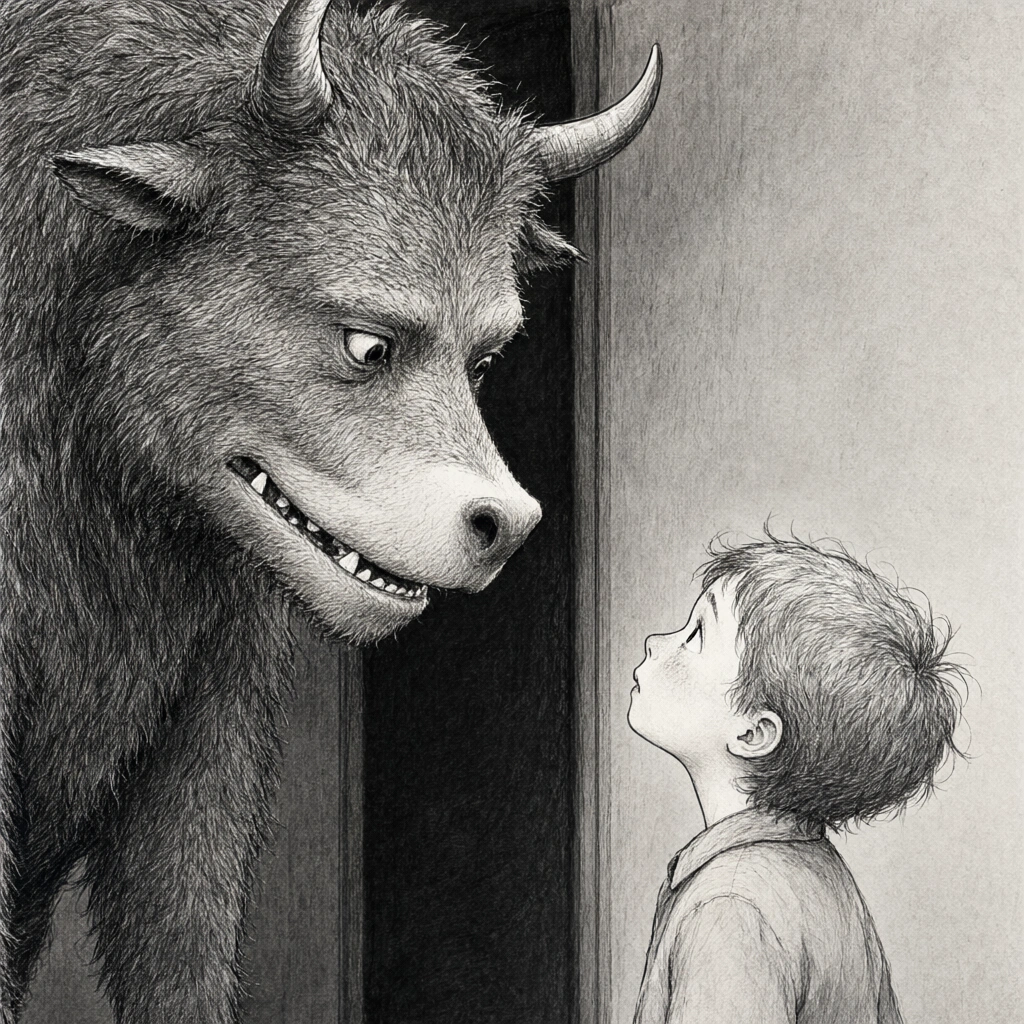 Qwen Image 2.1
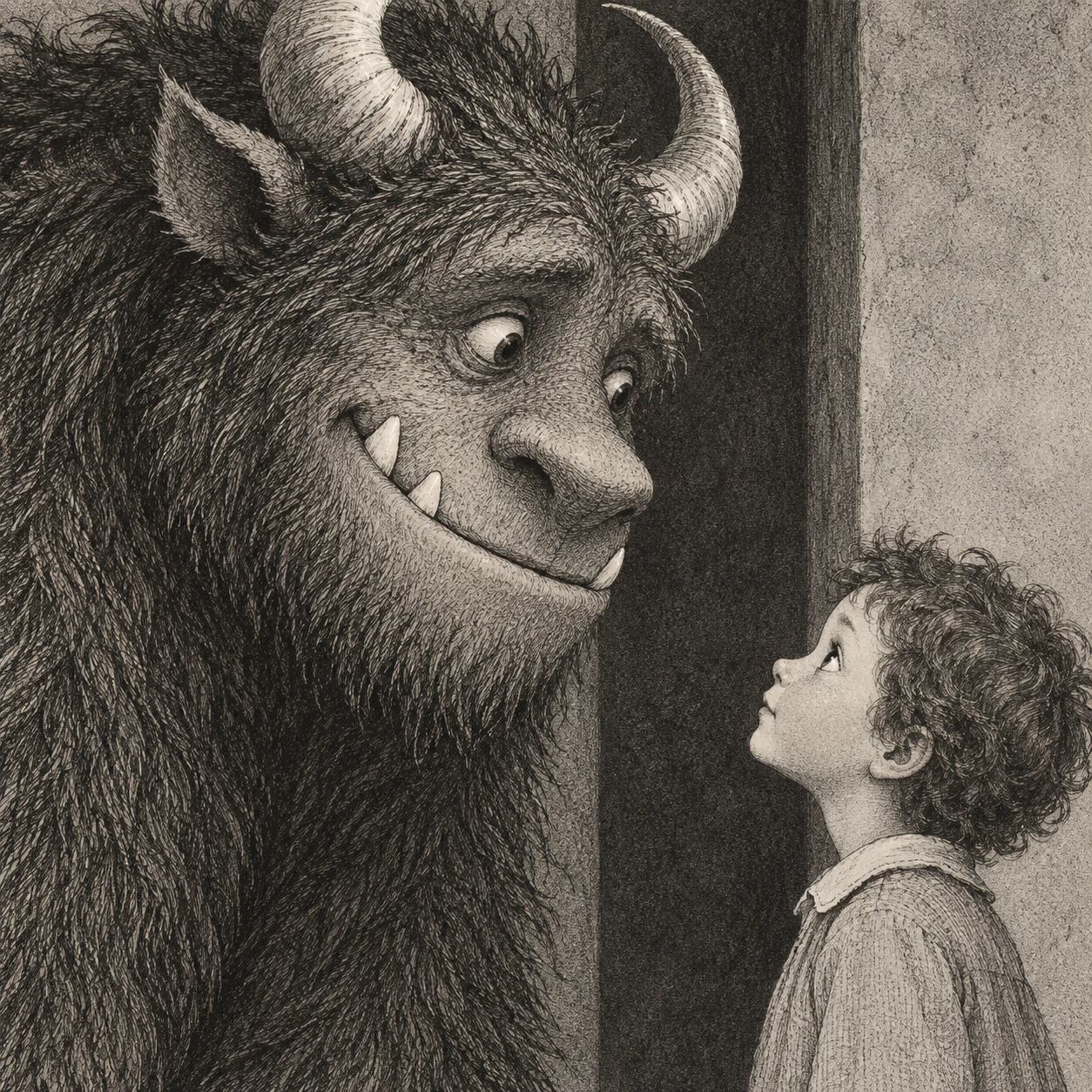 GPT Image 2.5
Reference details
- Reference ID
- 4333
- Category
- Flat illustration
Reference prompts
Style prompt
Use monochrome storybook illustration with fine ink lines, stippled gray wash, and visibly aged paper texture. Give the focal textured area dense directional hatching while keeping surrounding planes quiet and lightly toned. Model contrasts through charcoal shadow, soft middle gray, and small cream highlights. Let expressive contours remain slightly irregular and handmade. Crop close around an exchange or visual relationship so scale is felt directly, leaving simple vertical background divisions to organize space. The mood should be tender, uncanny, and still, with richly observed texture balanced by generous calm areas rather than decorative clutter.Full example prompt
A square monochrome storybook illustration shows a small child in profile facing a much larger shaggy horned creature. The child stands on the right, head tipped upward, short curly hair outlined by fine ink marks. A simple collared garment covers the shoulders. The creature leans in from the left, occupying almost the entire left half with thick fur, broad curved horns, pointed ears, a blunt snout, and a wide mouth that appears friendly despite its size. Its round eyes look directly at the child. A vertical dark doorway or wall shadow divides the space behind them, while lighter gray wall planes frame both sides. The image is closely cropped around the encounter; neither full body is visible, focusing attention on the exchange of gazes and the enormous difference in scale. Fur is built from countless small, directional pen strokes, with dense crosshatching deepening the neck and underside. The child's hair, nose, and cloth have lighter, more economical lines. A stippled gray wash softens the broad background and contributes an aged printed-paper texture. The creature's white teeth, pale muzzle, and horn edges emerge sharply from charcoal black shadow. There is no color, title, dialogue, or visible lettering. The tone is intimate and strange rather than frightening. The generous detail in the animal's fur is balanced by quiet, nearly empty wall areas, making the still moment feel like a page from a thoughtful illustrated children's tale.