
Styles
#4372
Anatomical illustration style reference and prompts
Explore the “Anatomical illustration” reference with etched linework, negative space, and pale neutral tones. View the images, copy the style or example prompt, and discover related styles on Looksift.
Compare the Qwen Image 2.1 and GPT Image 2.5 examples, choose the visual qualities you want, and copy the style prompt for your own project.
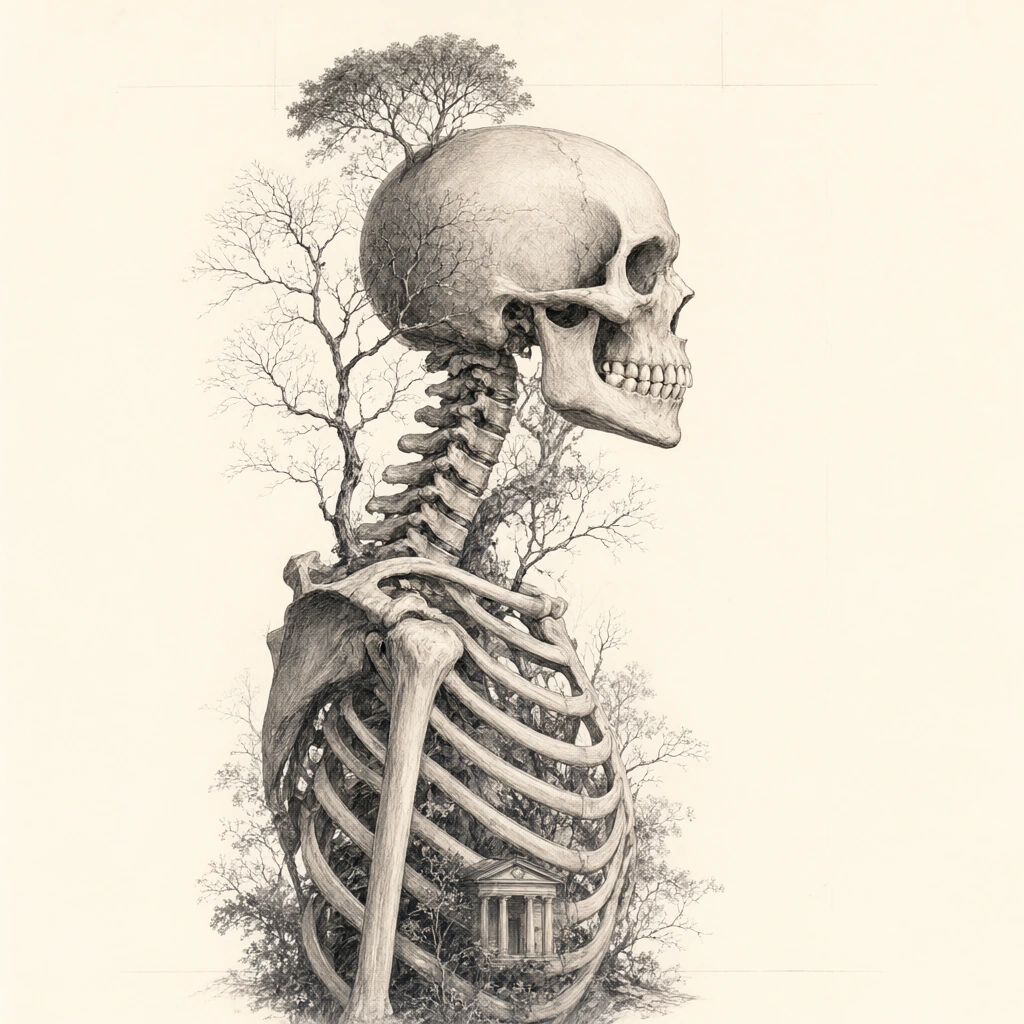 Qwen Image 2.1
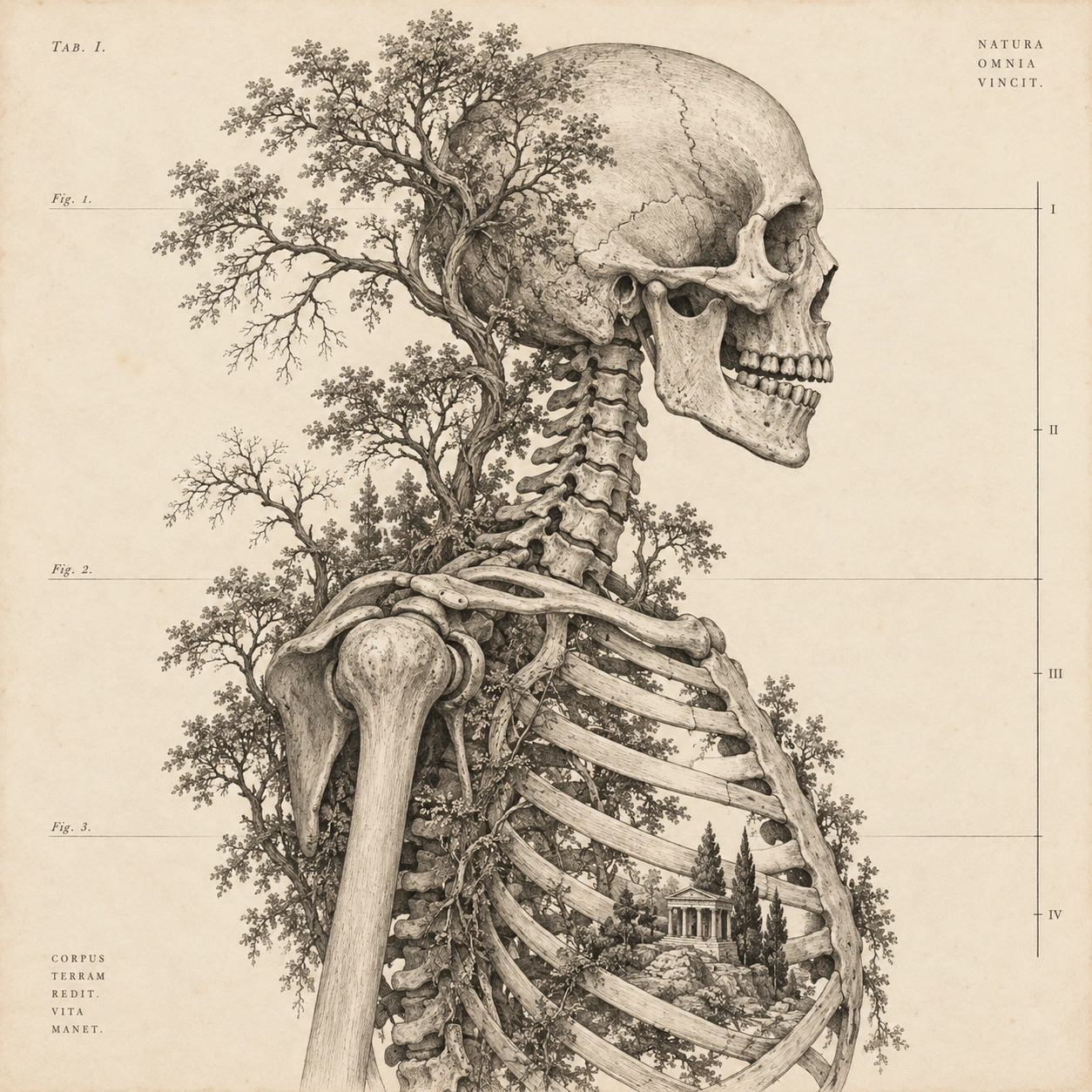 GPT Image 2.5
Reference details
- Reference ID
- 4372
- Category
- Ink & line
Reference prompts
Style prompt
The style is antique scientific engraving joined with restrained surreal montage. Meticulous graphite-gray hatching describes solid volume, while finer filament lines build airy secondary structures. Warm cream paper and large negative space isolate a compact central assembly. Faint ruled guides, tiny details and soft plate-like wear evoke archival illustration. Two systems of texture overlap through precise registration rather than abrupt collage. The result is analytical in draftsmanship and meditative in mood.Full example prompt
A square anatomical-style illustration presents a human skeleton in right-facing profile from the upper ribs to the skull. The jaw is slightly open, exposing carefully drawn teeth; vertebrae, clavicle, shoulder joint and rib cage are rendered with delicate engraved shading. Behind and through the bones, fine branching trees emerge like a miniature landscape, with one canopy growing near the back of the skull and another around the spine. At the bottom, a tiny classical building appears partly enclosed by the ribs and vegetation. The surrounding page is warm cream and largely empty, making the complicated central structure appear like an old scientific plate. Faint horizontal guide lines and a few narrow vertical marks cross the background. Bone surfaces have patient tonal hatching, while the trees use thinner, more filament-like strokes. The imagined overlap is precise enough to feel diagrammatic, yet the substitution of landscape for anatomy gives it a contemplative surrealism. The profile is shifted slightly right of center; branching forms extend leftward, balancing the forward thrust of the skull. The image favors graphite-gray and sepia-black over strong color. Its emotional effect is quiet and reflective, joining mortality, natural growth and measured observation within a single spare composition.