
Styles
#4378
Stephen Gammell style reference and prompts
Explore the “Stephen Gammell” reference with scratch-like marks, negative space, and a monochrome palette. View the images, copy the style or example prompt, and discover related styles on Looksift.
Compare the Qwen Image 2.1 and GPT Image 2.5 examples, choose the visual qualities you want, and copy the style prompt for your own project.
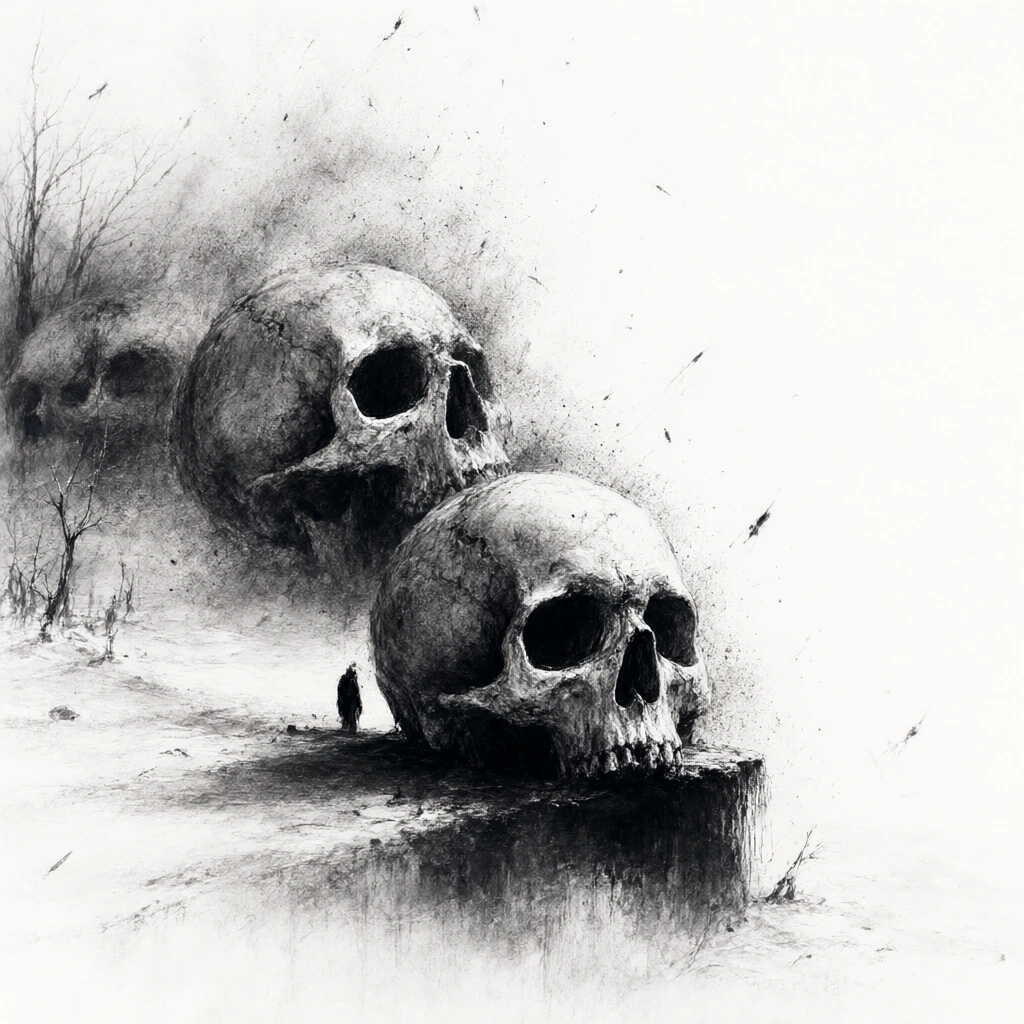 Qwen Image 2.1
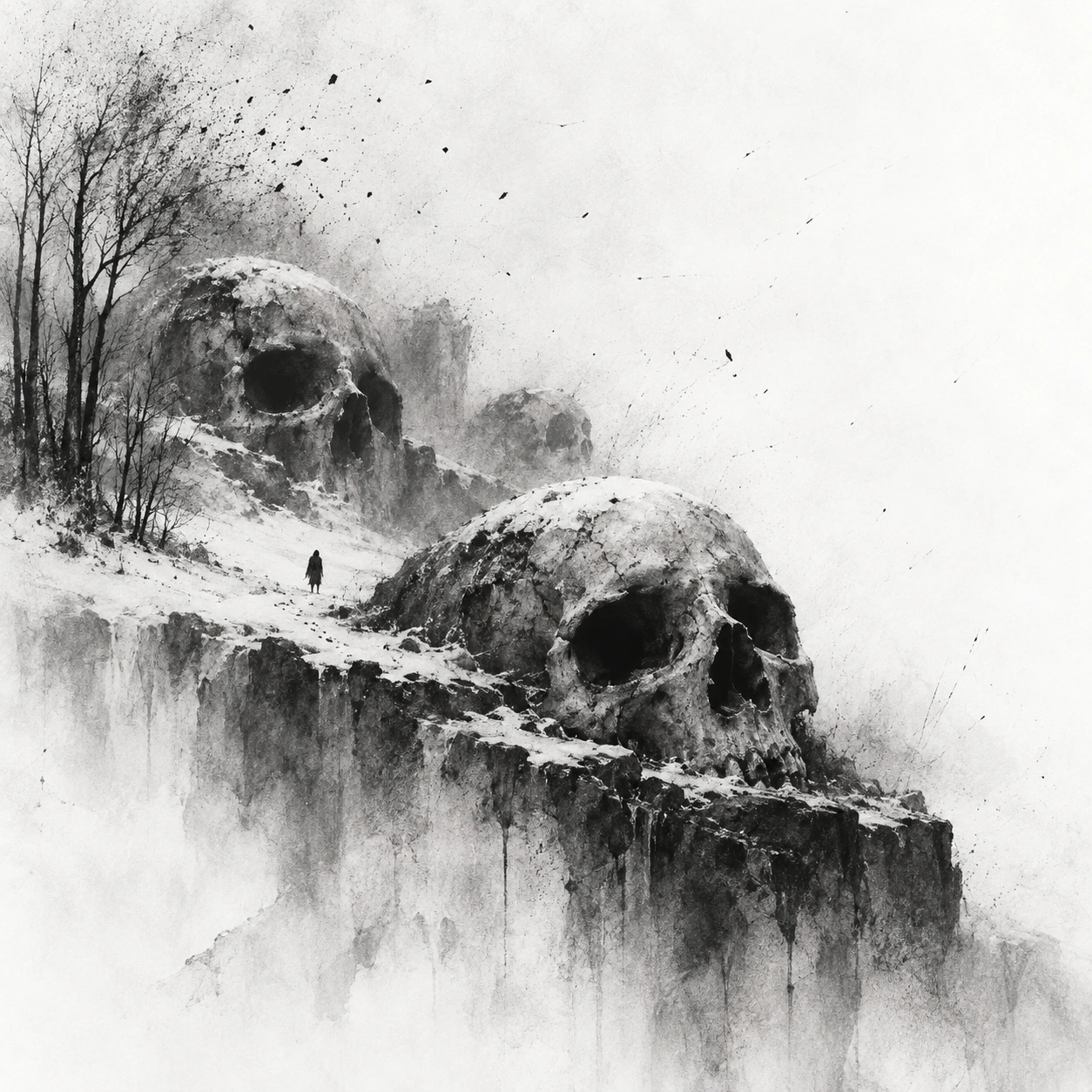 GPT Image 2.5
Reference details
- Reference ID
- 4378
- Category
- Ink & line
Reference prompts
Style prompt
The style is atmospheric monochrome horror illustration made from rubbed graphite, charcoal dust, ink spatter and broad erasure. A small cluster of dark defined forms is set against expansive nearly white negative space. Edges shift between anatomical precision and smoky dissolution; stray scratches and scattered grain suggest unstable air. Value contrast is strongest in a few deep cavities, while surrounding planes fade into mist. Scale remains ambiguous, creating unease through silence and incompletion rather than graphic excess.Full example prompt
A square monochrome illustration shows several enormous weathered skulls partly embedded in a snowy, almost empty landscape. One skull sits nearest the viewer on a dark ledge at the lower right; another rises behind it toward the left. Their hollow eye sockets are the deepest black shapes in the scene. Thin leafless trees stand at the far left, their branches dissolving into a cloud of charcoal dust. A tiny dark figure or fragment appears between the larger forms, making the skulls seem monumentally oversized. The ground below the ledge fades into pale washes and erasures rather than solid topography. Smudged graphite, sprayed ink and rubbed charcoal marks blur the boundaries between bone, snow and atmospheric mist. The right half of the composition opens into almost untouched white paper, creating an uneasy silence around the dark cluster. Fine scratches and stray marks drift through the air like debris. The nearest skull has enough anatomical detail to be recognizable, but the rear forms are less certain and merge with shadow. The image evokes a frightening vision caught mid-dissolution, not a neatly mapped fantasy world. Its drama arises from scale, negative space and the unstable transition from precise dark sockets to diffuse, grainy gray haze.