
Styles
#4429
W. Eugene Smith style reference and prompts
Explore the “W. Eugene Smith” reference with fine grain, a monochrome palette, and tactile surfaces. View the images, copy the style or example prompt, and discover related styles on Looksift.
Compare the Qwen Image 2.1 and GPT Image 2.5 examples, choose the visual qualities you want, and copy the style prompt for your own project.
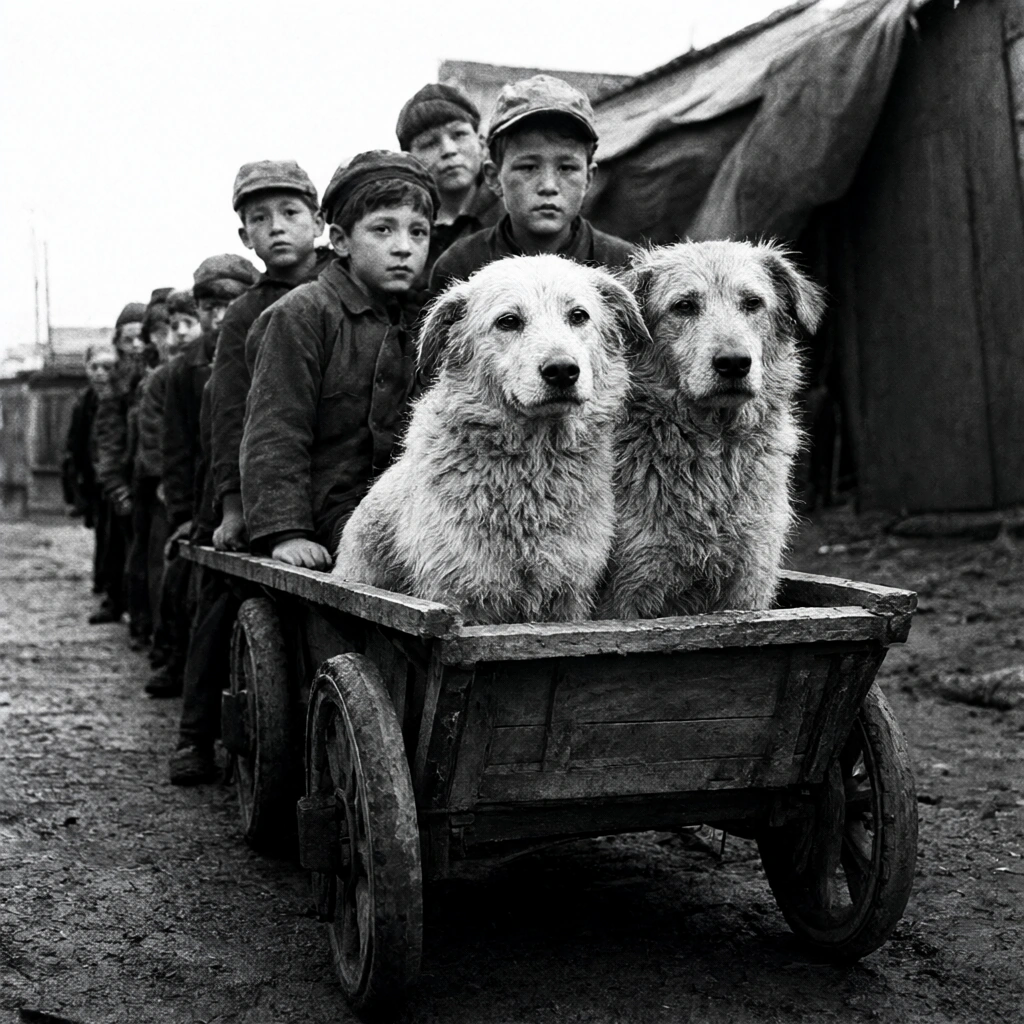 Qwen Image 2.1
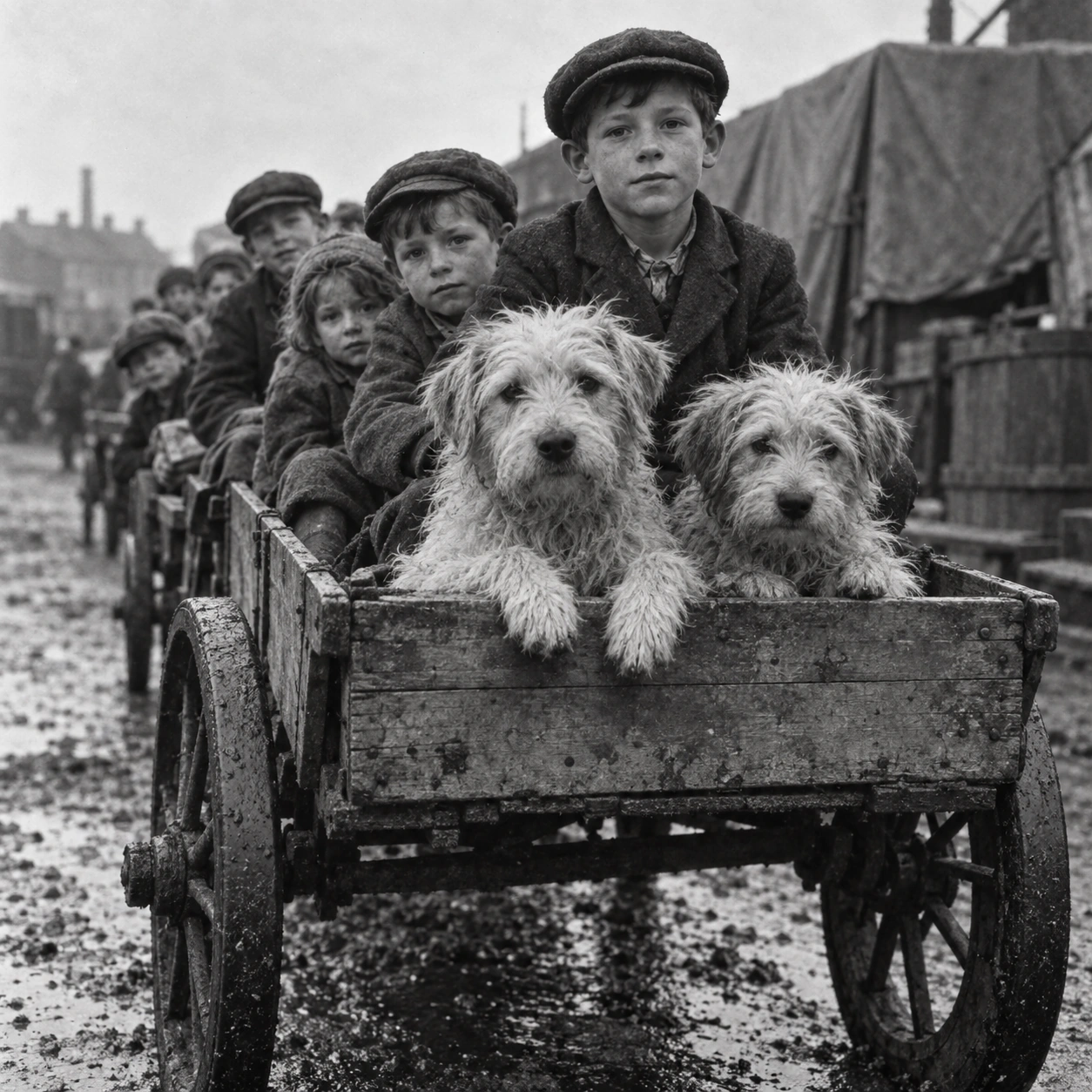 GPT Image 2.5
Reference details
- Reference ID
- 4429
- Category
- Photography
Reference prompts
Style prompt
A vintage black-and-white documentary photography style favors a low, close viewpoint and a chain of repeated forms receding into depth. Overcast daylight gives a broad but restrained grayscale range, with pale tactile highlights against deep clothing and ground shadows. Fine film grain, modest softness, worn surfaces, and candid expressions create archival immediacy. The foreground object or figures feel close and substantial; the background line becomes progressively smaller and less distinct. Composition emphasizes shared presence and ordinary life without theatrical posing. Strong blacks anchor the frame while mid-gray textures keep wood, fabric, fur, or other materials legible.Full example prompt
A square black-and-white documentary photograph shows several children crowded into a rough wooden cart with two shaggy dogs at the front. The cart points toward the viewer, its worn boards and large dark wheels visible beneath the animals. One boy in a cap sits upright behind them and looks directly at the camera, while more children recede in a line toward the left background. Their plain jackets and caps suggest an ordinary working-class street scene from an earlier era. The dogs' light fur stands out against dark clothing and the shadowed cart. The surrounding ground is rough and damp, with indistinct structures and a fabric-covered form behind the group. Natural overcast light creates a broad grayscale range without dramatic highlights. Fine film grain, slight softness at the edges, and deep blacks make the image feel archival but immediate. The low viewpoint brings the cart and dogs close, while the long row of faces establishes depth and communal movement. The children are serious rather than posed as cheerful props; the image's warmth comes from their closeness and the dogs' presence. The whole frame carries a candid, human documentary quality with strong tonal structure and visible historical texture.