
Styles
#4456
Nick Veasey style reference and prompts
Explore the “Nick Veasey” reference with fine grain, luminous accents, and tonal contrast. View the images, copy the style or example prompt, and discover related styles on Looksift.
Compare the Qwen Image 2.1 and GPT Image 2.5 examples, choose the visual qualities you want, and copy the style prompt for your own project.
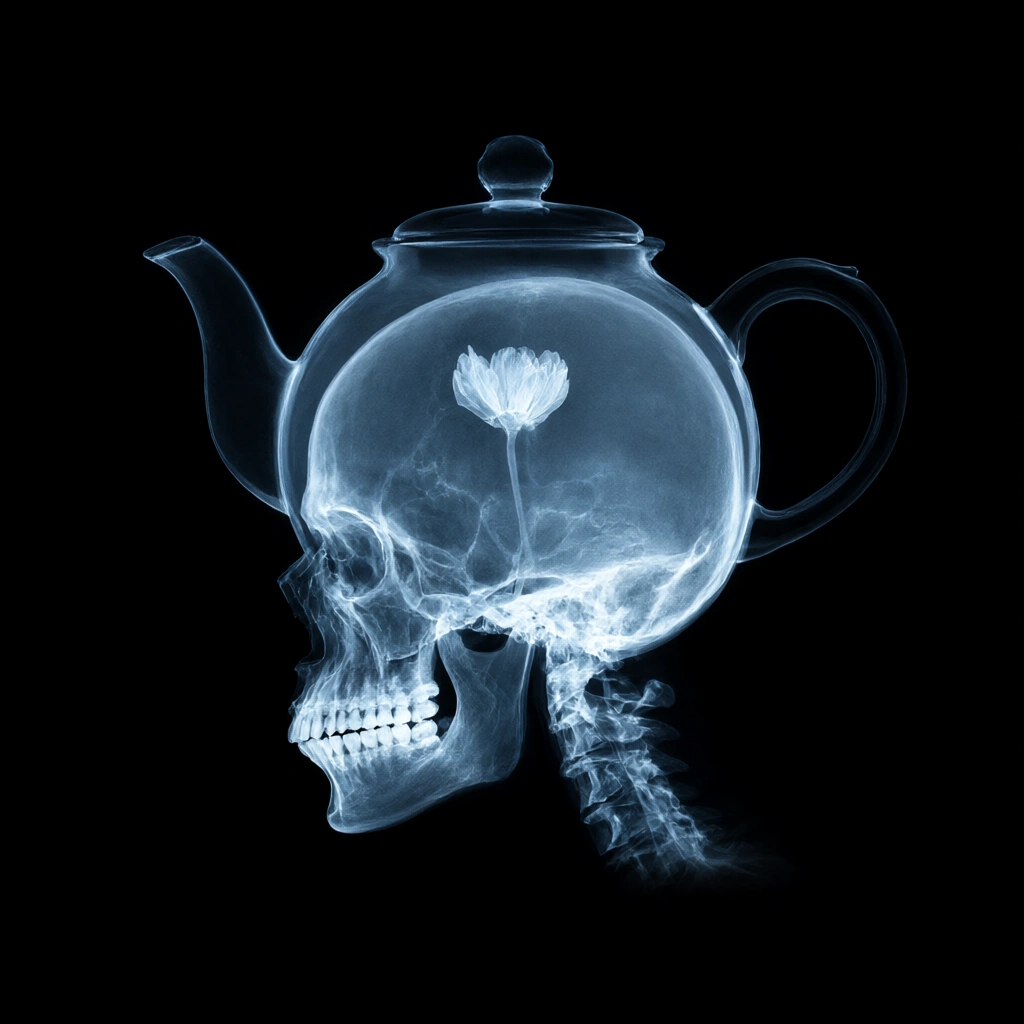 Qwen Image 2.1
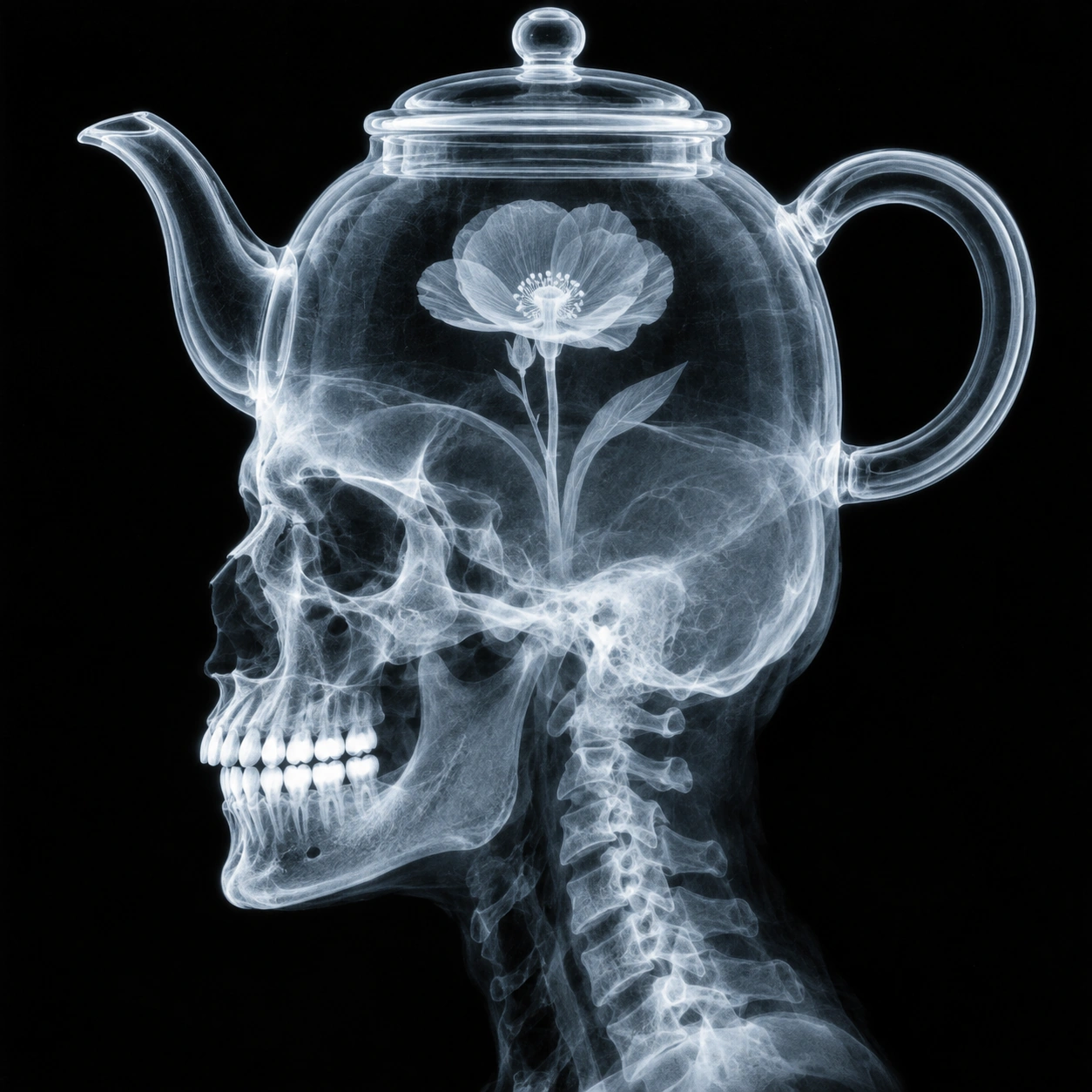 GPT Image 2.5
Reference details
- Reference ID
- 4456
- Category
- Photography
Reference prompts
Style prompt
Radiographic image-making on absolute black, where translucent cyan-white contours and varying internal densities reveal overlapping structures. Thin luminous edges, ghosted double exposures, soft halos, and fine photographic grain carry the texture. Sparse high-contrast placement creates a clinical yet uncanny rhythm; brightness feels emitted from within rather than projected onto a surface.Full example prompt
A square radiographic artwork on a pure black field combines the glowing outline of a teapot with a human skull and neck. The teapot sits in the upper center: its round body, short lid and knob, curved spout on the left, and loop handle on the right appear as thin blue-white translucent lines. Within the vessel, a pale flower floats upright like an object seen through glass. The lower contour of the teapot overlaps the crown of the skull, so the skull seems to extend downward from the pot. The jaw and teeth face left, and a short section of cervical vertebrae descends toward the lower right. Layered exposures make some edges doubled and reveal internal structures at different densities. The brightest whites gather around the teeth, rim, and base of the vessel; soft cyan halos outline the outer curves. The surrounding background is uninterrupted matte black, intensifying the strange composite and leaving no environmental clues. Illumination seems intrinsic to the X-ray image rather than cast from an external light. Fine grain and faint ghosted transitions give the picture a photographic technical quality. The composition feels clinical, witty, and uncanny, built from transparency and structural overlap rather than surface color.