
Styles
#4497
Francesca Woodman style reference and prompts
Explore the “Francesca Woodman” reference with a monochrome palette. View the images, copy the style or example prompt, and discover related styles on Looksift.
Compare the Qwen Image 2.1 and GPT Image 2.5 examples, choose the visual qualities you want, and copy the style prompt for your own project.
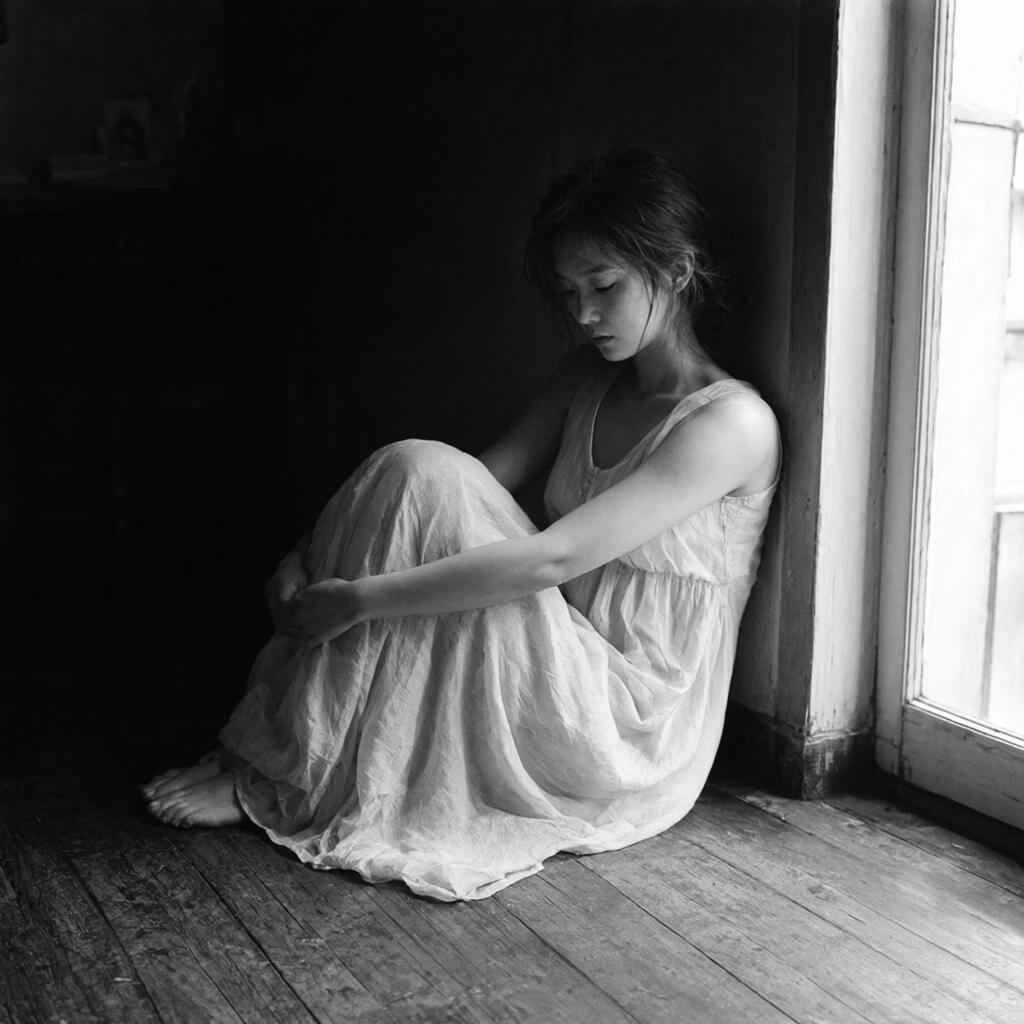 Qwen Image 2.1
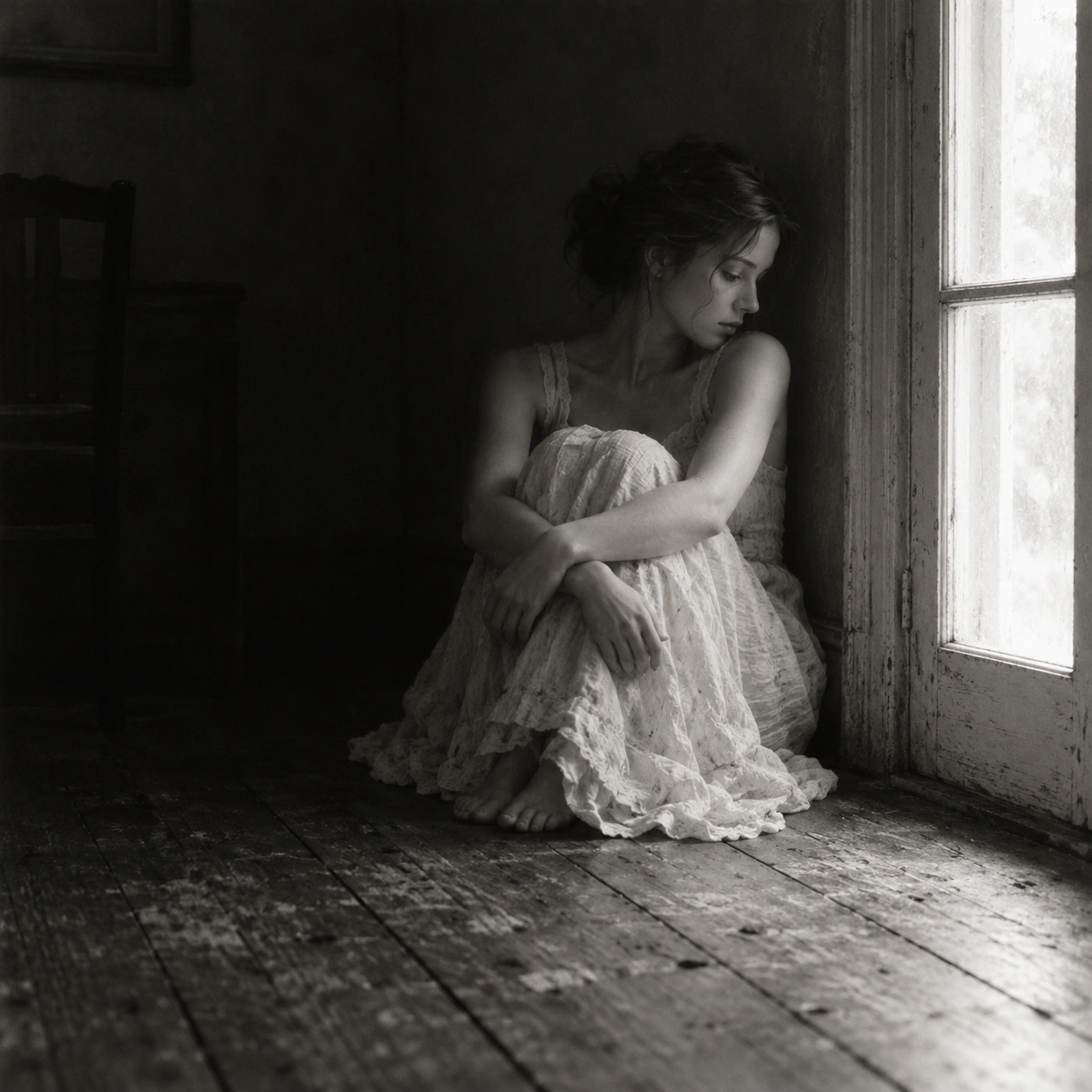 GPT Image 2.5
Reference details
- Reference ID
- 4497
- Category
- Photography
Reference prompts
Style prompt
Use intimate experimental black-and-white photography with a softly focused figure or focal form absorbed into an imperfect interior. Contrast one bright vertical light source with broad almost-black room mass, allowing pale fabric or surfaces to catch gentle intermediate grays. Keep posture compact and unforced, and let floor lines or wall edges quietly place the form in space. Preserve grain, slight blur, uneven exposure, and fragile tonal transitions rather than clean studio polish. Crop close enough for emotional proximity but retain a clear architectural boundary. The atmosphere is private, transient, and contemplative, with the focal form seeming to hover between illumination and disappearance.Full example prompt
A square black-and-white self-portrait-like photograph shows a young woman seated on worn wooden floorboards in a dim room. She is positioned just right of center, her back leaning into the dark corner beside a tall bright window or glazed door. Her knees are drawn up and her arms rest loosely around them. She wears a light sleeveless dress whose skirt spreads across her legs in soft folds. Her head turns toward the window, eyes downcast, and her hair is tied back loosely. The window's white light forms a vertical strip along the right edge and catches the shoulder, cheek, forearm, and layered fabric. The left half of the room falls into deep black, with only hints of wall and furniture. The floorboards run diagonally from the bottom toward the figure, their scuffed grain visible in the light. The image is softly focused and slightly grainy, so delicate facial detail is less important than pose, tonal mass, and the relation between body and room. There is no theatrical gesture; the woman's compact posture reads as quiet reflection or withdrawal. The framing is intimate but includes enough architectural edge to hold the body in a real interior. Contrast is strong between the luminous window and the shadowed wall, yet transitions across the dress remain gentle. No mirror, text, object, or additional person appears in the selected view. The photograph feels fragile, private, and transient, as if the figure could fade into the surrounding darkness.