
Styles
#0022
Flat color in the style of Egyptian murals style reference and prompts
Explore the “Flat color in the style of Egyptian murals” reference with stone or plaster surfaces, pale neutral tones, and weathered surfaces. View the images, copy the style or example prompt, and discover related styles on Looksift.
Compare the Qwen Image 2.1 and GPT Image 2.5 examples, choose the visual qualities you want, and copy the style prompt for your own project.
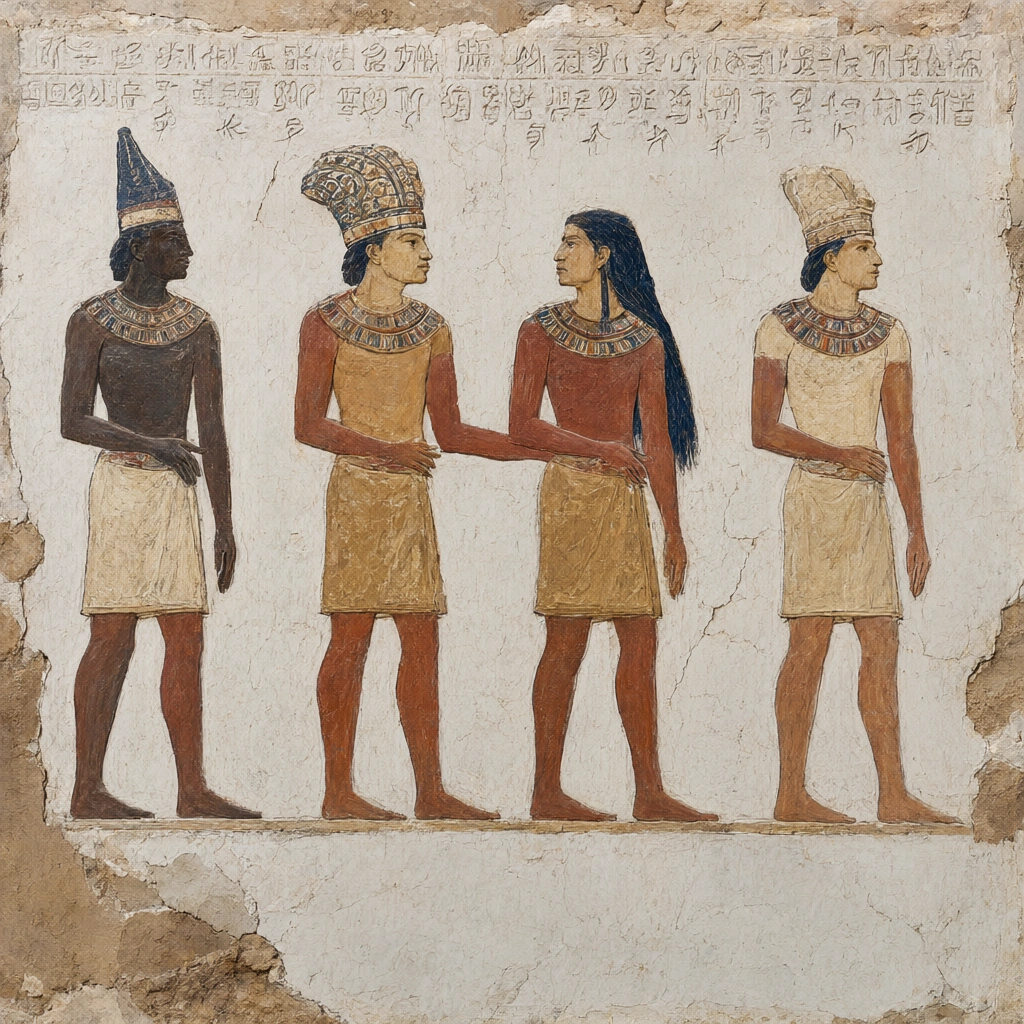 Qwen Image 2.1
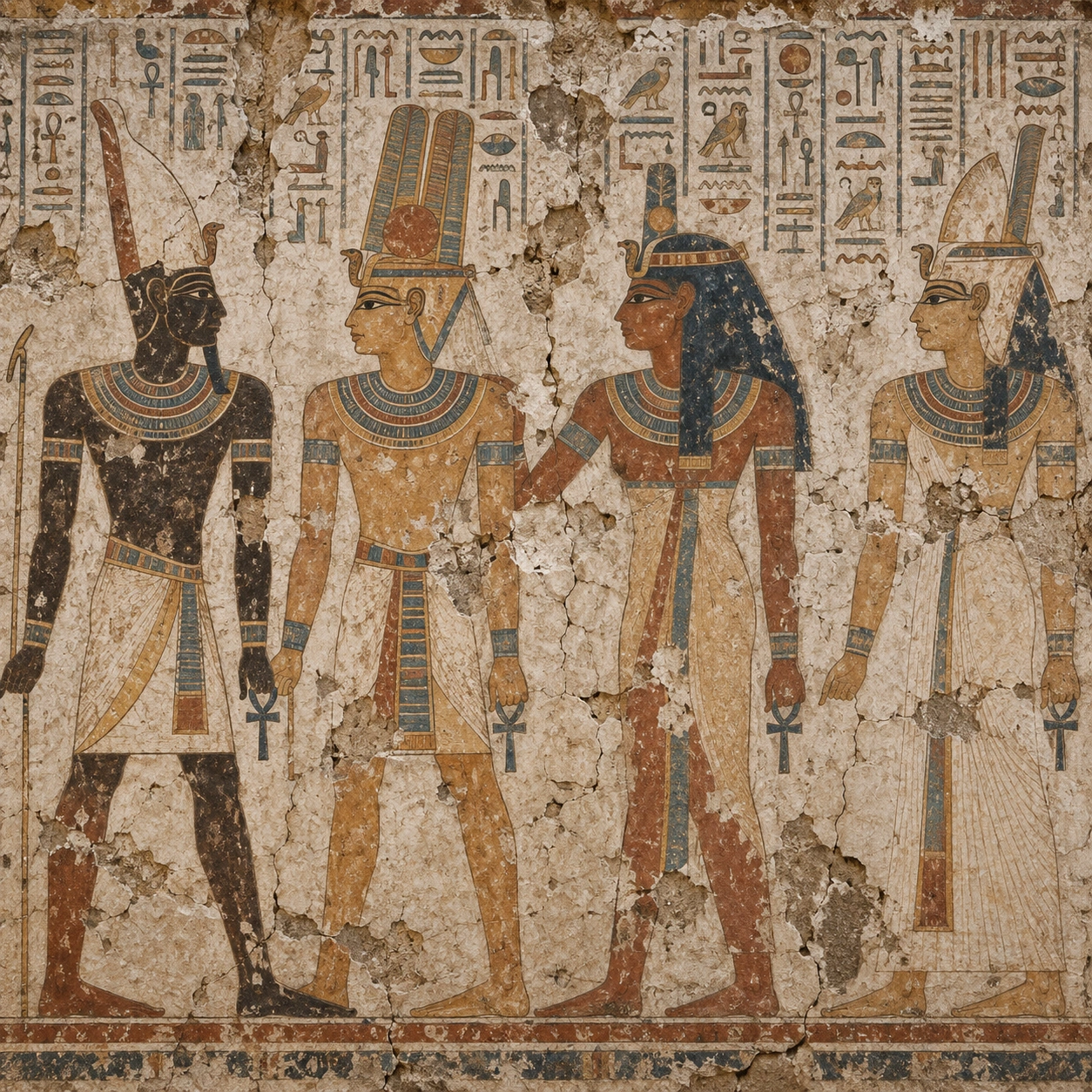 GPT Image 2.5
Reference details
- Reference ID
- 0022
- Category
- Flat illustration
Reference prompts
Style prompt
A mural-like painted finish rests on chalky, weathered stone or plaster, with visible cracks, chips, rubbed pigment, and granular mineral deposits. Warm cream and sandy tan cover the largest areas; brick red, dark blue-black, and restrained ocher form flatter, smaller accents. Thin dark outlines define simplified profiles and geometric divisions, while repeated narrow bands and small incised motifs establish a steady horizontal rhythm. Color sits close to the support rather than floating above it, and losses in the paint allow the pale ground to break through important contours. Volume is shallow and formal, carried by overlap and slight relief rather than natural perspective. Illumination is broad and even, with tiny shadows inside fractures and carved recesses. The overall effect is ceremonial, measured, and materially aged, its formal pattern enriched by the irregular erosion of the surface.Full example prompt
A square mural-like painting shows a row of four ceremonial figures across a weathered pale stone wall. The wall is not a smooth canvas: cracks, chipped plaster, uneven brown stains, and exposed rough patches interrupt the painted surface from top to bottom. Along the upper band, compact columns of incised symbols and small pictorial marks run across the width; their worn forms remain decorative rather than fully readable text. Below them, the figures are arranged at nearly equal height on a shallow ground strip. At the left, a dark-faced figure wears a tall tapering crown and a light kilt, the body shown with a forward-facing torso and a head turned in profile. The next figure has a large patterned headdress and pale ocher face. At the center-right, a figure with long dark blue-black hair turns toward the left, its arm overlapping the neighboring form. On the far right, a lighter headdress and a softly worn cream garment complete the group. Wide collars of repeated blue, ocher, and black bands bind the figures visually, while brick-red limbs and warm tan clothing alternate against the chalky ground. The poses are formal and measured, with narrow waists, long vertical bodies, profile faces, and flat areas of color outlined by fine dark lines. Missing paint and cracked plaster obscure some details without dissolving the overall procession. Light is even across the wall, with shallow relief shadows in incised marks and cracks rather than a scene-based sun direction. The overall composition is frontal and rhythmic, its ordered colored forms held within the irregular history of a mineral, timeworn surface.