
Styles
#0059
John Singleton Copley style reference and prompts
Explore the “John Singleton Copley” reference with visible brushwork, smooth tonal modeling, and a limited color palette. View the images, copy the style or example prompt, and discover related styles on Looksift.
Compare the Qwen Image 2.1 and GPT Image 2.5 examples, choose the visual qualities you want, and copy the style prompt for your own project.
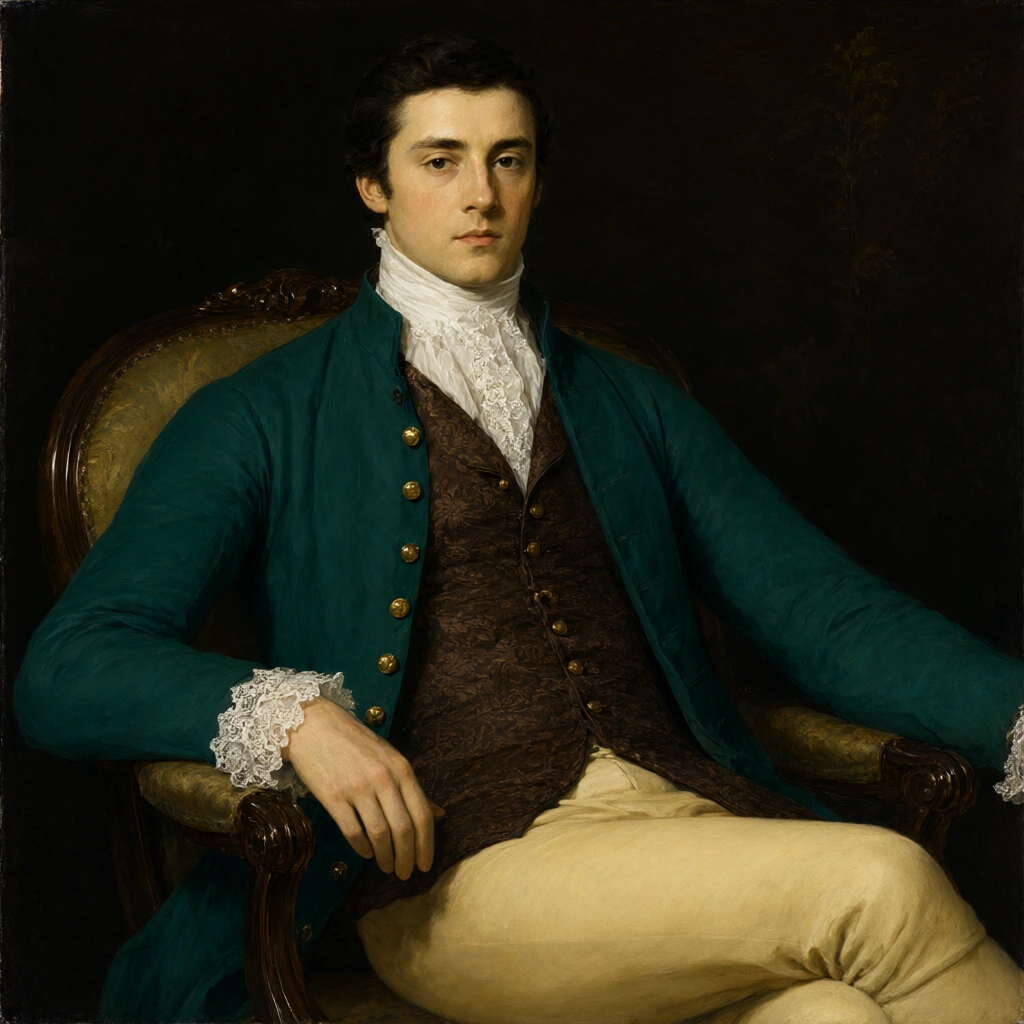 Qwen Image 2.1
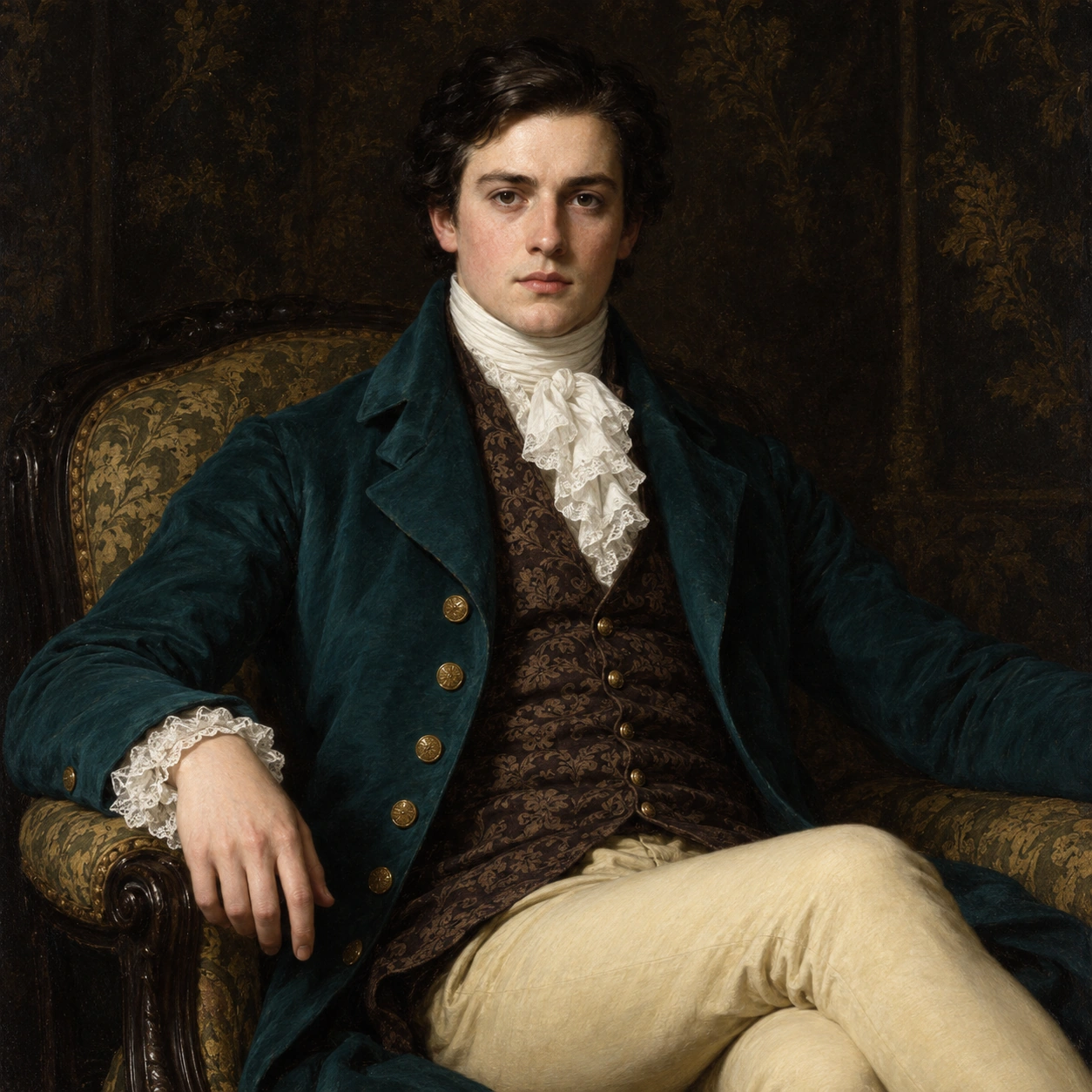 GPT Image 2.5
Reference details
- Reference ID
- 0059
- Category
- Painting
Reference prompts
Style prompt
The painting uses controlled tonal modelling, dark surroundings and selective warm illumination. Deep brown, black and muted green create a shadowed ground, while pale tonal passages and small gold accents provide measured contrast. Fine edges define delicate details; broader strokes describe larger surfaces without losing their form. Subtle ornament remains low in contrast and does not compete with the main light-dark structure. Highlights are concentrated rather than scattered, giving the image a composed, formal quality. The overall treatment balances precision, rich shadow and a restrained palette of cool greens, warm browns and soft ivory.Full example prompt
The square image is a formal oil portrait of a young man seated frontally against a very dark patterned background. He occupies the centre from the head to the knees, with one pale yellow trouser leg crossing the lower-right foreground. His posture is upright but relaxed, and his serious face looks directly outward beneath neatly arranged dark hair. The skin is pale and softly modelled, with small highlights on the forehead, nose and cheek, while the eyes and hair remain strongly defined. A crisp white ruffled neckcloth sits high at the throat and spills over the front of a dark brown brocade waistcoat. The waistcoat carries a subtle repeating floral pattern and is fastened at the centre with small buttons. Over it, a deep teal-green coat opens across the torso, its broad lapels and sleeves shaped by cool shadows and narrow highlights. A row of round gold buttons descends along the front. A white lace cuff surrounds the visible wrist on the left side of the image, where a relaxed hand rests on the chair arm. The opposite teal sleeve extends toward the right edge, with the other hand outside the frame. The chair is upholstered in muted olive and gold fabric with a curved, patterned back visible around the shoulders and left side. Its dark carved frame blends into the surrounding background. Behind the sitter, the nearly black brown ground carries faint gold foliage-like ornament and a few indistinct vertical contours, without forming a clear room. The lower coat and pale breeches provide the strongest value contrast against the shadowed seat. Warm frontal light illuminates the face, neckcloth, visible hand and knee, while the background and chair edges sink into deep brown-black. Brushwork is controlled and fine in the features and lace, broader in the coat and chair. No text is visible. The sitter’s arms spread away from the torso, making a broad relaxed arrangement above the pale trouser leg. On the visible chair arm, the fingers curve down over the upholstery. The dark brocade remains visible in the opening between the coat fronts, where its subdued pattern contrasts with the smoother teal cloth. The framing feels close but includes enough of the chair and legs to establish a formal seated pose rather than a head study. The overall composition is balanced around the seated figure, with the teal coat and pale leg separating from the dark setting and the lace, brocade and gold fastenings adding restrained detail.