
Styles
#0416
Eugene de Blaas style reference and prompts
Explore the “Eugene de Blaas” reference with visible brushwork, weathered surfaces, and smooth tonal modeling. View the images, copy the style or example prompt, and discover related styles on Looksift.
Compare the Qwen Image 2.1 and GPT Image 2.5 examples, choose the visual qualities you want, and copy the style prompt for your own project.
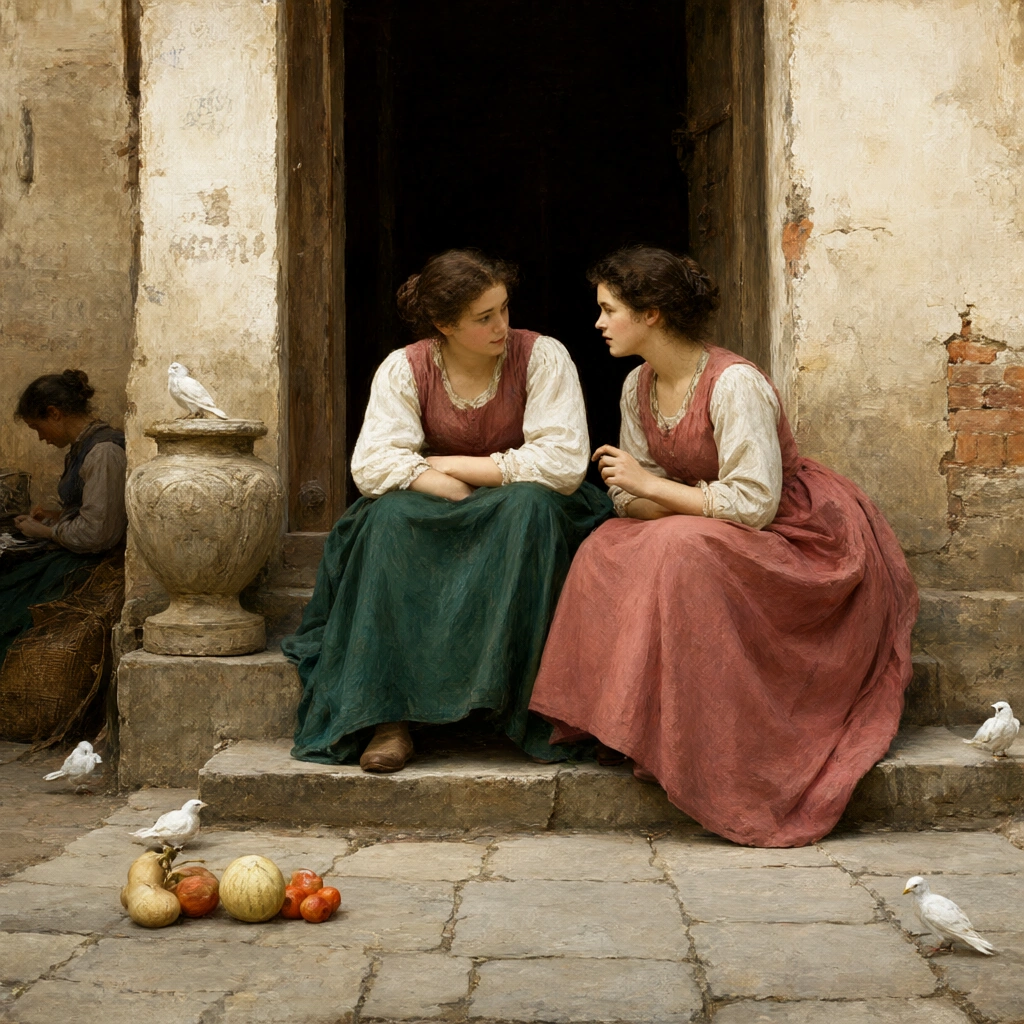 Qwen Image 2.1
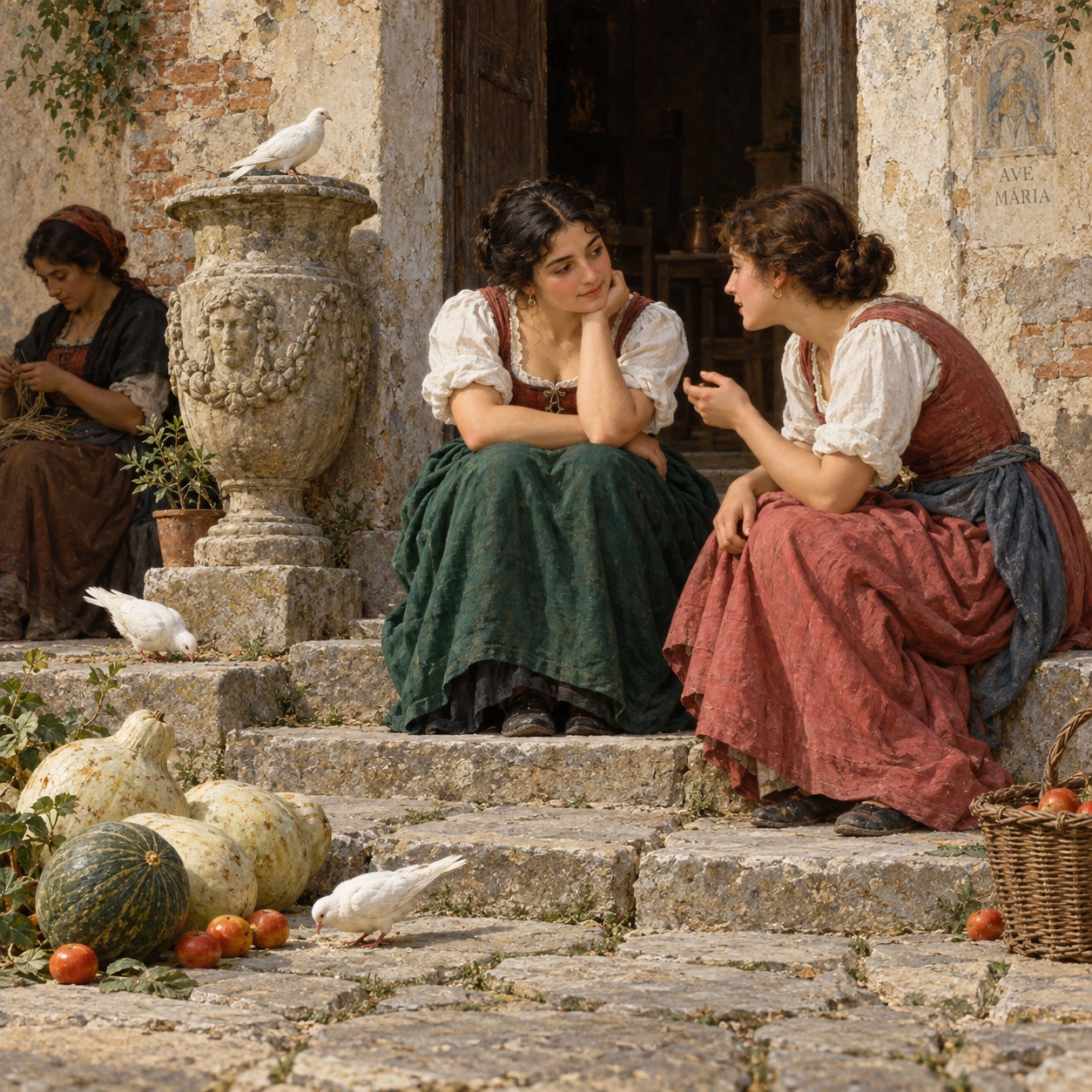 GPT Image 2.5
Reference details
- Reference ID
- 0416
- Category
- Painting
Reference prompts
Style prompt
Observational realist oil painting gives everyday forms warm, quietly detailed presence. Smoothly modeled pale areas sit against rough cream plaster, deep brown recesses, and broken stone planes. Muted crimson and teal-green cloth masses balance a restrained base of ocher, brick, sage, and warm gray. Fine controlled brushwork defines small folds and surface wear, while broader softened strokes keep the overall scene coherent. Daylight is even but directional enough to lift pale surfaces and leave interior gaps dark. The arrangement groups two medium-scale focal masses into an inward triangle, offsets them with a taller pale vessel-like volume, and lets irregular paving lines carry the eye through the foreground. Small bright white and orange accents punctuate earthy color areas. Edges shift from crisp at near objects to gentler in worn background textures, making a carefully composed scene feel lived-in and intimate.Full example prompt
A late nineteenth-century realist genre painting shows two young women seated close together on the stone steps of a weathered village doorway. The woman at center wears a white puff-sleeved blouse, muted crimson bodice, and deep green skirt; she leans forward with folded arms and listens to her companion. The other wears a rose-red skirt and matching bodice over a light blouse, bending toward her with a small gesture of conversation. A third figure sits farther left, partly in shadow and absorbed in work. White birds wander near the steps, with one perched atop a large carved stone urn beside the dark doorway. Pale gourds, a small melon, and a few red-orange fruits sit on the foreground paving, placing ordinary market objects close to the viewer. The doorway forms a deep brown central recess between chipped cream plaster, old brick, and faint wall marks. The composition has a carefully staged but unforced intimacy: the two main figures form a gentle inward triangle, the urn balances them to the left, and the paving stones lead forward in uneven perspective. Warm daylight falls across faces, blouses, produce, and worn masonry, while the interior remains dark. The paint is finely handled, with smooth but not glossy flesh modeling, individual folds in fabric, rough grains in the plaster, and irregular cracks between stones. A restrained earthy palette of cream, brick, ocher, sage, teal-green, and muted red gives the scene its natural warmth. Small white bird forms and bright fruit punctuate the broader quiet masses. The image feels affectionate and observant, finding narrative interest in a pause between everyday tasks.