
Styles
#2765
Balthus style reference and prompts
Explore the “Balthus” reference with visible brushwork, smooth tonal modeling, and frontal lighting. View the images, copy the style or example prompt, and discover related styles on Looksift.
Compare the Qwen Image 2.1 and GPT Image 2.5 examples, choose the visual qualities you want, and copy the style prompt for your own project.
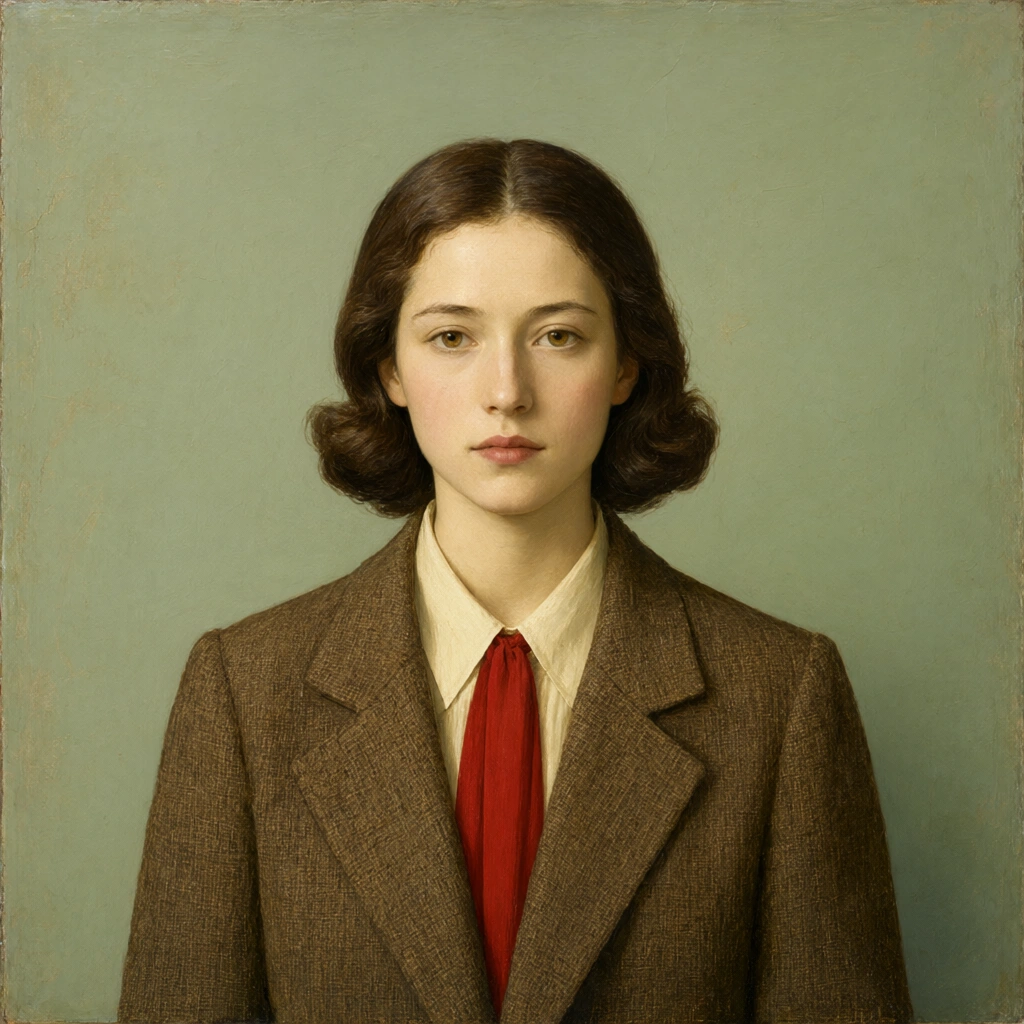 Qwen Image 2.1
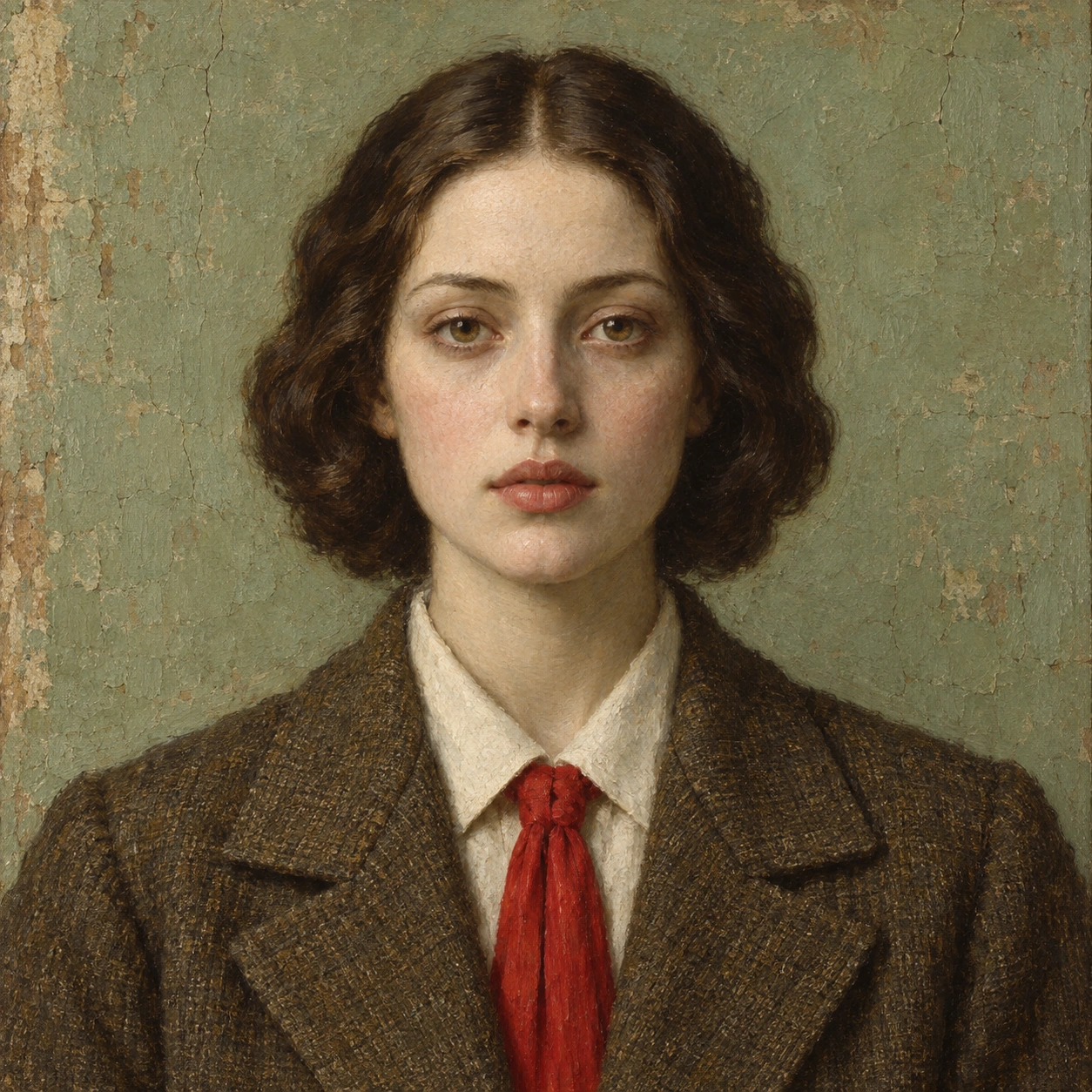 GPT Image 2.5
Reference details
- Reference ID
- 2765
- Category
- Painting
Reference prompts
Style prompt
Oil painting uses smooth, restrained modeling for the luminous focal area and grainier broken pigment for the surrounding surfaces. Muted sage green and warm umber form broad balanced fields, interrupted by one narrow saturated red accent. Soft frontal light establishes gentle volume without a strong cast shadow, while dark curved edges hold the center apart from the pale ground. Fine cracks, rubbed patches, and visible brush texture keep large quiet areas alive. The composition is nearly symmetrical, with a centered vertical accent and level lateral masses. Color transitions stay gradual in the focal planes and more mottled in the background, creating calm stillness with subtle material depth.Full example prompt
A square oil-painted portrait shows a young woman from the chest upward, placed almost exactly at the center against a flat pale sage-green wall. She faces the viewer directly, shoulders level, with a calm, distant expression and no gesture. Her dark brown hair is parted neatly at the middle and falls into soft rounded waves on both sides of the jaw. The forehead is broad and pale; light amber eyes look outward beneath thin arched brows. A straight small nose and softly parted rose-colored lips are modeled with restrained warm shadows. Her face has a smooth, quiet oval shape, and the neck rises from a cream collared shirt. Over it she wears a heavy brown tailored jacket with broad notched lapels. A narrow bright red scarf or tie drops vertically from the collar and supplies the strongest color in the composition. The shoulders extend to the sides of the lower frame, while the garment's rough olive-brown weave and darker seams absorb much of the light. The wall behind her is not perfectly uniform. Fine cracks, faint rubbed patches, and mottled green and tan paint remain visible across it, including a slightly warmer worn strip near the left edge. There are no objects or narrative clues around the sitter. Light is soft and frontal, a little stronger from the left, making the face and cream collar glow gently while the hair and jacket retain deep brown edges. The painterly surface is controlled rather than glossy, with subtle grain and small tonal transitions in skin, cloth, and wall. Green, umber, cream, and quiet flesh tones occupy large balanced areas; the slim red center accent holds the eye. The symmetrical crop and unadorned background make the stillness of her gaze and the material texture the central experience.