
Styles
#0071
Eric Lacombe style reference and prompts
Explore the “Eric Lacombe” reference with directional brush marks, scratch-like marks, and smooth tonal modeling. View the images, copy the style or example prompt, and discover related styles on Looksift.
Compare the Qwen Image 2.1 and GPT Image 2.5 examples, choose the visual qualities you want, and copy the style prompt for your own project.
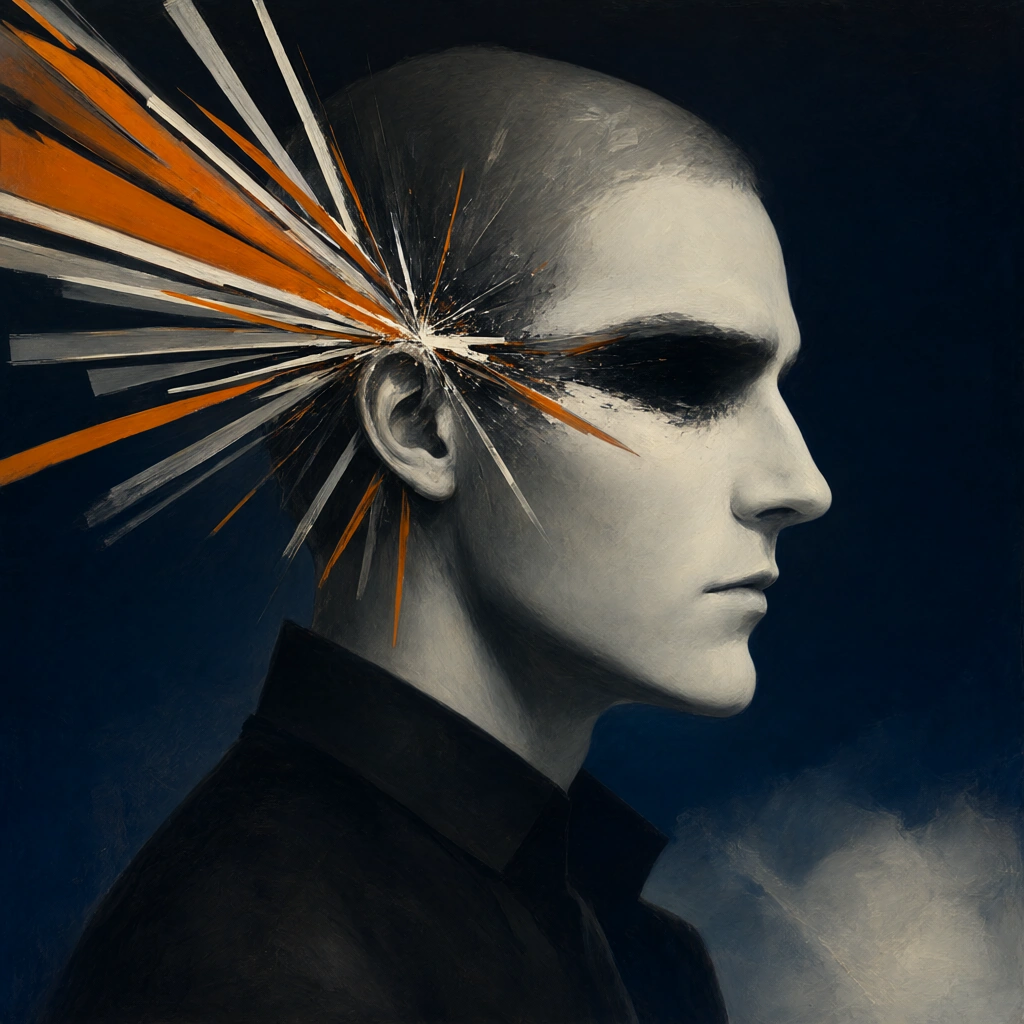 Qwen Image 2.1
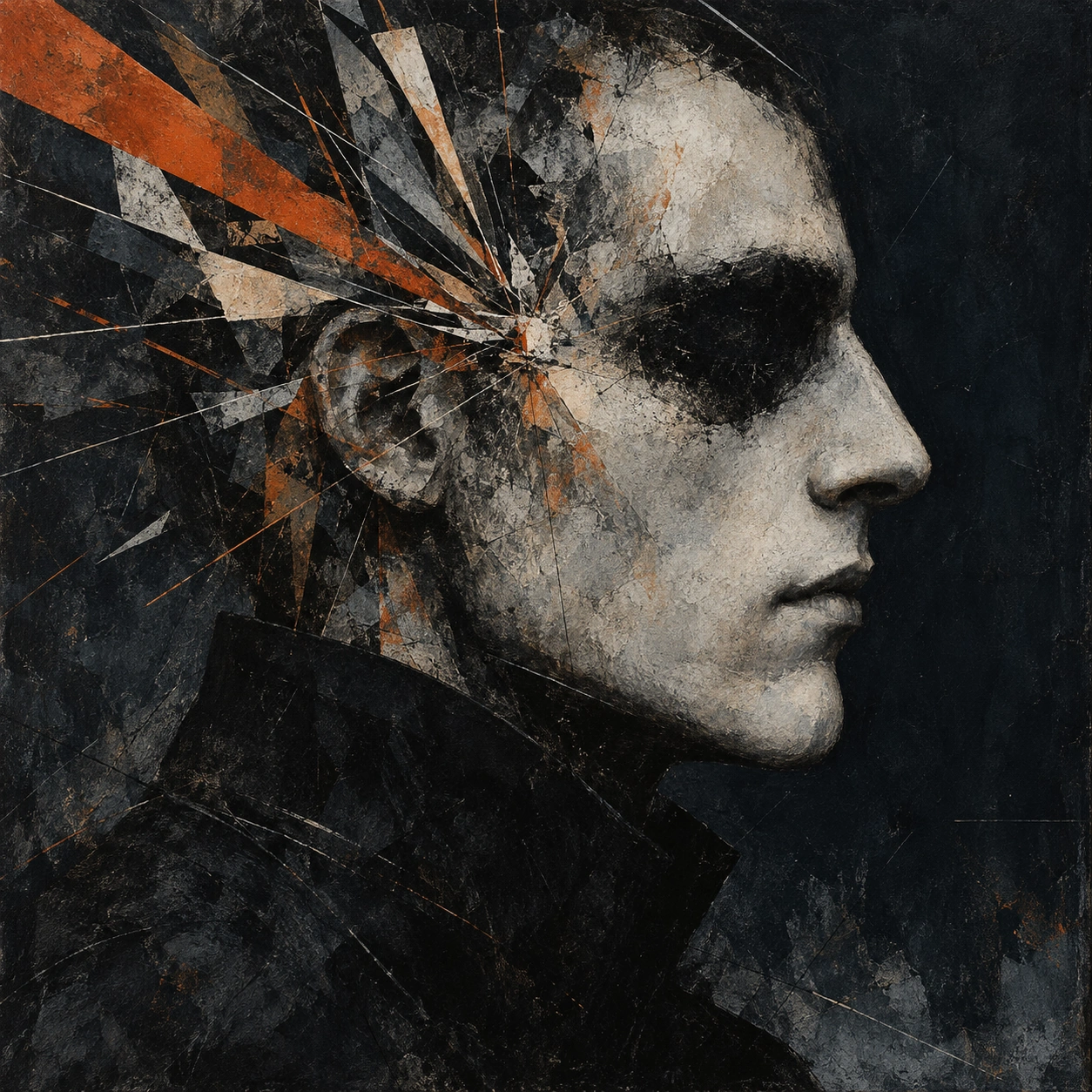 GPT Image 2.5
Reference details
- Reference ID
- 0071
- Category
- Painting
Reference prompts
Style prompt
The mixed-media image combines smooth tonal planes with sharp linear fragments and scraped marks. Charcoal, pale grey and cream form a restrained base, while rust orange concentrates attention in a few directional strokes. Hard edges radiate from a focal point and interrupt broader soft transitions. Fine scratches, flecks and cloudy underlayers keep the surface visibly worked. Light is selective, isolating pale areas against deep shadow and leaving large dark regions quiet. The overall visual language is fragmented and graphic, balancing controlled negative space with an abrupt burst of line and colour.Full example prompt
The square image is a mixed-media painting of an abstracted male profile in muted charcoal, pale grey and rust orange, facing toward the right against a deep blue-black ground. The head fills most of the frame, with the nose and lips extending toward the right edge and a dark high collar and shoulder mass occupying the lower-left. The face is pale and nearly unmodelled, with a straight nose bridge, closed mouth and a distinct chin emerging from the surrounding darkness. The eye area is obscured by a dense black patch, leaving the profile expressionless and mask-like. Around the ear and temple on the left side, long sharp fragments radiate outward in a fan of grey, cream and orange strokes. Their tapered forms cross one another and converge near a small bright point at the temple, where fine lines and flecks gather. A broad burnt-orange strip cuts through the upper-left region, accompanied by narrow cream and slate marks that angle toward the same centre. The rest of the background stays dark and relatively empty, though faint scratched lines and soft cloudy patches are visible near the lower edge. The contrast between the smooth, pale face and the jagged radiating shapes gives the image a split, interrupted surface. The face remains recognisable despite the hidden eye and missing fine details; the hairline dissolves into fragments, and a dark high collar is visible below the jaw. Light is concentrated on the forehead, nose and cheek, while the eye socket, lower jaw and background recede into charcoal shadow. The orange marks add the only strong warmth to an otherwise cool monochrome palette. The strongest fragments are concentrated at the left side of the head, where several long forms cross at different angles and break into finer lines near their tips. A few narrow strokes continue outward into the dark field, while others stop abruptly at the forehead. The ear itself is mostly absorbed into this cluster, so the point of origin is suggested by the surrounding geometry rather than fully outlined. The pale profile remains smooth around the nose and mouth, making the scattered marks feel sharply separate from the face. There is no visible lettering, accessory or distinct setting. The radiating lines are longest above the ear and shorten as they approach the brow. The nose forms the clearest projecting edge within the otherwise softened profile. The overall composition directs attention from the calm right-facing profile to the explosive fragments around the temple, balancing stillness and visual rupture in a dark, graphic frame.