
Styles
#0703
Barbara Chichester style reference and prompts
Explore the “Barbara Chichester” reference with dry-brush texture, scratch-like marks, and pale neutral tones. View the images, copy the style or example prompt, and discover related styles on Looksift.
Compare the Qwen Image 2.1 and GPT Image 2.5 examples, choose the visual qualities you want, and copy the style prompt for your own project.
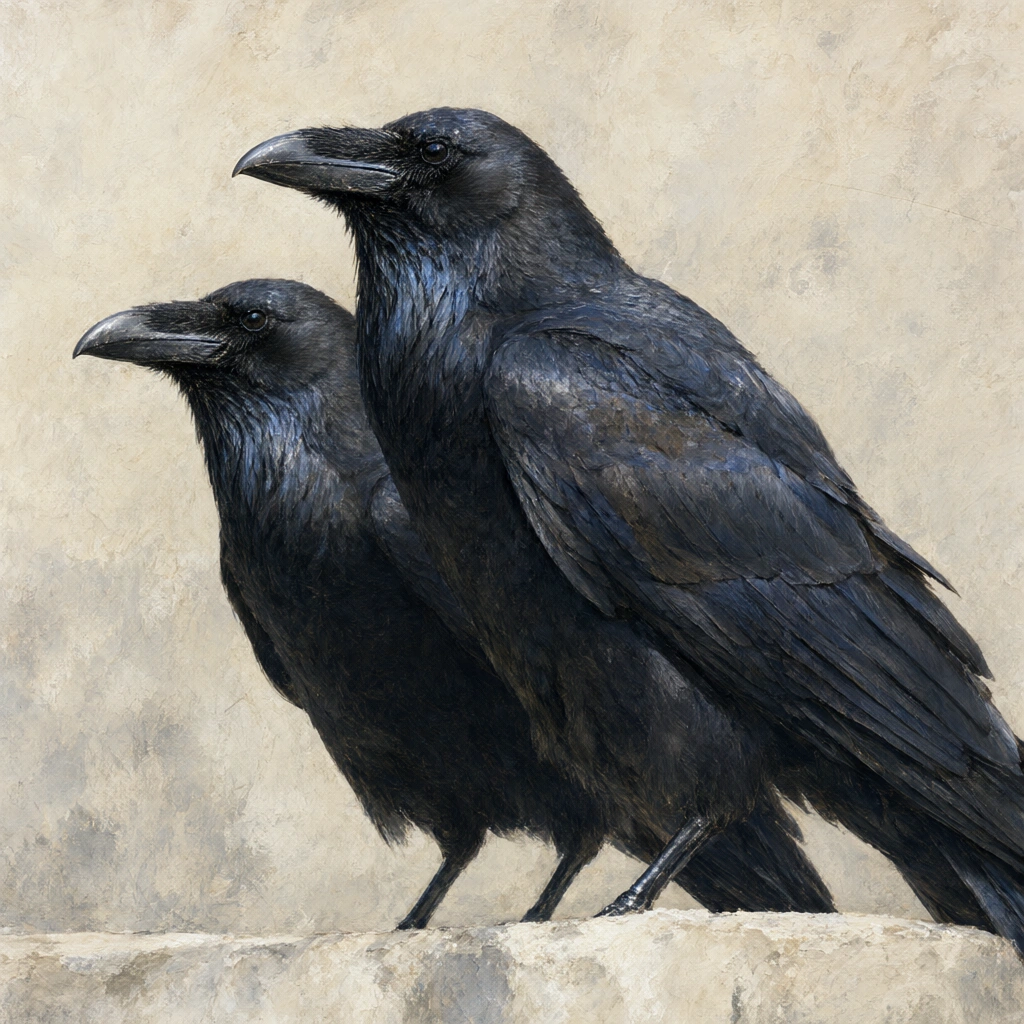 Qwen Image 2.1
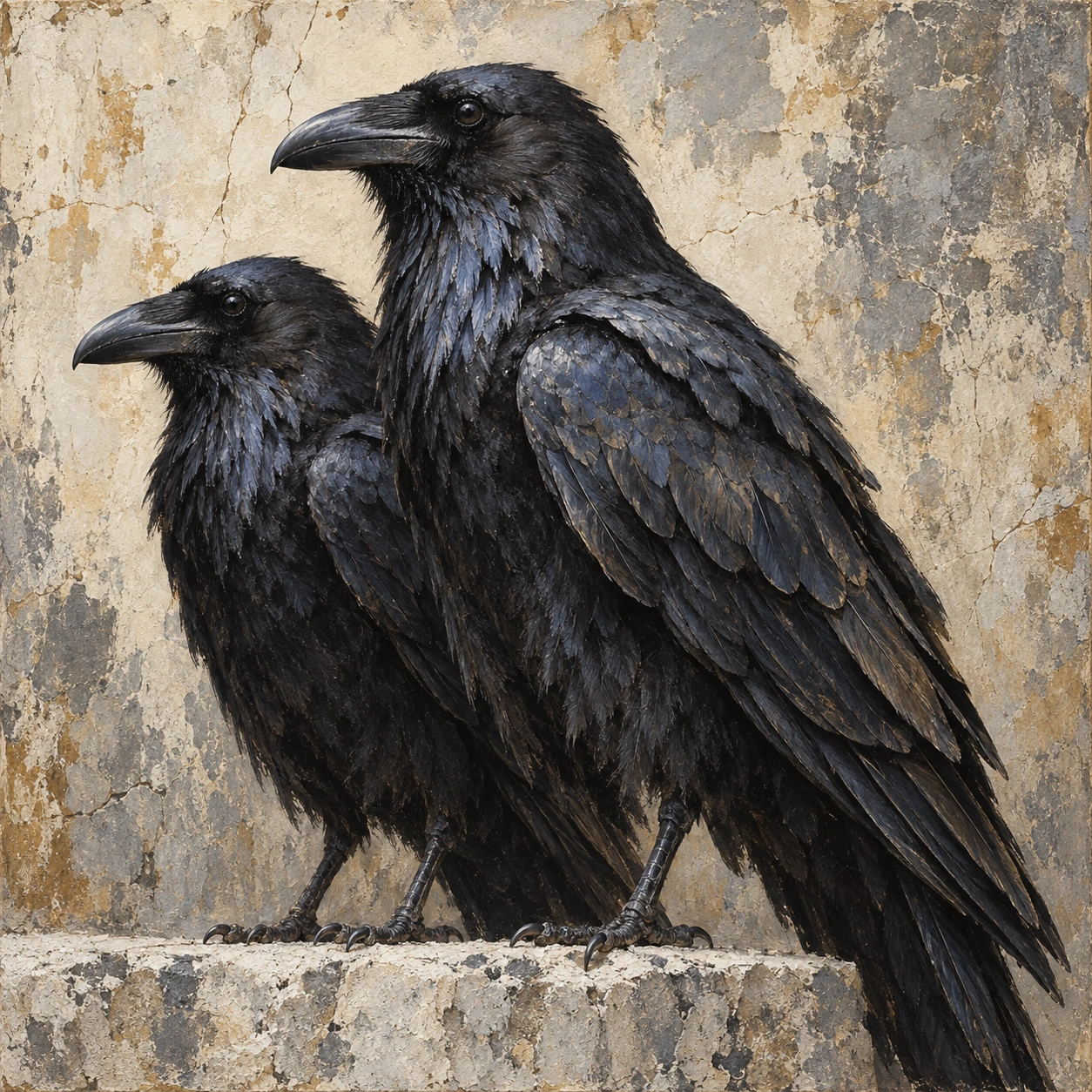 GPT Image 2.5
Reference details
- Reference ID
- 0703
- Category
- Painting
Reference prompts
Style prompt
The painterly style combines close natural observation with a weathered, lightly distressed ground. Deep blue-black masses are lifted by smoky gray and soft brown dry-brush marks, so darkness holds layered internal structure. Fine directional strokes pick out selected surfaces, while other edges fray into a mottled cream background. Large overlapping silhouettes create a compact focal cluster; broad pale space around them keeps that density legible. The light falls from above to one side, leaving thin highlights along upper planes and rich shadow in recesses. The background carries stains, scratches, and granular pigment without defining a full setting. The overall effect is restrained and tactile, balancing careful anatomical detail with loose atmospheric wear.Full example prompt
A square painterly animal portrait depicts two dark ravens standing close together on a pale rough ledge before a weathered cream and gray background. The larger bird occupies the right foreground, its head near the upper center and thick black beak pointing toward the left. The smaller raven stands behind and to the left, its head lower and partly overlapped by the nearer bird. Both face the same direction, their round dark eyes and heavy beaks clearly defined against the light ground. Blue-gray highlights run through the throat feathers and shoulders, while the main bodies remain charcoal black. On the larger bird, layered wing feathers sweep down toward the lower right, each long segment separated by narrow dark lines and a few dusty brown highlights. The smaller bird's wings are more compact and shadowed. Thin dark legs descend to the pale ledge along the bottom, where soft gray marks suggest grit or uneven stone. The background is mottled rather than fully described: warm beige stains, cool gray patches, faint scratches, and translucent marks make it resemble old plaster or aged paper. The birds' forms are carefully observed, yet their edges soften in places where loose dry-brush textures meet the background. Light appears to come from above and slightly left, catching the crown, beaks, and upper wing planes while leaving underparts and overlapping feathers deep in shade. The restrained palette gains richness from blue-black, smoky gray, and a little warm brown without turning into flat monochrome. No readable text appears. The overall composition is compact and still, using the birds' parallel leftward gaze and overlapping silhouettes to create a quiet, watchful presence.