
Styles
#1598
John Piper style reference and prompts
Explore the “John Piper” reference with dry-brush texture, scratch-like marks, and pale neutral tones. View the images, copy the style or example prompt, and discover related styles on Looksift.
Compare the Qwen Image 2.1 and GPT Image 2.5 examples, choose the visual qualities you want, and copy the style prompt for your own project.
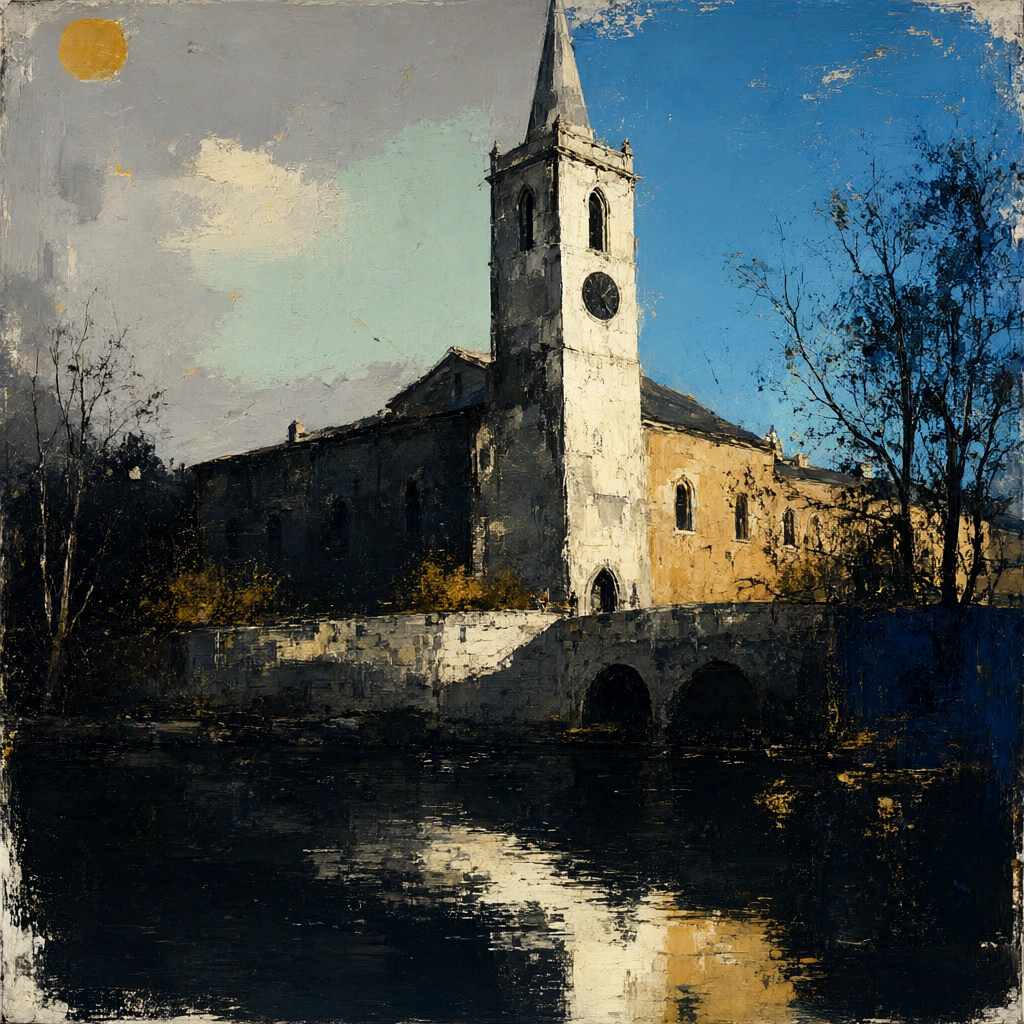 Qwen Image 2.1
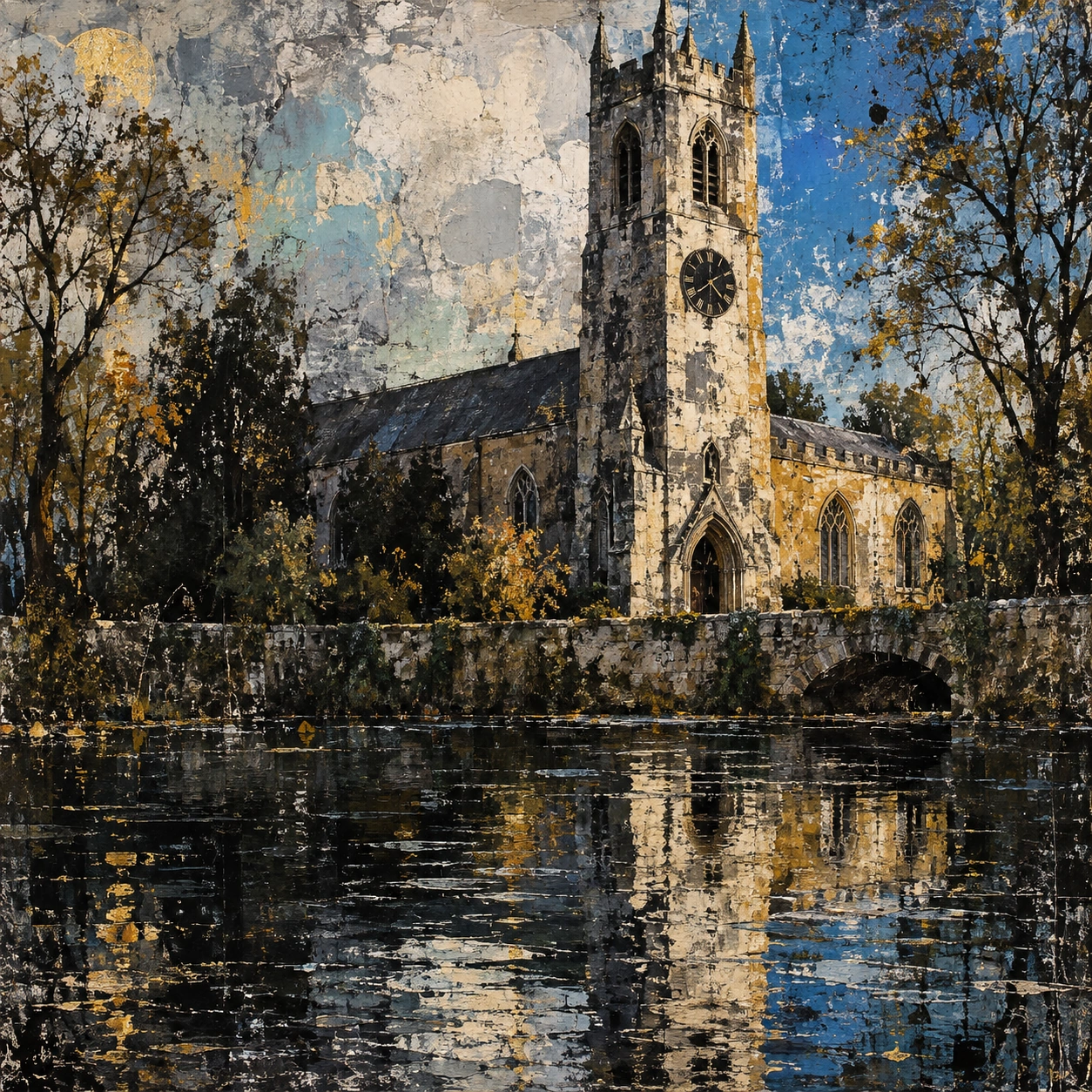 GPT Image 2.5
Reference details
- Reference ID
- 1598
- Category
- Painting
Reference prompts
Style prompt
The mixed-media painting fuses recognizable solid forms with scratched, layered pigment and partly erased marks. Slate gray, black, cobalt blue, cream, and glowing ocher create a moody high-contrast palette. Strong verticals rise through a broad horizontal lower division, while irregular branches and splatters fracture the more stable geometry. Light falls selectively on pale and golden planes; darker masses absorb nearby edges and reappear in broken lower reflections. Some surfaces are smoothly blocked, others show dry-brush scraping, specks, stains, and rough overpainting. Thin linework remains visible inside large color fields, giving the image a worn, accumulated history. The overall effect is atmospheric and forceful, with clear underlying structure held beneath energetic abrasion and color contrast.Full example prompt
A square mixed-media landscape painting shows an old stone church with a tall clock tower above dark water, surrounded by trees and weathered walls. The tower rises near the center-right, extending toward the top edge. Its pale and charcoal stone faces alternate in abrupt vertical passages, and a dark round clock sits midway up below narrow arched openings. Lower roofs step to both sides of it: a shadowed dark building stretches left, while a warmer ocher wall with arched windows extends right. A pointed entrance is visible near the tower's base. Thin trees frame the building on both sides, their black branches and sparse leaves interlacing with a bright blue patch of sky at the upper right. The rest of the sky is layered gray, pale turquoise, and scraped cream, with a partial yellow circular mark at the upper left. Across the lower middle, a stone embankment and low bridge-like wall run horizontally before the water. The dark foreground water holds broken reflections of cream stone, charcoal shadow, and a few gold patches; short horizontal paint streaks make it restless without turning it into waves. Small warm yellow-orange spots appear in the wall and trees, while deep blue at the right and near-black at the left create a strong color split. The scene contains no clear human figures or readable signs. Light seems to arrive from the left and upper sky, catching the tower and warm right facade while the left building and water stay in heavy shade. The painted surface is deliberately distressed, with scratches, splatters, rough overpainting, and partly erased edges layered over recognizably architectural forms. The viewpoint is across the water at roughly eye level, keeping the tower vertical amid energetic surface marks. The overall composition is moody and structured, using a firm central spire to organize a broken field of cool blue, warm gold, and dark reflection.