
Styles
#0077
Ebru Sidar style reference and prompts
Explore the “Ebru Sidar” reference with gradual tonal modeling, negative space, and a monochrome palette. View the images, copy the style or example prompt, and discover related styles on Looksift.
Compare the Qwen Image 2.1 and GPT Image 2.5 examples, choose the visual qualities you want, and copy the style prompt for your own project.
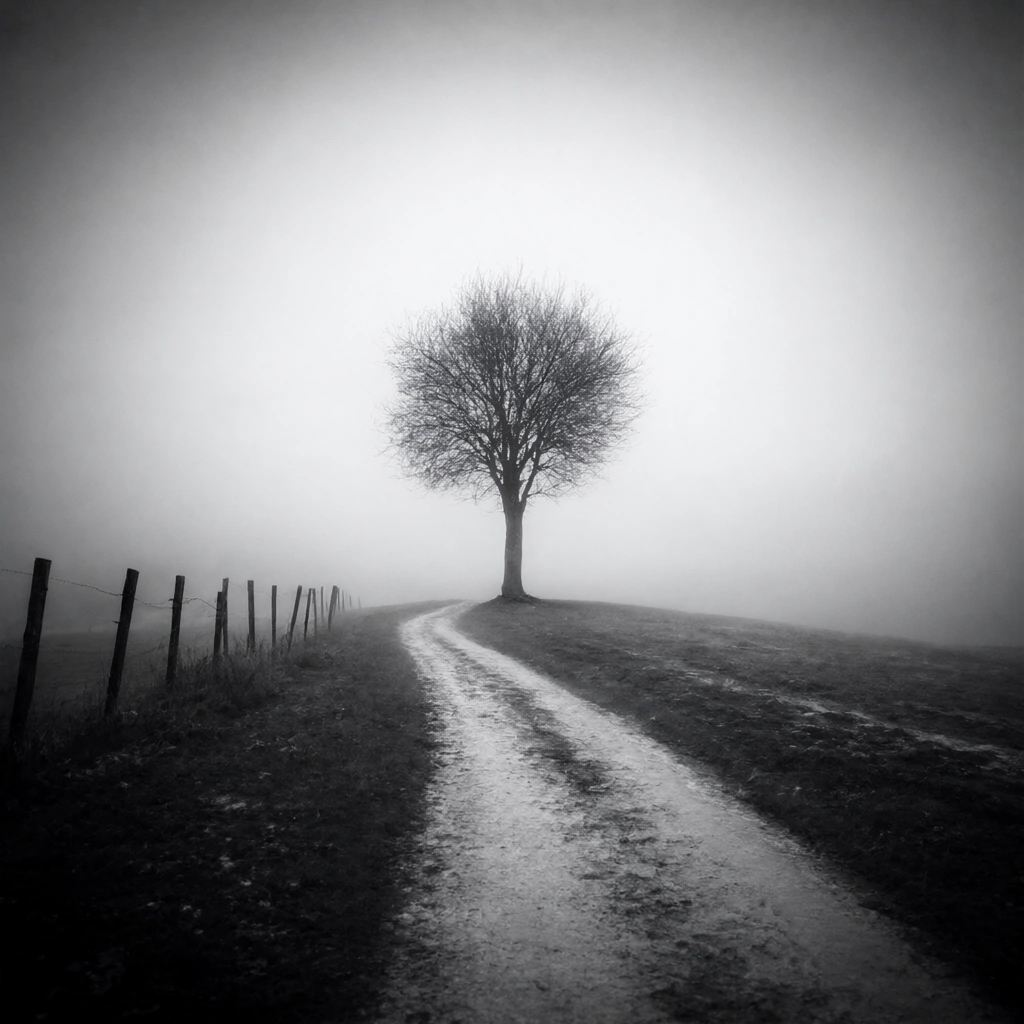 Qwen Image 2.1
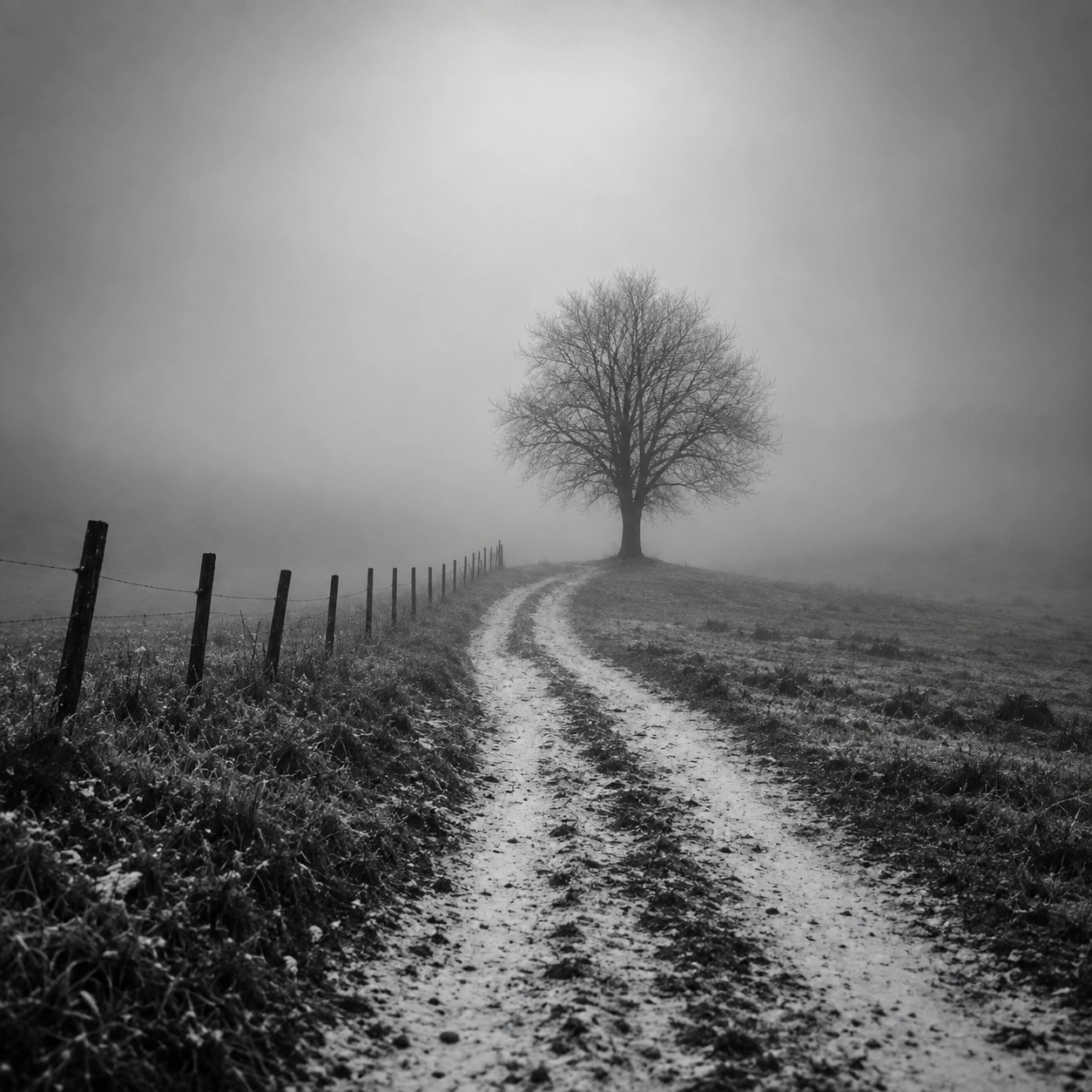 GPT Image 2.5
Reference details
- Reference ID
- 0077
- Category
- Photography
Reference prompts
Style prompt
Monochrome fine-art photography is organised through a broad luminous middle value surrounded by gently darkened edges. A limited number of dark organic forms remain readable while distant detail dissolves gradually into mist-like tonal transitions. Fine irregular contours carry local texture, whereas most surrounding areas stay soft and nearly empty. Receding lines establish depth without a sharply drawn horizon, and modest grain prevents the smooth greys from feeling synthetic. Diffuse backlighting produces pale halos and subdued foreground shadows rather than crisp highlights. The overall visual language is restrained and contemplative, balancing small areas of concentrated darkness with extensive, quietly modulated negative space.Full example prompt
The image is a monochrome fine-art landscape photograph of a solitary leafless tree beside a pale track, surrounded by dense mist. Across the background, a luminous grey fog absorbs the distant land until the horizon is barely distinguishable from the sky. The upper centre is the lightest region, while the upper corners gradually deepen toward charcoal grey, creating a soft enclosure rather than a sharply defined border. Near the centre of the frame, slightly to the right, the tree rises from a low crest at the end of the visible path. Its narrow trunk divides into a dense rounded crown of fine bare twigs, with the outermost branches becoming faint against the mist. The crown is compact and irregular, appearing darker at its core and more transparent around its upper and side edges. Just below it, the trunk meets a dark strip of ground, and the surrounding slope remains soft enough that individual plants are difficult to distinguish. On the left side, a line of simple fence posts starts large in the foreground and shrinks toward the tree. The posts lean at slightly different angles, and thin connecting wires are only intermittently visible against the changing tones behind them. Between the fence and the right-hand field, a light-toned track curves gently away from the lower centre, narrowing as it approaches the crest. Its surface appears pale and damp or lightly snow-covered, with darker irregular marks suggesting worn ruts rather than a clean, uniform stripe. Across the lower-left corner, the ground is very dark, with small lighter flecks and indistinct rough grass along the fence line. On the right side of the track, low uneven terrain stretches toward the edge, its shallow ridges and mottled patches gradually disappearing into haze. Along the bottom edge, the nearest path texture remains visible but soft, drawing the eye inward without becoming a separate focal point. There are no buildings or clearly visible people in this selected scene; the repeating posts provide the only secondary vertical rhythm beside the tree. The lighting is diffuse daylight filtered through heavy fog, brightest behind and above the tree, with broad tonal transitions and no sharply cast shadows. A gentle grain and softened peripheral detail make the photograph feel atmospheric while preserving the tree's unmistakable silhouette. The overall composition balances the small dark tree against extensive pale negative space, using the curving track and receding fence to create a restrained, lonely, and contemplative depth.