
Styles
#3245
Holga photography style reference and prompts
Explore the “Holga photography” reference with tactile surfaces, negative space, and a monochrome palette. View the images, copy the style or example prompt, and discover related styles on Looksift.
Compare the Qwen Image 2.1 and GPT Image 2.5 examples, choose the visual qualities you want, and copy the style prompt for your own project.
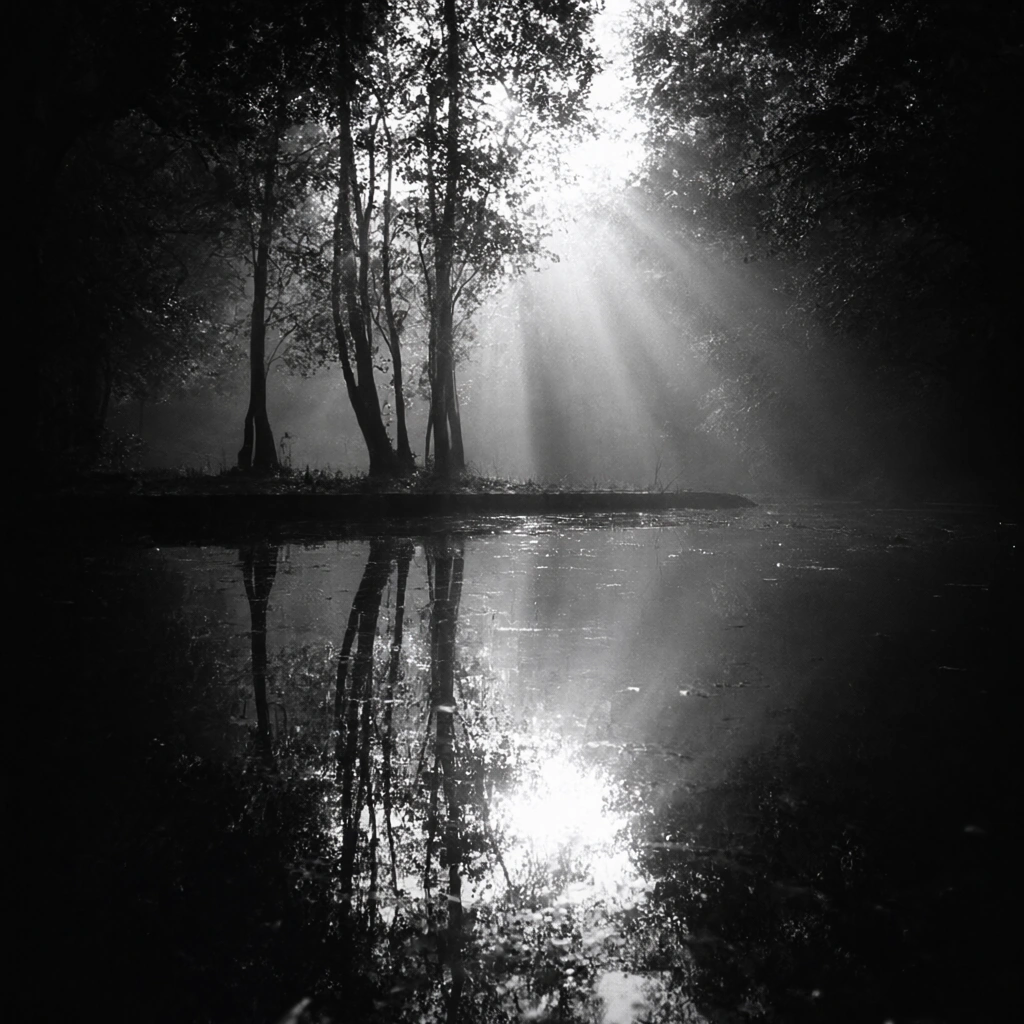 Qwen Image 2.1
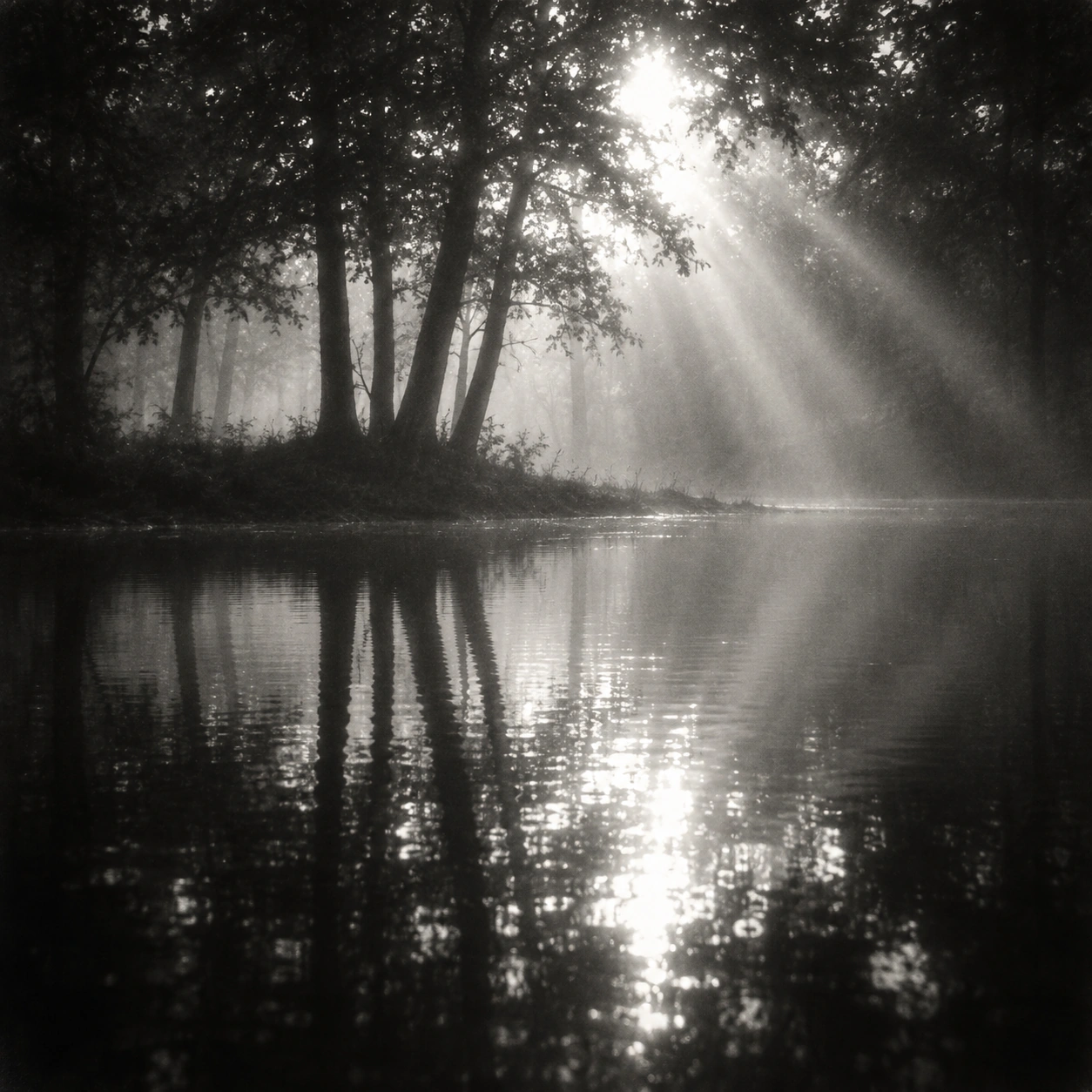 GPT Image 2.5
Reference details
- Reference ID
- 3245
- Category
- Photography
Reference prompts
Style prompt
The soft-focus monochrome photography uses dark vignetting, blooming highlights, and visible grain to turn ordinary forms into luminous silhouettes. Black gathers around the frame, while a concentrated pale opening sends soft diagonal rays through haze. Broad shapes remain readable despite blurred edges; fine detail gives way to tonal atmosphere near the brightest area. A horizontal dividing band allows bright and dark patterns above to repeat below in imperfect reflection. Small silver flecks break the heavy lower blacks without flattening their depth. Strong backlight hides surface color and much internal detail, making light direction and negative space the main structure. The overall effect is dreamlike, hushed, and tactile, with simple optics and imperfect focus producing a distinctive glow.Full example prompt
A square black-and-white, soft-focus photograph shows bright sunbeams breaking through a group of trees beside still water, with their dark reflections filling the foreground. The upper half is a dense canopy of leaves and trunks, almost black at the outer corners. Near the top center-right, a bright gap burns through the foliage; diagonal shafts of light descend toward the lower right through visible mist. A cluster of upright trunks stands slightly left of center along a low shoreline, its roots and the bank reduced to one dark horizontal strip. Behind it, pale haze obscures the farther trees so their vertical shapes dissolve before reaching the water. The water begins around the middle of the frame and lies nearly level, reflecting the trunks, leaves, and bright sky in broken shapes. Below the central trees, long dark reflections extend downward, interrupted by small silver patches where the light catches slight ripples. The reflected bright opening forms a luminous area toward the lower center, but the lower corners remain very dark. The image has few discrete objects beyond trunks, foliage, shore, and water, so the pattern of light itself becomes the subject. Strong backlight creates nearly featureless silhouettes around the opening and soft rays through the moist air. The light scatters and loses definition as it crosses the water, where bright and dark patches interlace. Black edges and a naturally blurred softness give the scene the imperfect look of a simple analog-camera print. Fine grain is visible across the midtones, and some highlights bloom beyond sharp detail. No people or readable text appear. The overall composition is quiet and symmetrical in broad masses, with the bright central opening doubled by reflection and surrounded by deep woodland shadow.