
Styles
#0117
Irving Amen style reference and prompts
Explore the “Irving Amen” reference with tactile surfaces, angular planes, and asymmetric composition. View the images, copy the style or example prompt, and discover related styles on Looksift.
Compare the Qwen Image 2.1 and GPT Image 2.5 examples, choose the visual qualities you want, and copy the style prompt for your own project.
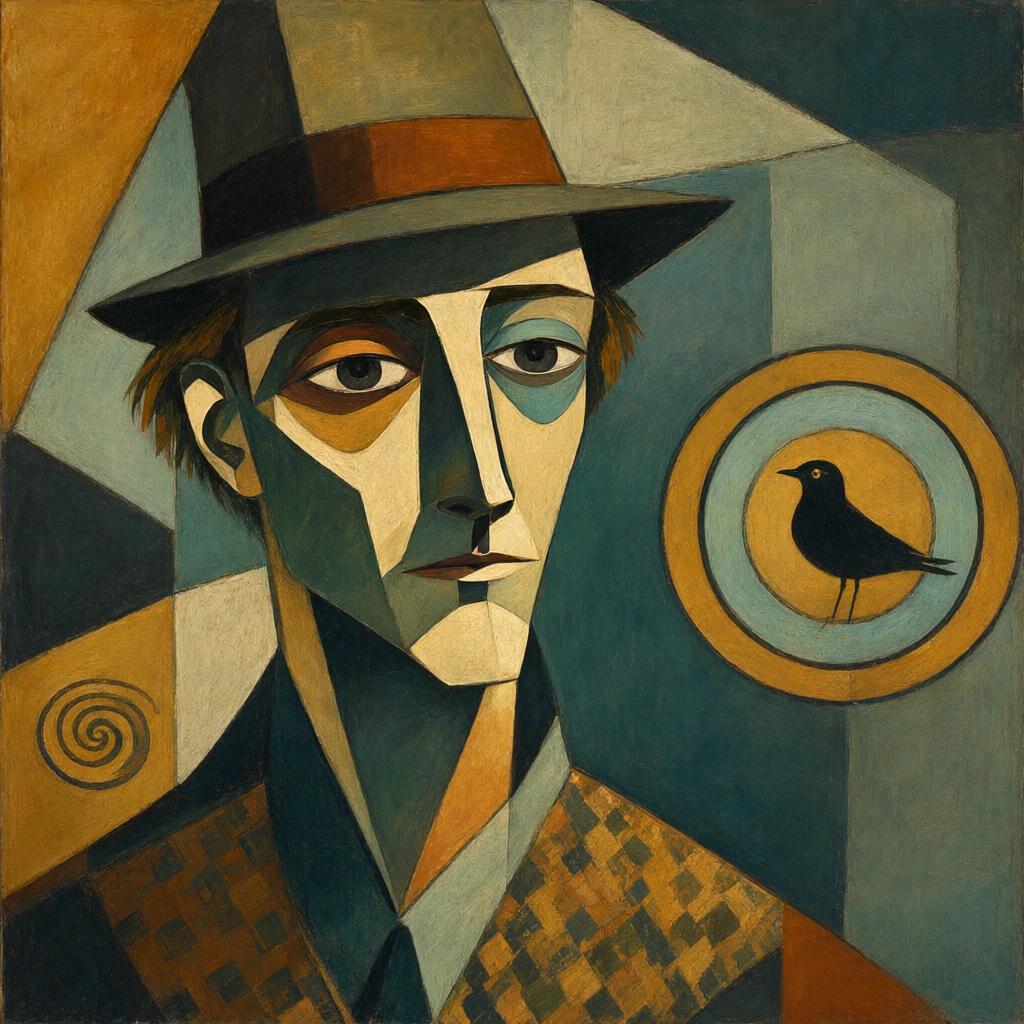 Qwen Image 2.1
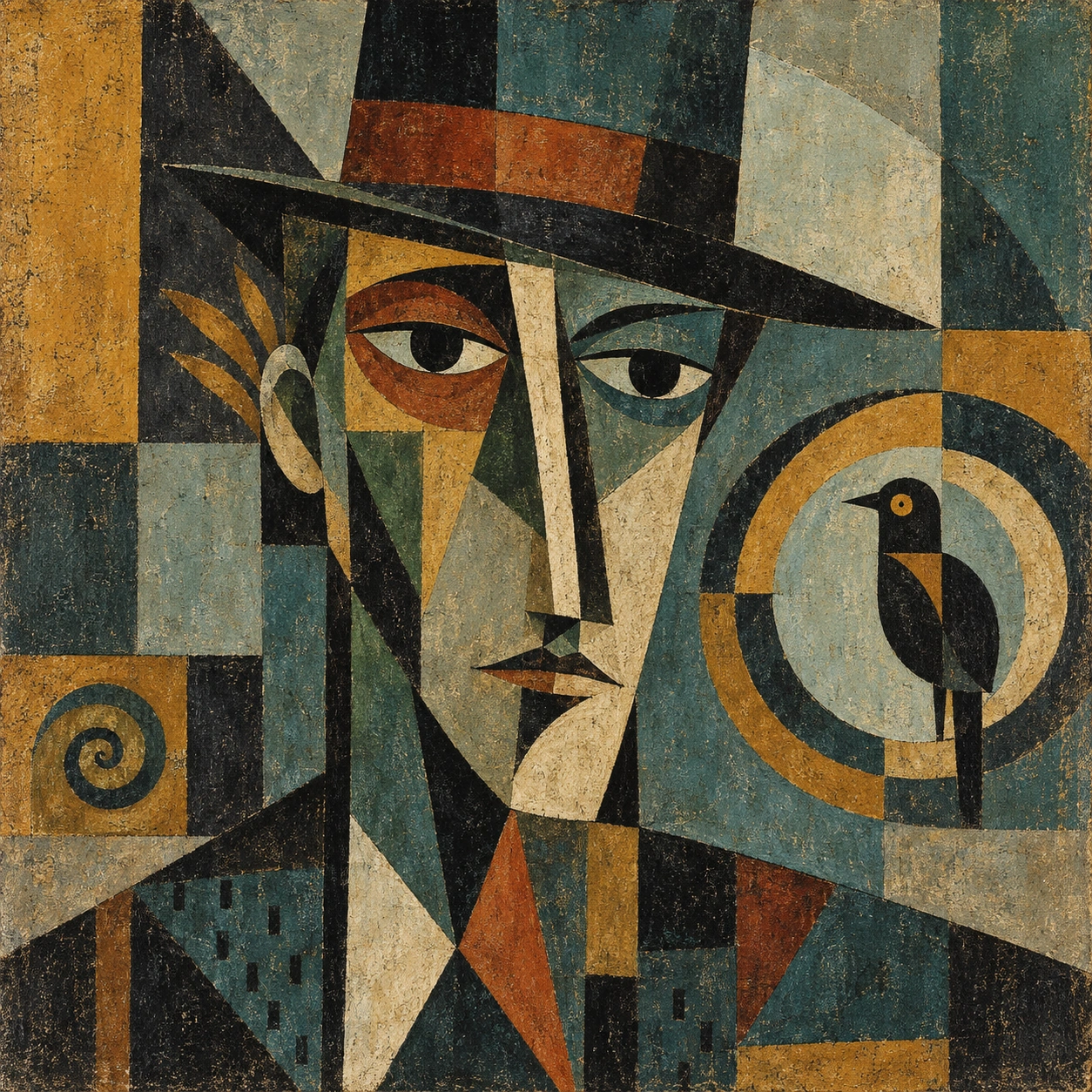 GPT Image 2.5
Reference details
- Reference ID
- 0117
- Category
- Painting
Reference prompts
Style prompt
The painted surface is organized through interlocking angular planes and rounded motifs, with recognizable forms stretched into calm, elongated proportions. Muted teal and ochre dominate, supported by rust red, creamy highlights and near-black structural divisions. Dry pigment, uneven coverage and granular substrate remain visible across both foreground and background, preventing the geometry from appearing digitally immaculate. Value contrast supplies the sense of light, while overlapping colour planes establish shallow depth. Broad divisions control the composition and small spirals or hatch-like details provide secondary rhythm. The overall language is asymmetrical, tactile and contemplative, balancing decorative abstraction with legible form.Full example prompt
The image is a square geometric painting of a long-faced man in a tall hat, built from muted teal, ochre and charcoal planes. The background fills the frame with overlapping rectangular fields, diagonal wedges and curved fragments, all carrying a coarse, dry painted texture. Across the upper-left corner, an ochre vertical field borders a dark diagonal band, while pale grey-green shapes extend behind the crown of the hat. Near the upper centre, the hat rises beyond the man's narrow forehead with a warm rust-coloured band above its dark brim. Its brim cuts across the face on a slant, establishing an angular rhythm that continues through the brow and nose. On the left side of the face, one large almond-shaped eye sits within a deep reddish-brown socket, surrounded by golden ochre and green. The other eye, nearer the centre-right, has a cool turquoise surround and a dark pupil, creating an alert but motionless gaze. Between them, the long nose is assembled from a narrow pale strip and adjoining black-green planes, with the different colours acting as both anatomy and abstraction. Beneath the nose, a small closed mouth rests above a pointed cream chin, and subtle curved lines soften the otherwise sharply divided features. At the far left, a narrow ear and feather-like ochre marks project into the background. Below the jaw, the neck and collar form elongated triangles in dark teal, faded cream and rusty orange, meeting the patterned upper torso at the lower edge. The clothing is represented by interlocking blocks rather than realistic fabric folds, with small darker marks suggesting a decorative weave. On the right side, a large circular emblem floats beside the cheek, its rings alternating ochre, pale blue-green and dark outlines. A compact black bird-like silhouette occupies the emblem's centre, with a small golden marking near its head and a slender dark extension below. Across the lower-left background, a small spiral inside a golden block echoes the larger circle without balancing it symmetrically. The paint surface remains visible everywhere, with scratchy edges, uneven coverage and fine granular speckling binding the face to the surrounding geometry. Illumination is expressed through contrasting painted values rather than a literal spotlight: creamy planes advance while charcoal and deep teal recess. The overall composition feels poised and slightly solemn, its asymmetrical arrangement, worn ochre-teal palette and simplified human features held together by the repeated dialogue between angular divisions and rounded eyes.