
Styles
#0154
Flashy colors style reference and prompts
Explore the “Flashy colors” reference with rough surface texture, saturated colors, and tactile surfaces. View the images, copy the style or example prompt, and discover related styles on Looksift.
Compare the Qwen Image 2.1 and GPT Image 2.5 examples, choose the visual qualities you want, and copy the style prompt for your own project.
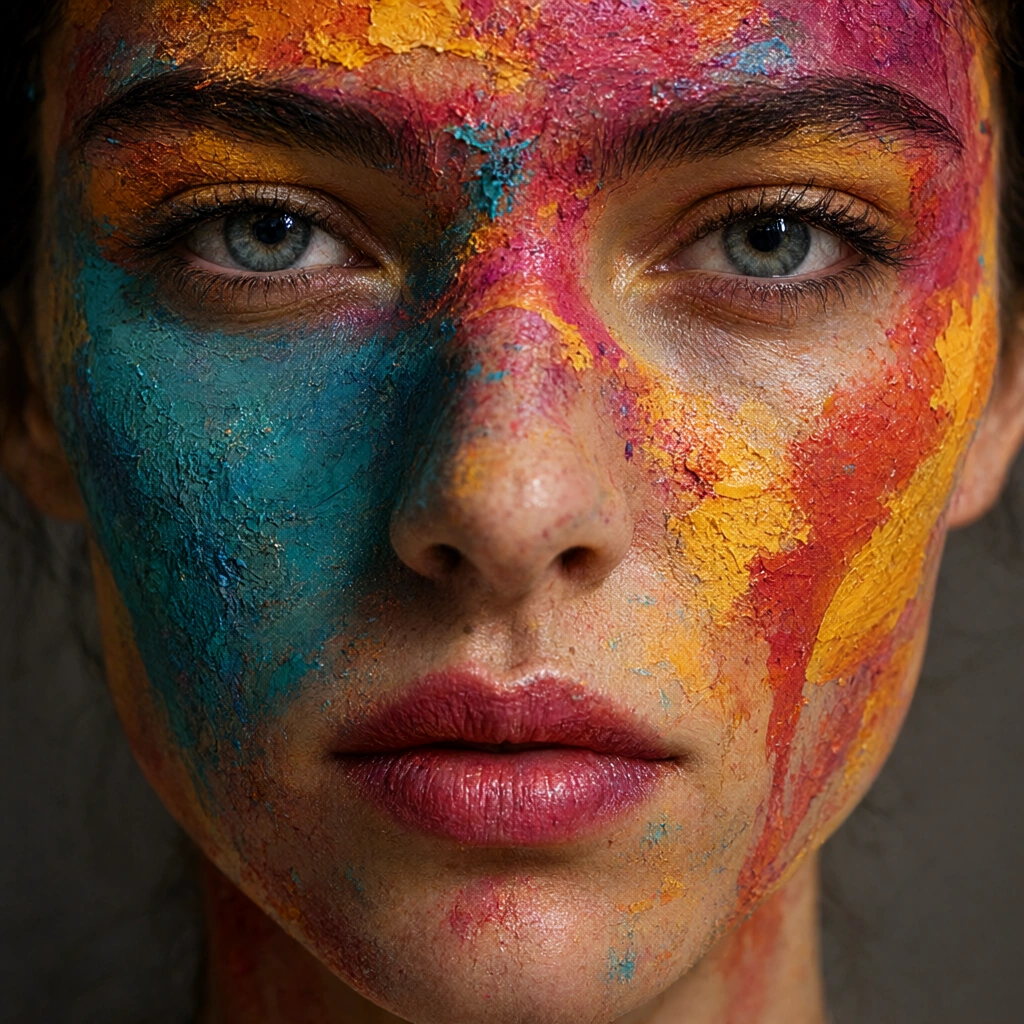 Qwen Image 2.1
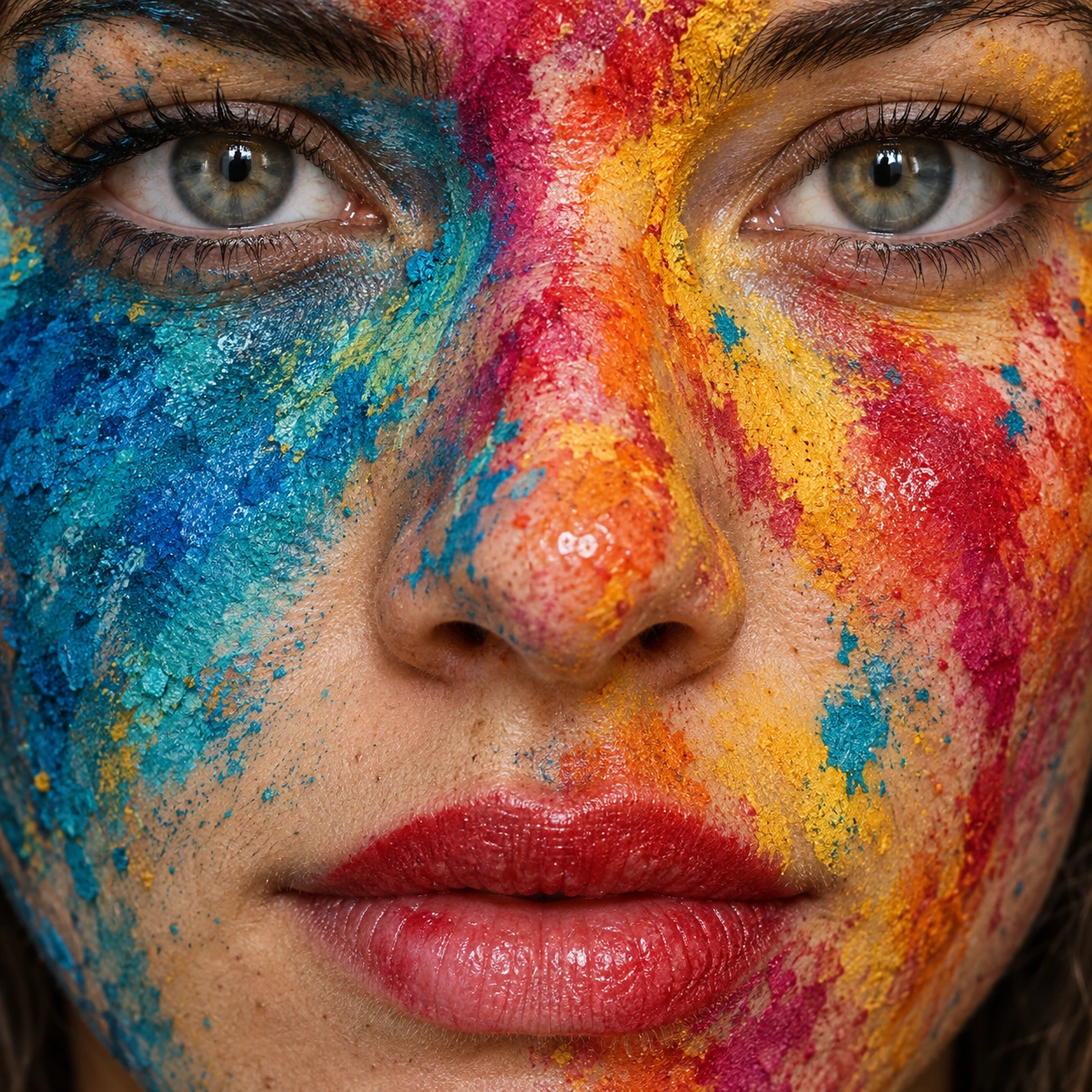 GPT Image 2.5
Reference details
- Reference ID
- 0154
- Category
- Photography
Reference prompts
Style prompt
Tactile pigment and finely resolved tonal modeling combine in a vivid, closely framed treatment. The visual treatment favors vivid color blocks, granular texture and strong local contrast. Warm reds and yellows meet cool blues, teals and violets in irregular patches rather than smooth natural gradients. Dark areas hold the composition together, while pale highlights punctuate the saturated fields. Edges can break into small flecks or layered marks, creating a layered, materially varied surface. Close framing intensifies the color relationships, and the focal area remains sharper than the surrounding edge. The effect is bold and expressive, driven by chromatic collisions, uneven texture and tight visual concentration.Full example prompt
An extreme photographic close-up fills the square frame with a face covered in vivid, irregular pigment. Both gray-green eyes are fully visible near the upper edge, looking outward beneath dark lashes and partially cropped brows. The bridge and rounded tip of the nose occupy the centre, while textured red lips sit near the bottom. Natural skin remains visible around the mouth and across small gaps in the paint. A dense blue-teal area spreads across the left cheek and the space below the left eye. Magenta, red, orange, and golden-yellow strokes cross the forehead, bridge of the nose, and opposite cheek in broken bands. Smaller turquoise flecks and uneven pigment deposits interrupt the warm colors. Some patches appear dry and granular, while others catch tiny moist highlights. The lips carry a deeper red upper contour and a softer pink sheen below. Soft frontal light models the nose, eyelids, and cheeks, revealing pores and pigment grains without erasing the underlying facial structure. Darker areas around the eyes and beside the nose provide local contrast. The crop excludes most of the hair and surrounding environment; only narrow peripheral slivers remain beyond the face. Rather than following natural shadow boundaries, the applied colors form a separate, tactile layer over the skin. The close framing makes differences between smooth skin, coarse pigment, and reflective highlights especially prominent. Warm yellow-orange and magenta collide with cool teal and blue, producing an intense, direct portrait anchored by the clear eyes and recognizable features.