
Styles
#1951
Lascaux style reference and prompts
Explore the “Lascaux” reference with rough surface texture, pale neutral tones, and tactile surfaces. View the images, copy the style or example prompt, and discover related styles on Looksift.
Compare the Qwen Image 2.1 and GPT Image 2.5 examples, choose the visual qualities you want, and copy the style prompt for your own project.
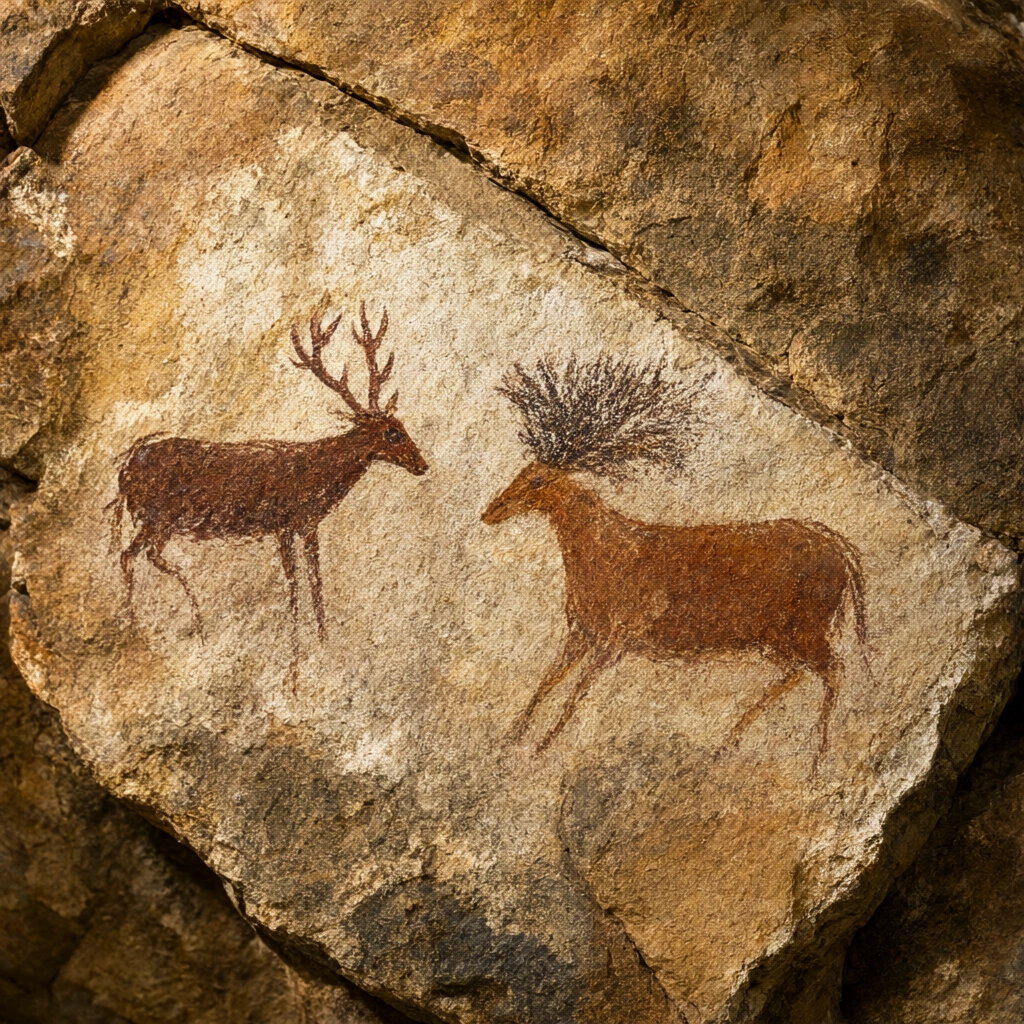 Qwen Image 2.1
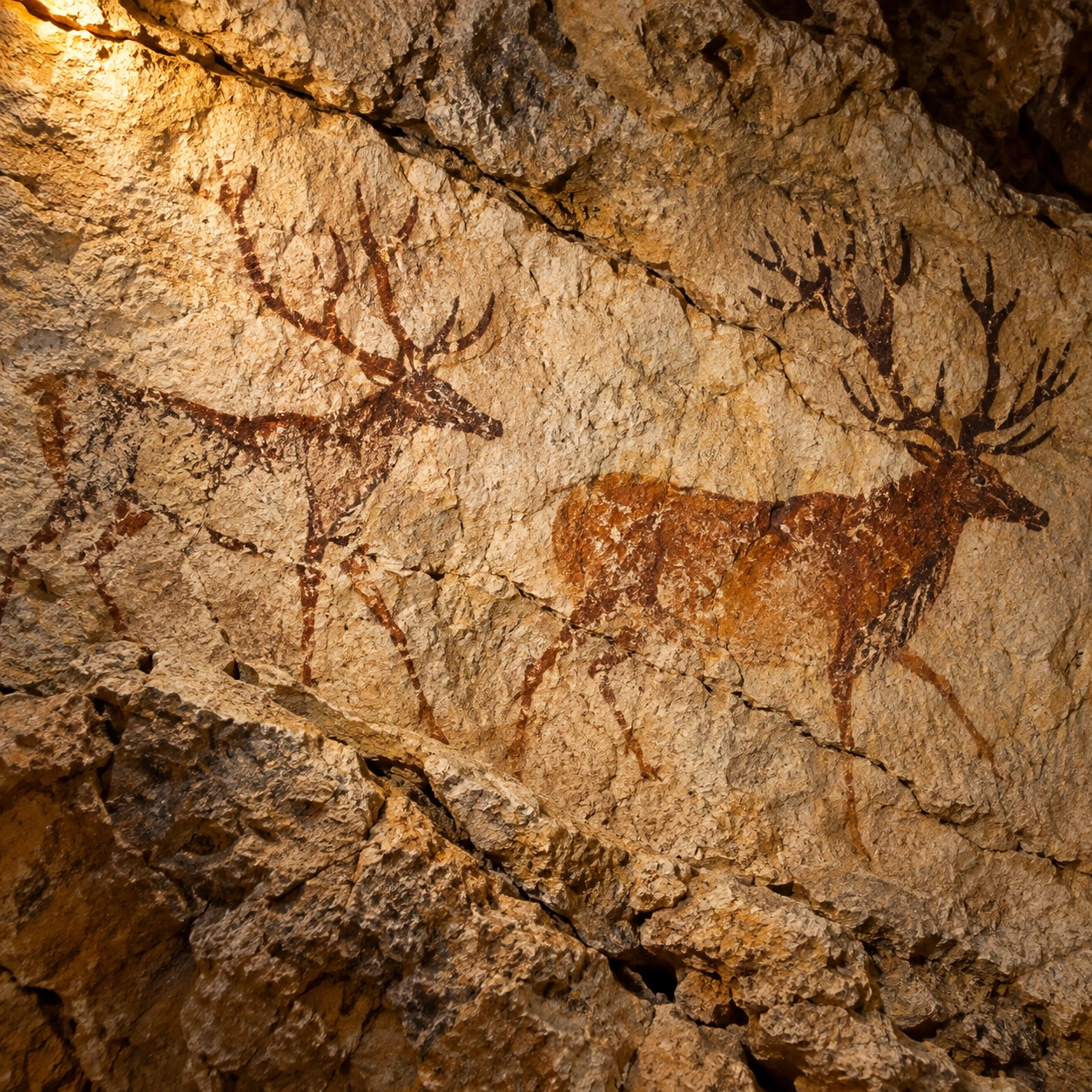 GPT Image 2.5
Reference details
- Reference ID
- 1951
- Category
- Photography
Reference prompts
Style prompt
Documentary photography of hand-marked stone preserves the uneven mineral support as strongly as the pigment on it. Warm grazing light catches raised ocher and cream surfaces while cracks and recesses stay deep brown-black. Thin, irregular rust and charcoal lines may form simple profiles, with broken contours that follow the rock's fissures. Frame closely enough to reveal granular texture and fading marks, but retain the surrounding bare surface. The palette is earthbound and limited; the effect is tactile, spare, and quietly ancient.Full example prompt
A square photograph looks close at a rough ocher cave wall carrying two ancient-looking painted animal figures. The stone slopes diagonally from upper left to lower right, with deep fissures, raised ridges, and a lighter central area used as the picture surface. On the left, a dark reddish-brown antlered animal faces right in profile. Its back and legs are indicated with thin, uneven pigment lines, and the antlers rise into several branching prongs. A second animal sits farther right, also in profile, rendered with a fuller warm rust body and a dense spray of dark branching antlers. Their limbs appear long and lightly sketched, suggesting motion without detailed anatomy. The two figures overlap the stone's natural cracks, and some lines are faded or broken where the rock surface changes. Around them, bare cave wall remains visible in tan, ocher, charcoal, and chalky cream patches. Warm artificial light grazes the uneven stone from above and left, brightening the raised face of the rock and leaving crevices dark. The camera is close enough to show granular mineral texture but wide enough to hold both animal figures and the rocky frame. There is no modern object or printed text in view. The composition is guided by the diagonal slab and the two antler shapes, which echo one another across the pale center. Pigment, irregular line, and porous stone are inseparable. The image feels tactile and quiet, inviting attention to how simple marks and the cave's existing contours join to suggest living forms.