
Styles
#2897
Ernest Zacharevic style reference and prompts
Explore the “Ernest Zacharevic” reference with masonry textures, negative space, and rough surface texture. View the images, copy the style or example prompt, and discover related styles on Looksift.
Compare the Qwen Image 2.1 and GPT Image 2.5 examples, choose the visual qualities you want, and copy the style prompt for your own project.
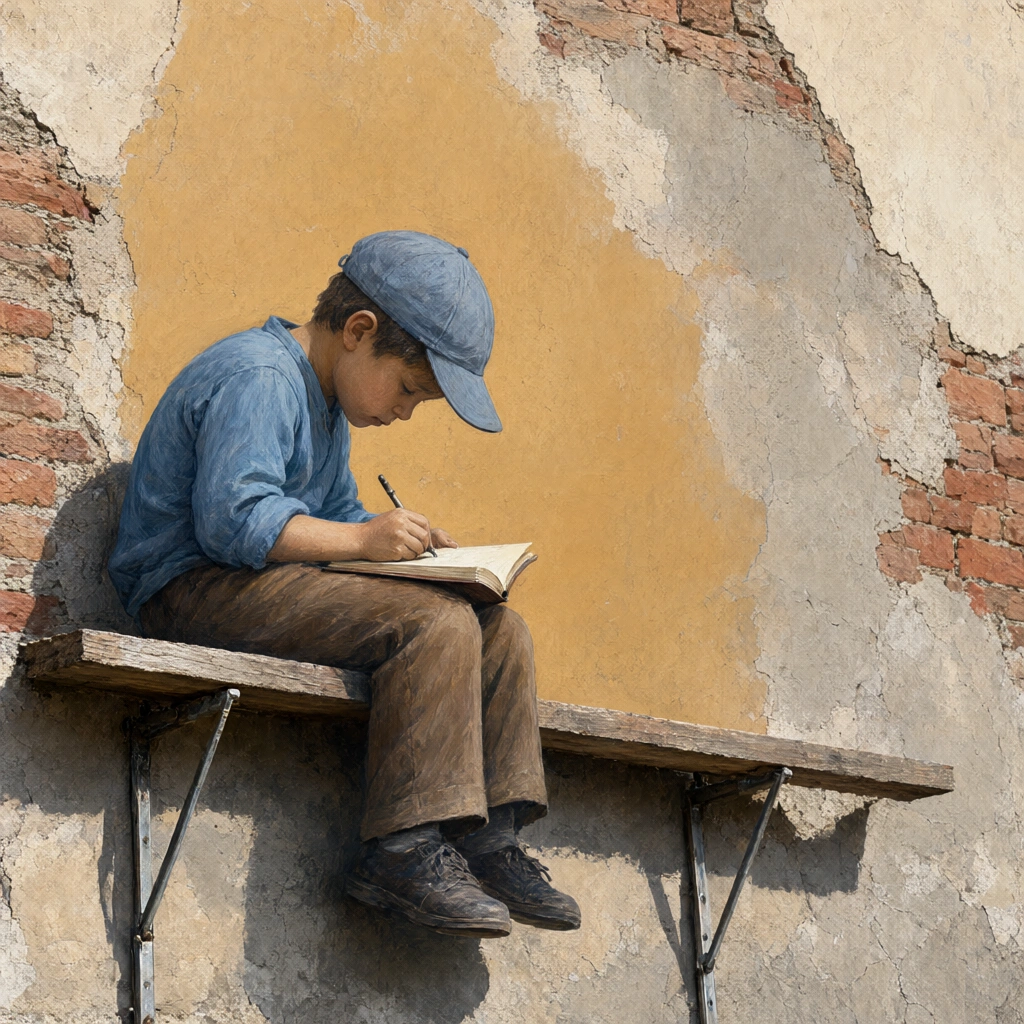 Qwen Image 2.1
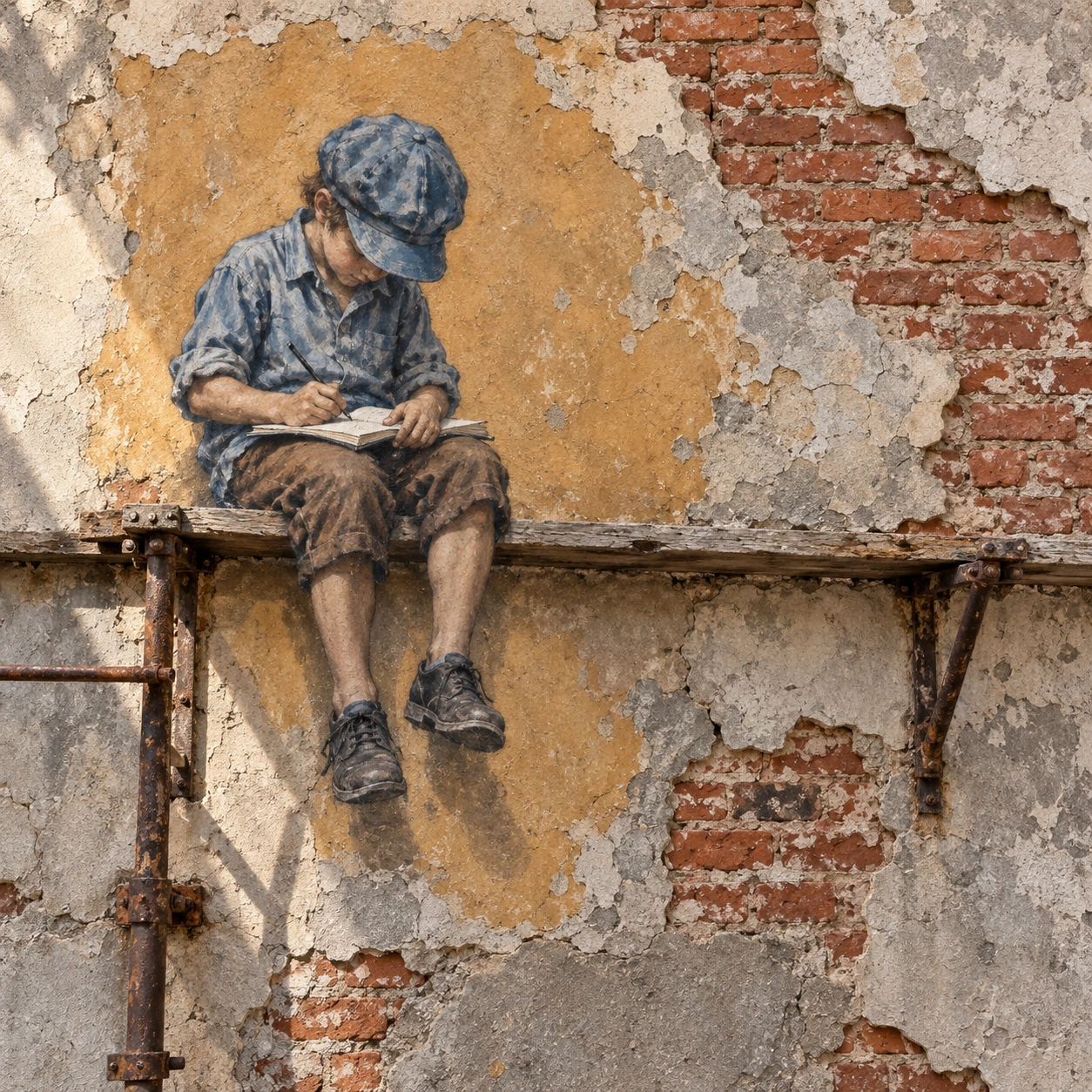 GPT Image 2.5
Reference details
- Reference ID
- 2897
- Category
- Photography
Reference prompts
Style prompt
The image has an illusionistic street-art finish photographed on worn masonry, combining delicately painted form with real cracks, plaster loss, and exposed rough texture. Muted blue and warm ocher stand against dusty gray and brick red. Fine modeled contours make the focal element almost three-dimensional, while the surrounding wall remains uneven and materially honest. Real protrusions and their cast shadows connect painted and physical layers. Diffuse outdoor light catches raised plaster edges and leaves shallow shadow in recesses. The composition lets a compact painted focal area breathe inside broad damaged negative space; irregular patches and horizontal support lines create a quiet rhythm. The overall effect is tender, tactile, and gently surprising.Full example prompt
A square photograph of street art shows a painted child seated on a narrow wooden ledge attached to a weathered plaster wall, writing in a notebook. The real wall fills the background, its pale beige and gray surface broken by large patches of peeling plaster and exposed red brick. The painted child sits at the left-center, wearing a soft blue cap, a rolled-sleeve blue shirt, brown knee-length trousers, and dark shoes. The body leans forward over the notebook resting on the lap, with one hand holding the page and the other making a small writing mark. The face is turned down and mostly hidden by the cap brim, keeping attention on the absorbed posture rather than expression. Under the figure, rough planks and thin metal scaffolding project from the wall, casting real shadows that join the painted scene to the physical surface. A large warm ocher patch behind the child acts as a quiet color field, while gray cracks and red masonry break around its edges. The lower part of the frame contains more of the wall and support structure, with no street crowd or readable writing. Fine brushwork models the shirt folds, legs, and hands, and the illusionistic shading makes the painted figure appear perched on the actual ledge. Soft outdoor light falls from the upper left, revealing the relief of peeling plaster and the ledge's contact shadow. Muted blue, warm brown, ocher, brick red, and dusty gray form a restrained palette. The overall composition blends a tender painted action with the rough history of its real wall.