
Styles
#0246
Night style reference and prompts
Explore the “Night” reference with low-key lighting and atmospheric haze. View the images, copy the style or example prompt, and discover related styles on Looksift.
Compare the Qwen Image 2.1 and GPT Image 2.5 examples, choose the visual qualities you want, and copy the style prompt for your own project.
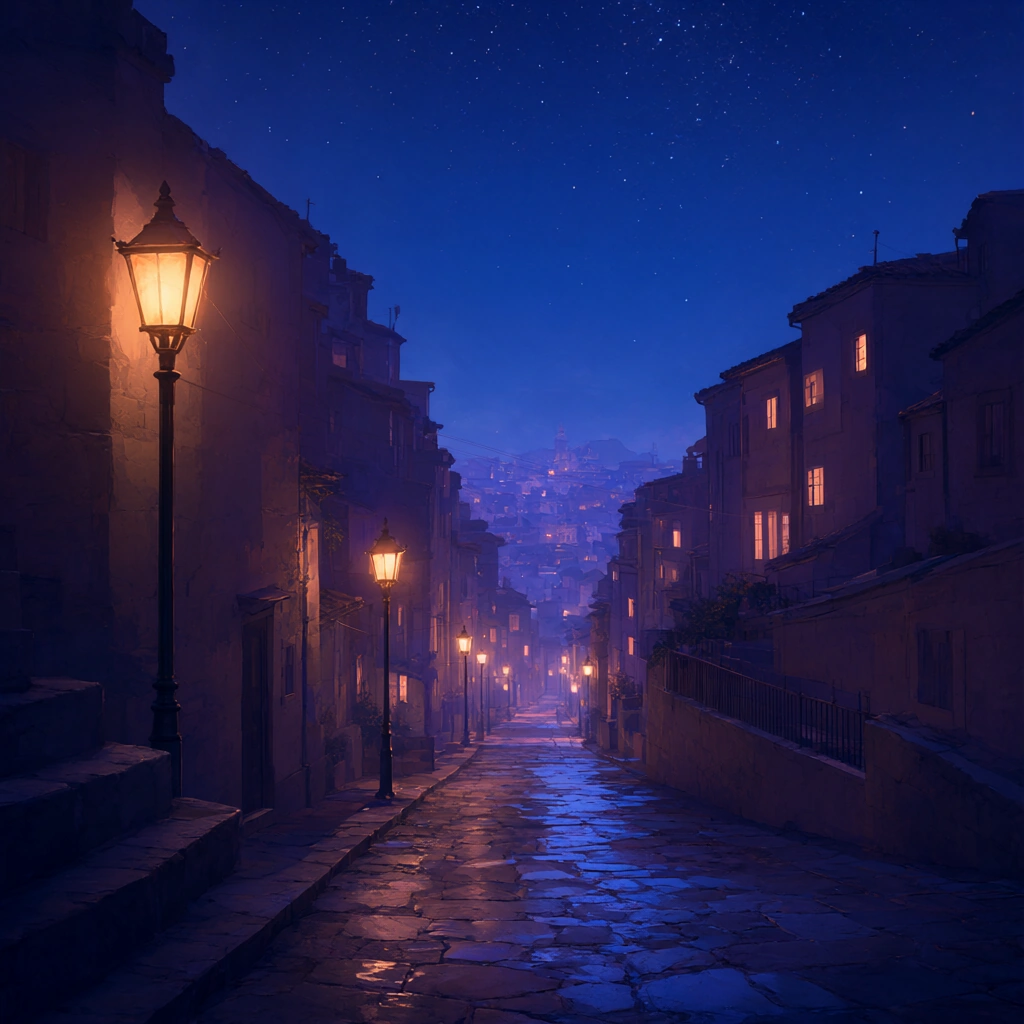 Qwen Image 2.1
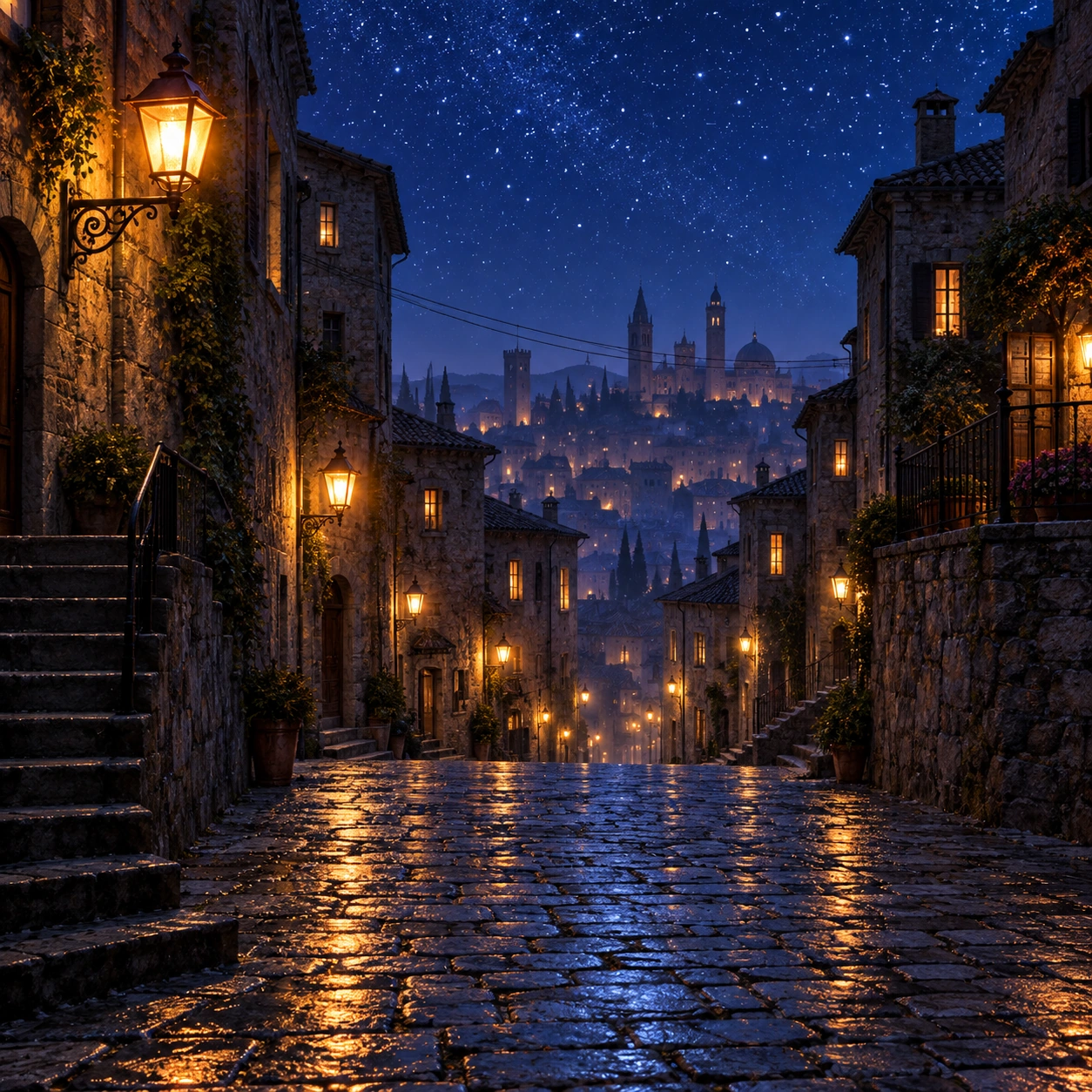 GPT Image 2.5
Reference details
- Reference ID
- 0246
- Category
- Flat illustration
Reference prompts
Style prompt
An atmospheric nocturnal illustration combines a broad cobalt and indigo upper field with near-black violet-brown side masses and a narrow receding central corridor. Many tiny cool-white points create a delicate speckled texture overhead, while warm amber and peach accents repeat at progressively smaller intervals below. The perspective is built by converging vertical and horizontal edges, rhythmic local light sources, and a central depth that softens into purple haze. Surfaces carry a gently painterly grain; lower reflective patches are broken and irregular, mixing cool blue with small orange fragments. Dark edges remain clear in the near frame but lose definition with distance. The lighting is low-key and layered: diffuse cool fill establishes the overall night color, and compact warm glows illuminate only short neighboring areas. The image feels intimate despite the open upper space, using the contrast between dense small points and large shadowed fields to create a quiet, lived-in rhythm.Full example prompt
A square atmospheric night illustration looks down an old stone-paved city street lined by close buildings and warm lanterns. The street begins broad in the foreground and tapers gently toward a hazy cluster of distant roofs and towers near the center. Dark steps and a wall occupy the left foreground, while a raised terrace with a railing and lit windows fills the right middle ground. Buildings rise on both sides as deep violet-brown masses, their individual façades only partly visible in the dim blue ambient light. Small rectangular windows glow amber and peach, and an uneven procession of traditional street lamps runs down the route. The nearest lamp on the left is bright and large, its orange halo softly touching the neighboring wall; smaller lamps repeat into the distance, tightening the perspective rhythm. Fine wires cross between the upper façades. Above the street, a rich cobalt-blue night sky is scattered with numerous small, crisp white points that resemble stars or light snow, with denser specks near the top. The stone surface is slightly wet and irregular, so pools of blue, violet, and warm amber glimmer between darker joints rather than forming a clean mirror. The far city dissolves into purple haze, making the foreground lanterns and stones feel more tactile and immediate. No people are visible, leaving the built setting still but comfortably inhabited through its lights. Illumination is entirely nocturnal: cool diffuse blue fills the open air, while local warm sources create short halos, window rectangles, and broken reflections. The composition draws the eye along the lamp sequence into the softened distance, holding a gentle balance between the starry cool expanse and the many small warm points below.