
Styles
#0277
John George Brown style reference and prompts
Explore the “John George Brown” reference with negative space, pale neutral tones, and side lighting. View the images, copy the style or example prompt, and discover related styles on Looksift.
Compare the Qwen Image 2.1 and GPT Image 2.5 examples, choose the visual qualities you want, and copy the style prompt for your own project.
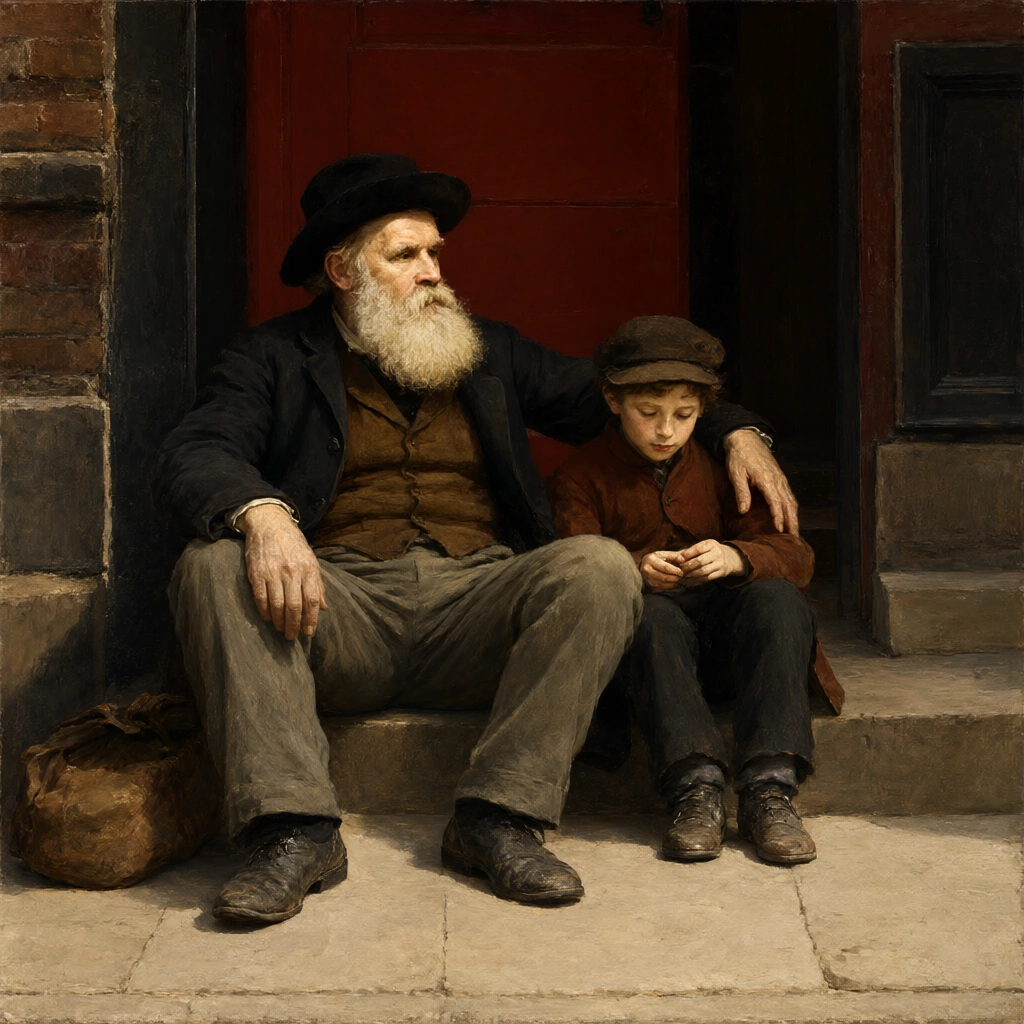 Qwen Image 2.1
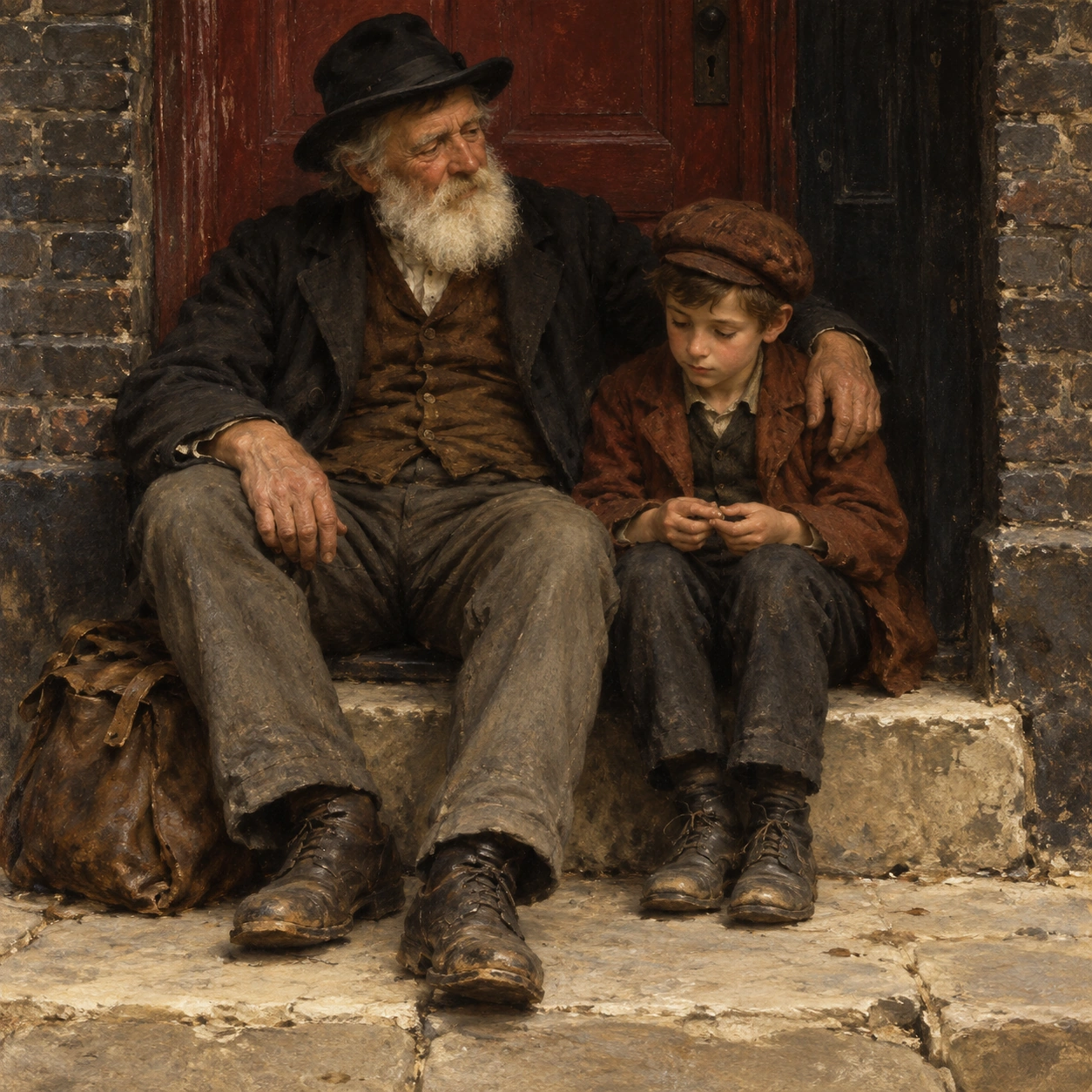 GPT Image 2.5
Reference details
- Reference ID
- 0277
- Category
- Painting
Reference prompts
Style prompt
A restrained realist oil-painting treatment arranges a compact warm-dark mass against a deep burgundy and umber backdrop, grounding it on a wide pale lower plane. Muted browns, olive grays, black, old red, and small cream highlights create a low-saturation, earthy harmony. Forms are modeled with gentle tonal gradation rather than graphic outlines; the focal areas receive careful small strokes, while surrounding fabriclike and masonrylike textures are broader and softer. A close grouping of unequal shapes carries the center, with a narrow dark recess on one side and a few worn objects near the bottom providing balance. Warm front-side light lifts selected pale surfaces and catches raised textures, but deeper areas remain richly colored instead of flattening to void black. The surface has the quiet irregularity of traditional oil paint: softened transitions, subtle scuffs, and selective detail. The composition stays intimate and observational, relying on ordinary physical closeness, measured negative space, and a limited value contrast to create humane stillness.Full example prompt
A square nineteenth-century realist oil painting shows an elderly bearded man and a young boy seated together on the stone step of a worn city doorway. The man occupies most of the left half, broad and relaxed in a dark jacket, brown vest, gray trousers, heavy leather shoes, and a black hat. His thick white beard catches the warmest light in the scene. One arm rests loosely at his side; the other bends around the boy's shoulders in an unforced protective gesture. The boy sits close on the right, smaller and more upright, wearing a russet coat and cap over dark trousers and scuffed boots. He looks down at something small in his hands, his expression quiet and inward. Behind them, a large deep red wooden door fills the upper middle, flanked by dark, rough brick and a recessed black side panel. The doorway supplies a compact backdrop that makes the two figures stand out without a wide landscape or busy street narrative. A worn brown bag rests on the ground near the man's left boot. The foreground stone is pale beige, cracked and rubbed smooth in places, with irregular marks that locate the bodies firmly in the setting. Deep umber, black, burgundy, olive gray, and muted ochre dominate; the white beard, light face, and step provide modest value relief. Brushwork is careful in faces and hands and more economical across clothing and masonry, retaining the slightly softened surface of traditional oil paint. Warm directional light enters from the front left, touching skin, beard, and step while the recess behind stays dark. The close grouping and small gesture make the scene observant and humane, its emotional weight carried by ordinary posture rather than theatrical action.