
Styles
#0280
Jose Guadalupe Posada style reference and prompts
Explore the “Jose Guadalupe Posada” reference with etched linework, aged paper, and sepia tones. View the images, copy the style or example prompt, and discover related styles on Looksift.
Compare the Qwen Image 2.1 and GPT Image 2.5 examples, choose the visual qualities you want, and copy the style prompt for your own project.
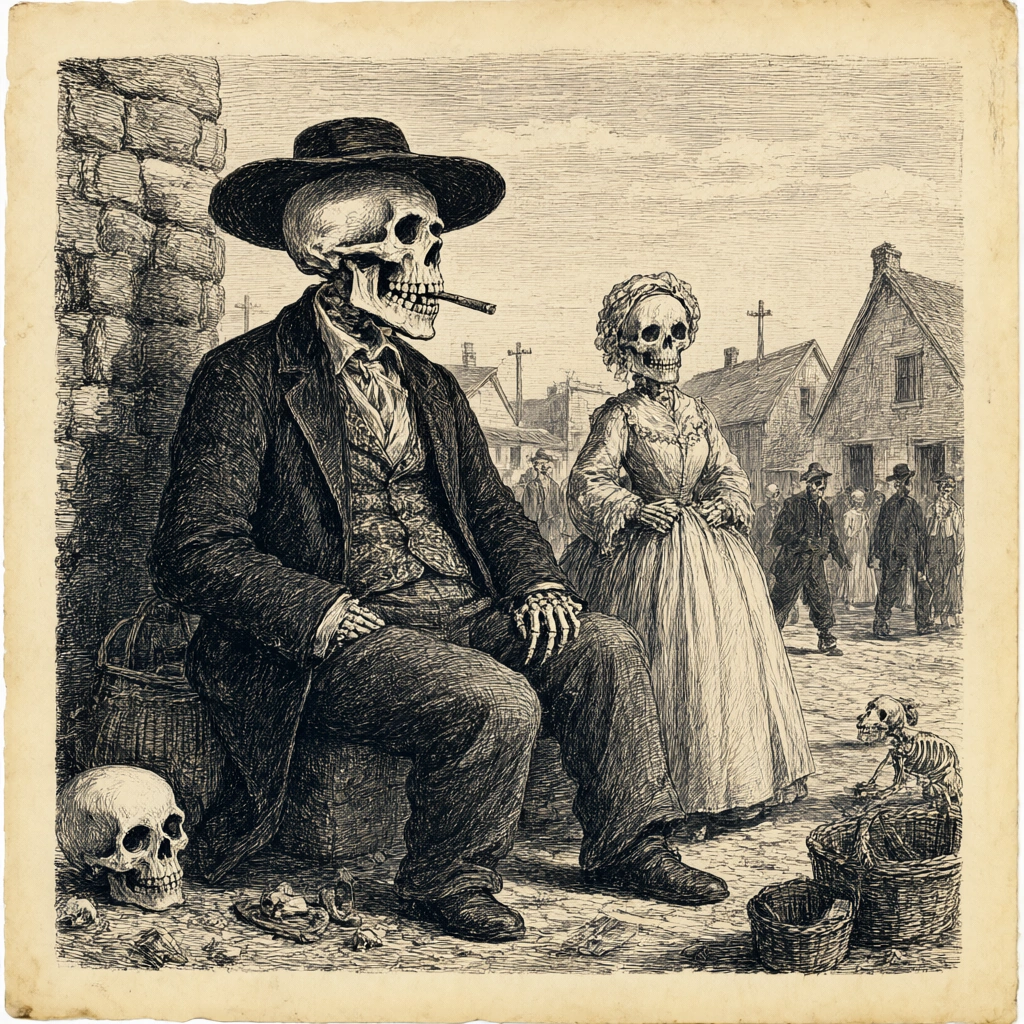 Qwen Image 2.1
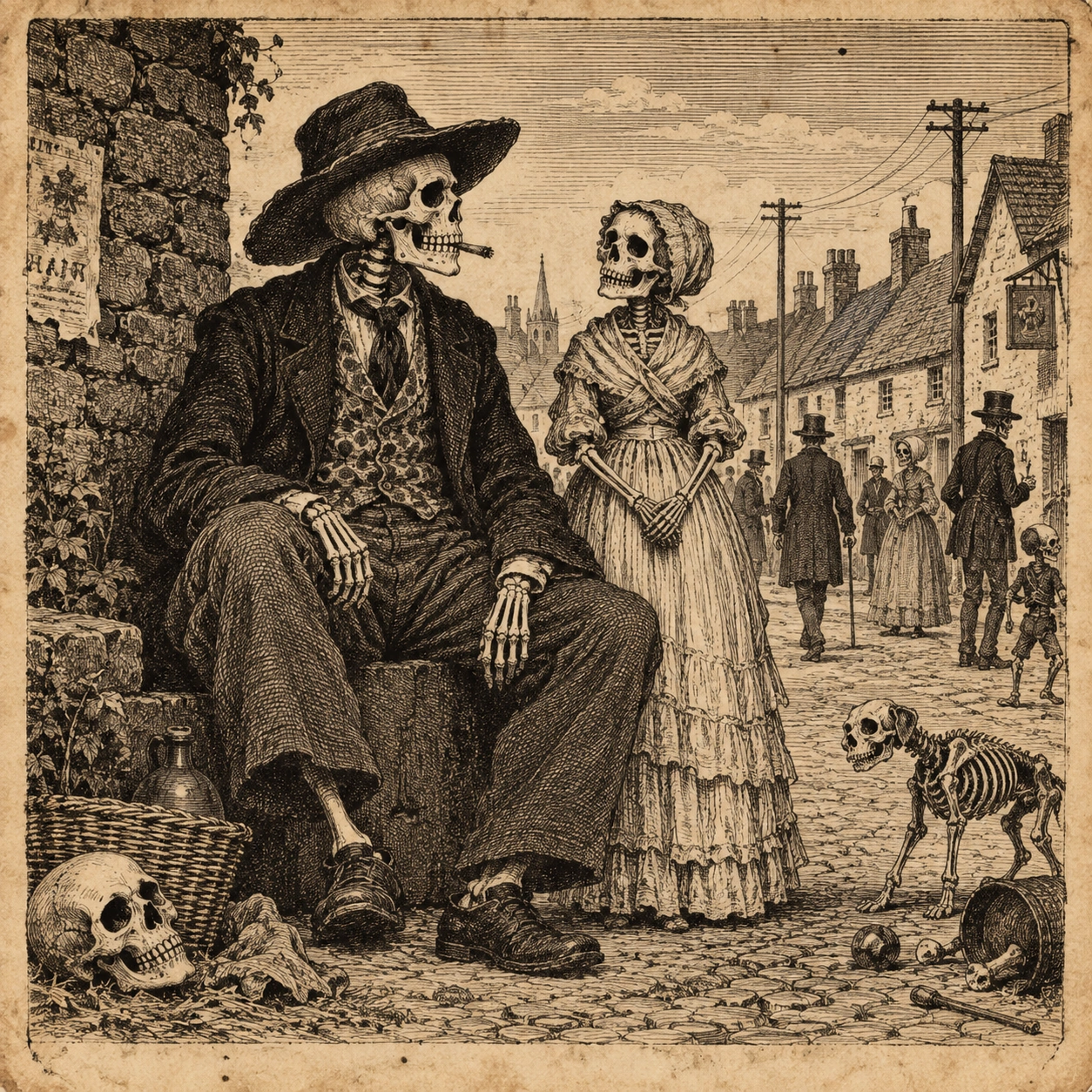 GPT Image 2.5
Reference details
- Reference ID
- 0280
- Category
- Ink & line
Reference prompts
Style prompt
An aged popular-print engraving uses black-brown ink on warm yellowed paper, with variable fine line width, dense crosshatching, stippled wear, and imperfect outer borders. Large dark shapes are built from closely packed directional cuts, while lighter areas preserve the paper and use sparse parallel strokes for texture. A prominent front mass is balanced by a narrower neighboring form, then many smaller narrative details recede into a shallow, busy backdrop. Architectural and organic contours are equally outlined, producing a lively, slightly coarse graphic unity. Sepia staining, uneven ink density, tiny margin blemishes, and hand-printed roughness remain visible. Lighting is represented through line density and paper-white highlights rather than smooth gradients or a physical lamp. The palette is intentionally narrow, so contrast, eccentric silhouette, and the rhythm of small marks carry the scene. The overall effect feels witty, dark, and historical, with theatrical figures presented in the ordinary visual language of an illustrated broadsheet.Full example prompt
A square sepia-black newspaper engraving depicts a satirical village street populated by dressed skeleton figures. A large skeleton in a wide-brimmed hat sits at center-left, its toothy skull turned in profile and a short stick or cigar held between its jaws. It wears a dark coat, patterned vest, neckcloth, and baggy trousers; one bony hand rests on a raised knee. Just to the right stands a smaller skeleton in a long ruffled dress and head covering, hands folded at the waist. Tiny background figures walk between simple pitched-roof houses and telegraph poles, giving the main pair a public, everyday setting. In the lower corners, a loose skull, small doglike skeleton, baskets, and scattered street objects crowd the cobbled ground. A rough stone wall frames the left edge, while an open sky with thin clouds and fine horizontal cuts sits behind the rooftops. The scene is densely narrated but arranged in clear tiers: large dark seated form in front, pale standing figure at its side, small houses and walkers behind. Every contour is built from thin, irregular printed strokes. Dense crosshatching makes the coat and wall nearly black; lighter parallel lines describe sky, cobbles, fabric folds, and bone surfaces. The image lies on yellowed, slightly stained paper with uneven borders, tiny registration blemishes, and faint marginal marks; any incidental small writing is not prominent. There is no vivid color or photographic lighting. Tonal separation and the preserved paper white imply a mild overhead day, with shadows supplied by engraving density. The result is playful and macabre, using popular-print roughness and sharp social caricature to make impossible figures feel like ordinary street residents.