
Styles
#0458
Risograph Print Style with Halftone Texture
Limited spot colors, halftone dots and slight registration drift create a risograph-like print surface. View the images, copy the style or example prompt, and explore related references on Looksift.
Compare the Qwen Image 2.1 and GPT Image 2.5 examples, choose the visual qualities you want, and copy the style prompt for your own project.
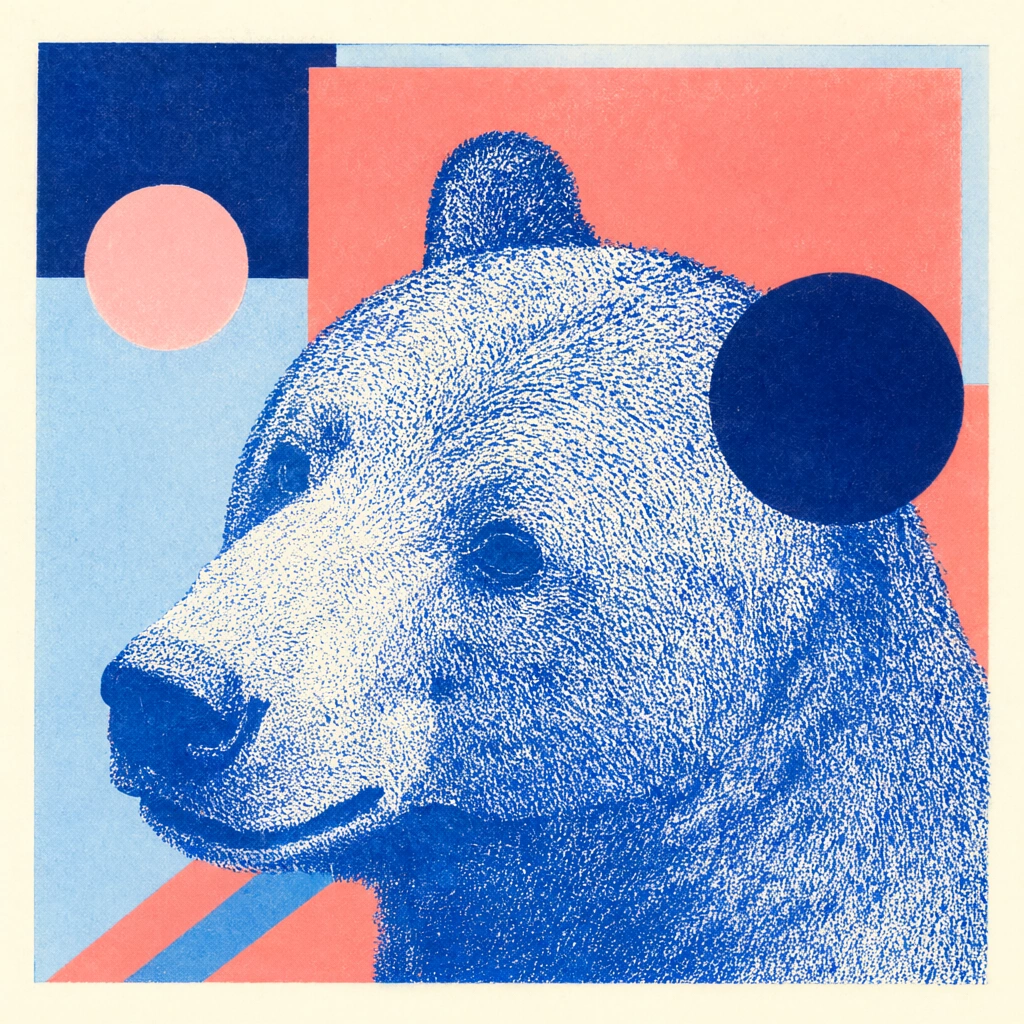 Qwen Image 2.1
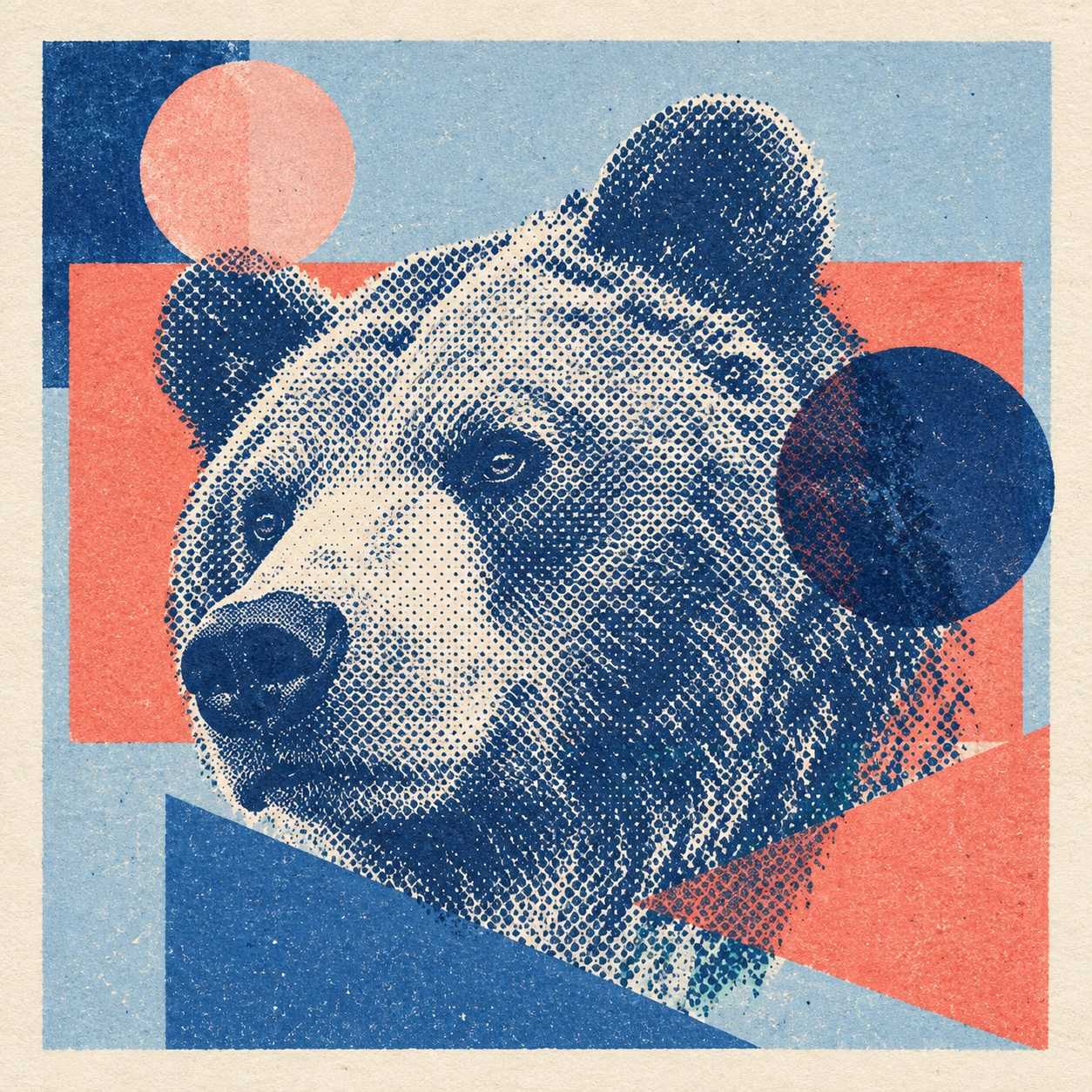 GPT Image 2.5
Reference details
- Reference ID
- 0458
- Category
- Flat illustration
Reference prompts
Style prompt
Use risograph-like layered spot inks on absorbent off-white paper. Limit the palette to two or three vivid colors plus their overprinted mixtures, leaving visible grain, halftone dots, broken lines, and slight registration drift. Combine a textured representational focal form with flat circles, rectangles, and wedges, allowing them to overlap without realistic perspective. Let printed density describe volume instead of conventional lighting. Keep generous paper margins and a bold compact graphic balance.Full example prompt
A square risograph-style print centers the head of a bear in blue ink over a stack of simple geometric shapes. The bear faces slightly left, its broad muzzle protruding toward the lower left and one round ear rising near the upper center. Fur and facial planes are described by dense blue halftone dots, stipples, and rough broken lines rather than smooth shading. A dark navy circle overlaps the right edge of the head, echoing a pale pink circle in the upper left. Behind the animal, a wide coral rectangle sits on a pale blue square field, while a darker navy block occupies the top-left corner. Additional blue and salmon wedges slip beneath the chin and extend toward the right edge. The pale cream paper margin remains visible around the rectangular image, particularly at the top and sides. Areas of blue and coral overlap imperfectly, creating darker mixed patches and slight registration offsets at some edges. The surface looks absorbent and grainy; flecks of unprinted paper show through solid fields, and the bear's texture changes from tight dots around the muzzle to looser broken marks near the neck. There is no plausible lighting setup or dimensional room. Volume comes from layers of limited ink colors and the varied density of printed marks. The animal is recognizable but partially integrated into the flat blocks, turning a natural subject into a graphic collage. The composition is centered and compact, with circles balancing the heavy head and hard-edged rectangles. The overall effect is tactile, playful, and boldly editorial.