
Styles
#0475
Wildlife Art style reference and prompts
Explore the “Wildlife Art” reference with directional brush marks, tactile surfaces, and warm highlights. View the images, copy the style or example prompt, and discover related styles on Looksift.
Compare the Qwen Image 2.1 and GPT Image 2.5 examples, choose the visual qualities you want, and copy the style prompt for your own project.
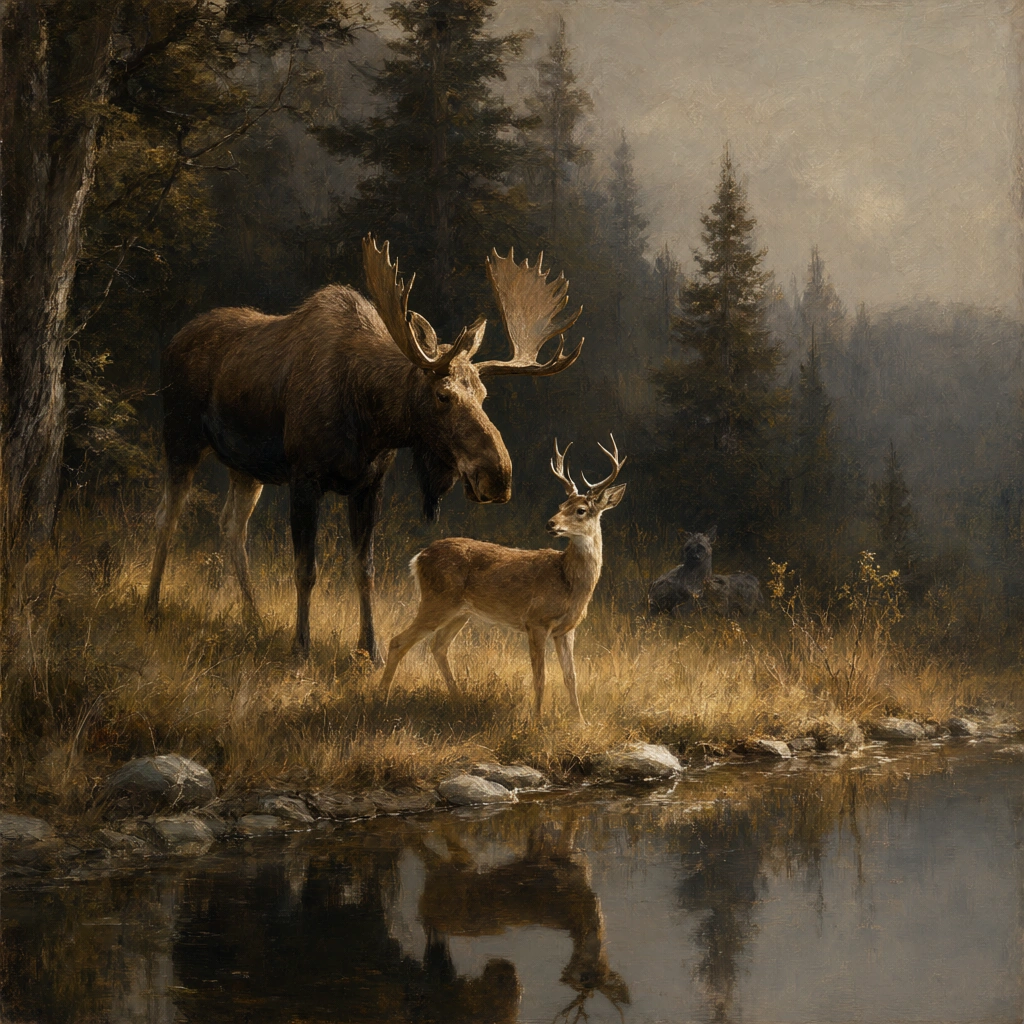 Qwen Image 2.1
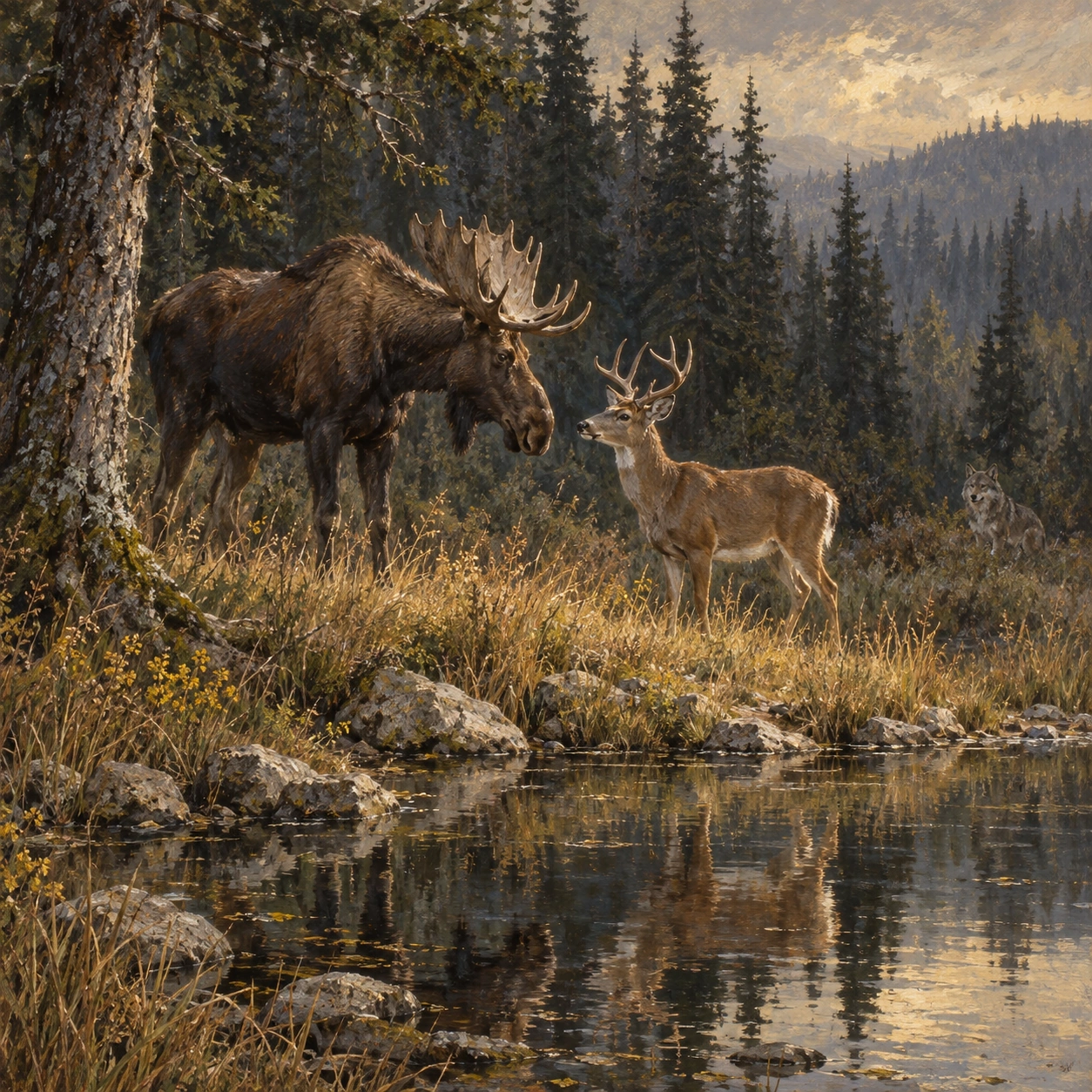 GPT Image 2.5
Reference details
- Reference ID
- 0475
- Category
- Painting
Reference prompts
Style prompt
The image has the finish of a representational painting, with layered, visible brushwork used to build naturalistic form without polishing away the surface. Short directional marks give close forms tactile density, while broader broken strokes dissolve distant areas into atmosphere. Deep brown, olive, charcoal, muted gray, and restrained amber carry most of the frame; small warm highlights draw attention across the darker field. Edges sharpen around the focal forms and soften progressively toward the margins and distance, so detail and quiet blur establish depth together. Gentle light filters through an opening above, grazing raised textures while recessed areas remain cool and shadowed. Reflections and dark masses are fragmented rather than mechanically exact, and irregular bands of foreground, middle distance, and backdrop create a calm spatial rhythm. The overall effect is earthy, attentive, and softly dramatic.Full example prompt
A square wildlife painting shows a large moose and a smaller antlered deer beside a still woodland pool, set against dark evergreen trees and a hazy, warm gray sky. The background recedes into layered trunks and soft foliage, with the far woods losing definition in atmospheric shadow. At the left, a broad tree trunk and low branches frame the scene; the moose stands just inside this natural border, its heavy brown body built from short, visible strokes that follow the direction of its coat. Its head lowers toward the deer near the center, bringing the two animals into a quiet visual exchange. The deer stands upright in a patch of tawny grass, its pale underside catching more light than the surrounding brush. A smaller gray animal sits back from them near the darker trees, partially absorbed by the muted vegetation. Across the lower half, the pool reflects broken dark shapes and warm highlights rather than a perfect mirror image. Pale stones and rough bank edges interrupt the waterline, while dry grasses and small yellowish plants gather around them. The brushwork shifts from firm, fine edges around the animals' eyes and antlers to broader, softened marks in the trees, grasses, and reflections. Soft light enters from the open upper right and rests on the animals' backs and the grass, leaving the wooded edges deeper and cooler. Brown, olive, charcoal, and restrained gold form a natural palette with small bright notes at the water's edge. The overall composition balances closely observed animal forms against a textured, shadowed habitat, giving the scene a hushed and attentive mood.