
Styles
#0799
David Martiashvili style reference and prompts
Explore the “David Martiashvili” reference with scratch-like marks, angular planes, and warm color tones. View the images, copy the style or example prompt, and discover related styles on Looksift.
Compare the Qwen Image 2.1 and GPT Image 2.5 examples, choose the visual qualities you want, and copy the style prompt for your own project.
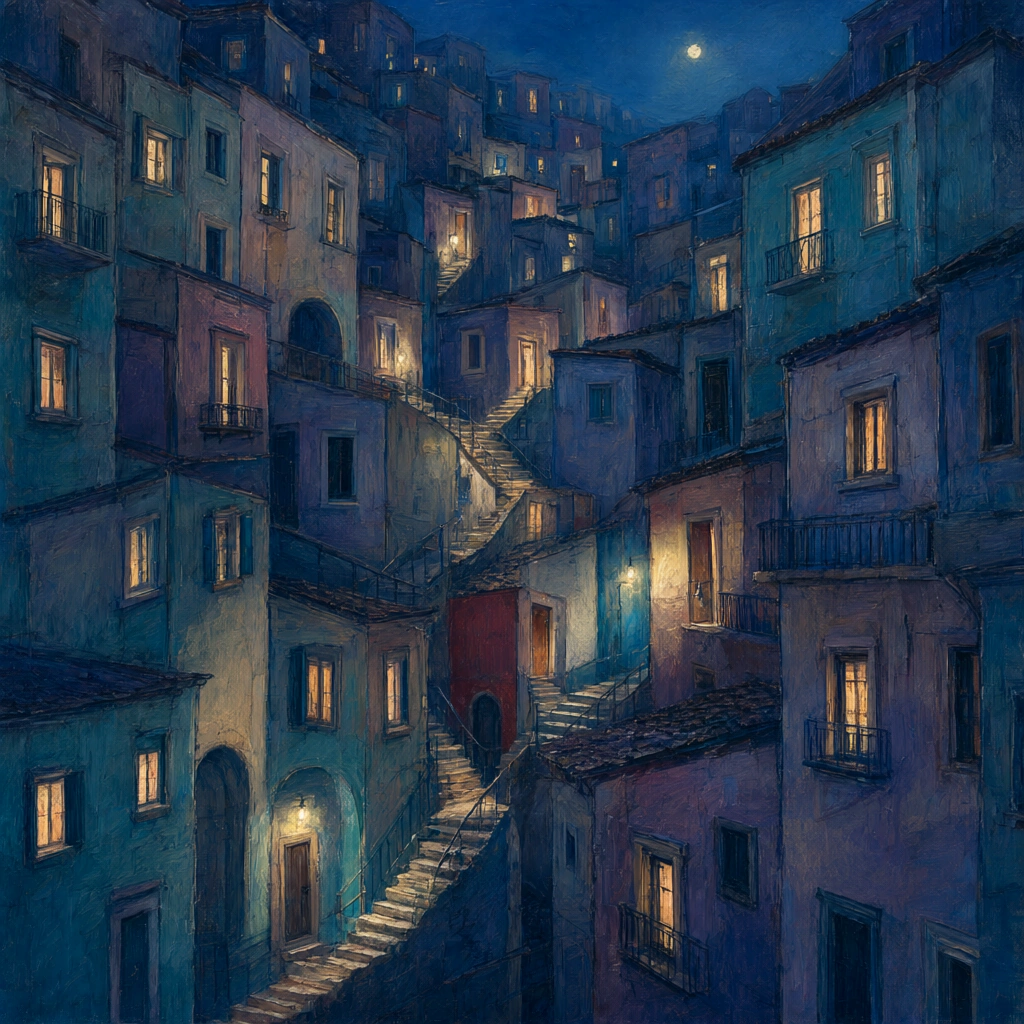 Qwen Image 2.1
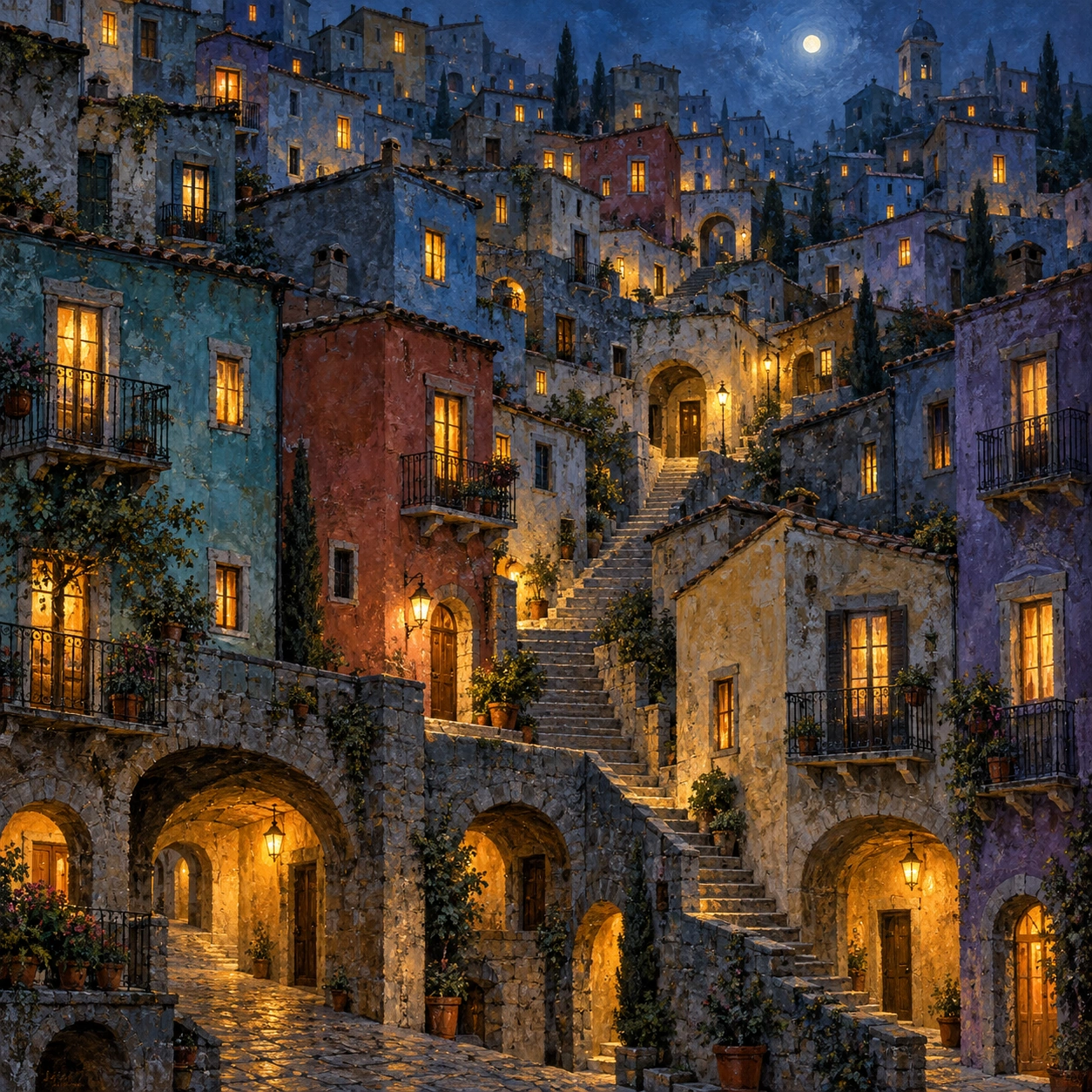 GPT Image 2.5
Reference details
- Reference ID
- 0799
- Category
- Painting
Reference prompts
Style prompt
Paint a densely layered nocturnal environment with visible rough brushwork, narrow interlocking planes, and small scratched structural details. Use cool teal, slate, indigo, violet, and deep blue as the dominant atmosphere, punctuated by warm ochre, amber, and orange light sources. Let illuminated rectangles create rhythm through a crowded square composition. Build depth by stacking forms and zigzagging paths, preserving a slightly dreamlike density under misty moonlit haze.Full example prompt
The painting depicts a compact hillside town at night. Tall, narrow houses stack above and behind one another until their rooflines almost disappear into a deep blue sky. Their facades shift between teal, slate blue, muted red, ochre, violet, and warm gray. A narrow staircase climbs diagonally from the center toward a bright landing, then seems to disappear among further terraces and doorways. Small balconies project from several walls, and arches open beneath the lower buildings. Windows glow in scattered yellow and orange rectangles, each suggesting an inhabited room inside the maze of masonry. A small pale moon or lamp-like orb hangs high in the misty sky. The city has believable architectural fragments but an improbable, dreamlike density: every path appears to lead upward or around a corner into another hidden space. Brushwork is visible and slightly rough, with scratched lines indicating mortar, window frames, and railing details. Cool blue shadow washes over the overall scene, while warm light pools around doors, stair landings, and a few lower archways. There is no single human figure competing for attention; the town itself becomes the subject. The square composition is nearly full from edge to edge, but the repetition of lit windows gives the eye a navigable rhythm. The image feels intimate and fantastical at once, as though a familiar old town had been folded into a glowing nocturnal labyrinth.