
Styles
#2460
Max Weber style reference and prompts
Explore the “Max Weber” reference with visible brushwork, scratch-like marks, and angular planes. View the images, copy the style or example prompt, and discover related styles on Looksift.
Compare the Qwen Image 2.1 and GPT Image 2.5 examples, choose the visual qualities you want, and copy the style prompt for your own project.
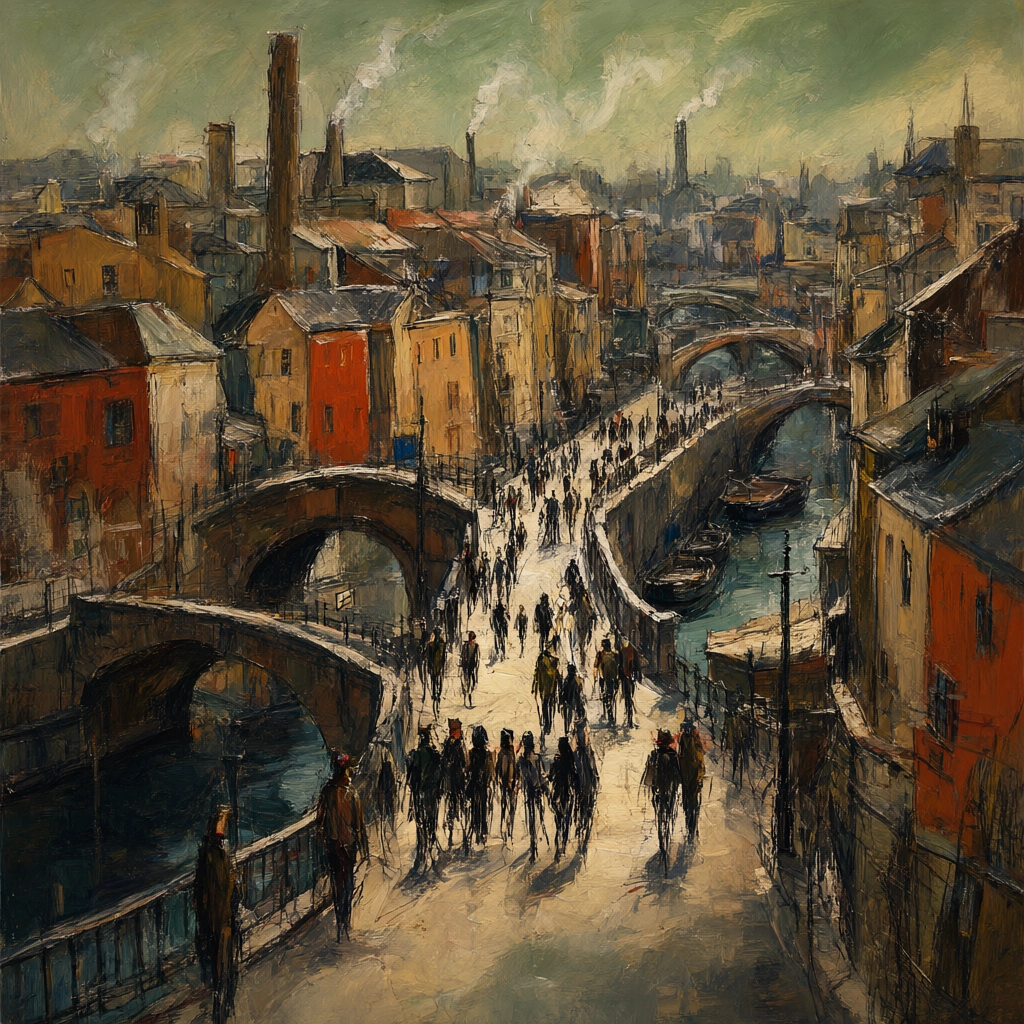 Qwen Image 2.1
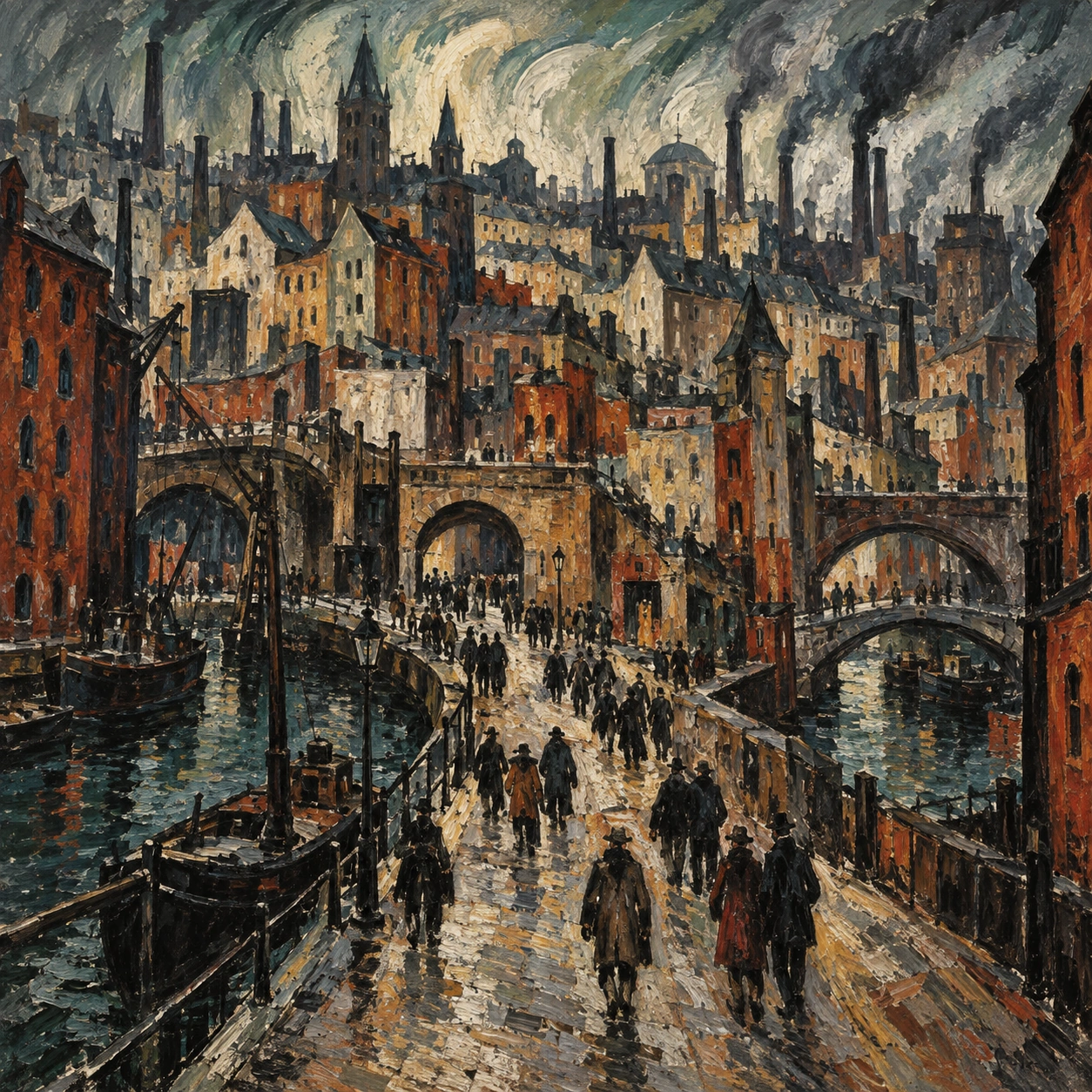 GPT Image 2.5
Reference details
- Reference ID
- 2460
- Category
- Painting
Reference prompts
Style prompt
Expressionist city painting compresses many angular planes, arches, and vertical marks into a dense but navigable surface. Ochre, rust, gray-green, cream, and deep brown overlap in broken patches, with black scratch lines sharpening selected edges. Broad smoky swirls soften the upper field while tighter strokes crowd the lower focal area. Light is filtered and uneven, catching pale ridges while recesses remain deeply colored. Repeated passages and converging bands guide the eye through the texture rather than letting detail become noise. The result is restless, earthy, and atmospheric.Full example prompt
A square expressionist city painting looks across a crowded industrial district built along a canal. The foreground is a broad pedestrian approach leading from the lower center toward arched bridges and tightly packed buildings. Small dark figures walk in groups along the path, their bodies rendered as quick vertical marks rather than individual portraits. To the left, dark water and moored boat shapes run alongside the street, while another curved channel and bridge appear deeper to the right. Across the middle and upper half, ochre, rust, cream, and gray facades overlap at many heights, punctuated by steep roofs, towers, chimneys, and dark windows. Several arched structures cut through the lower city, creating repeated passages into the distance. Smoke rises from the far buildings and merges with a turbulent green-gray sky, where broad pale swirls move over the rooftops. The architecture is recognizable but compressed into angular planes and broken color patches, making the city feel dense and restless. Black drawing and short scratch marks define selected doors, railings, figures, and masonry, while rough brushwork blurs the joins between neighboring structures. Light filters through the smoky sky from above, catching pale roof edges and the central path; alleys, water, and building recesses remain dark brown and blue-green. Warm red-orange accents appear in a few walls and street-level areas but never dominate the earthy range. No street sign or text is legible. The overall composition drives inward through people, bridges, and stacked facades, creating a layered, smoky vision of urban movement.