
Styles
#1034
Simon Schubert style reference and prompts
Explore the “Simon Schubert” reference with hatching, tactile surfaces, and ornamental detail. View the images, copy the style or example prompt, and discover related styles on Looksift.
Compare the Qwen Image 2.1 and GPT Image 2.5 examples, choose the visual qualities you want, and copy the style prompt for your own project.
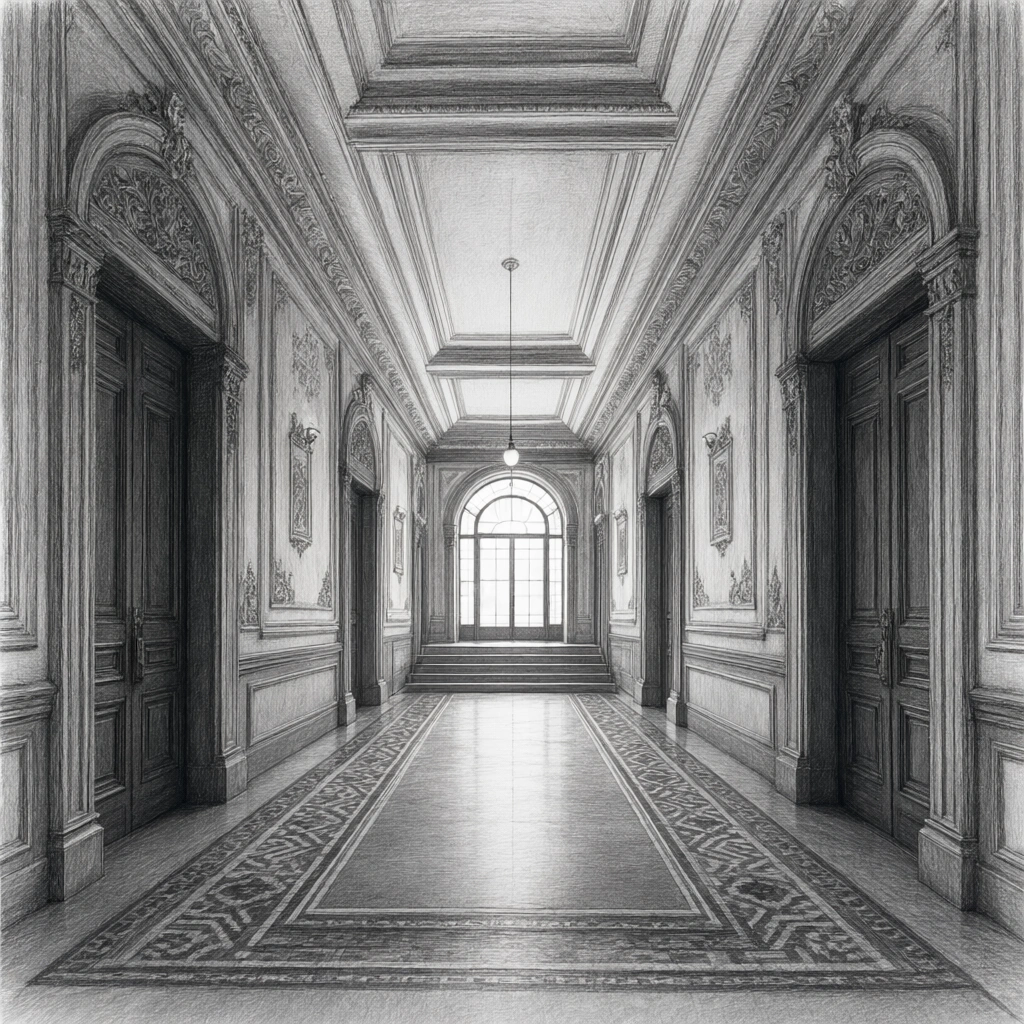 Qwen Image 2.1
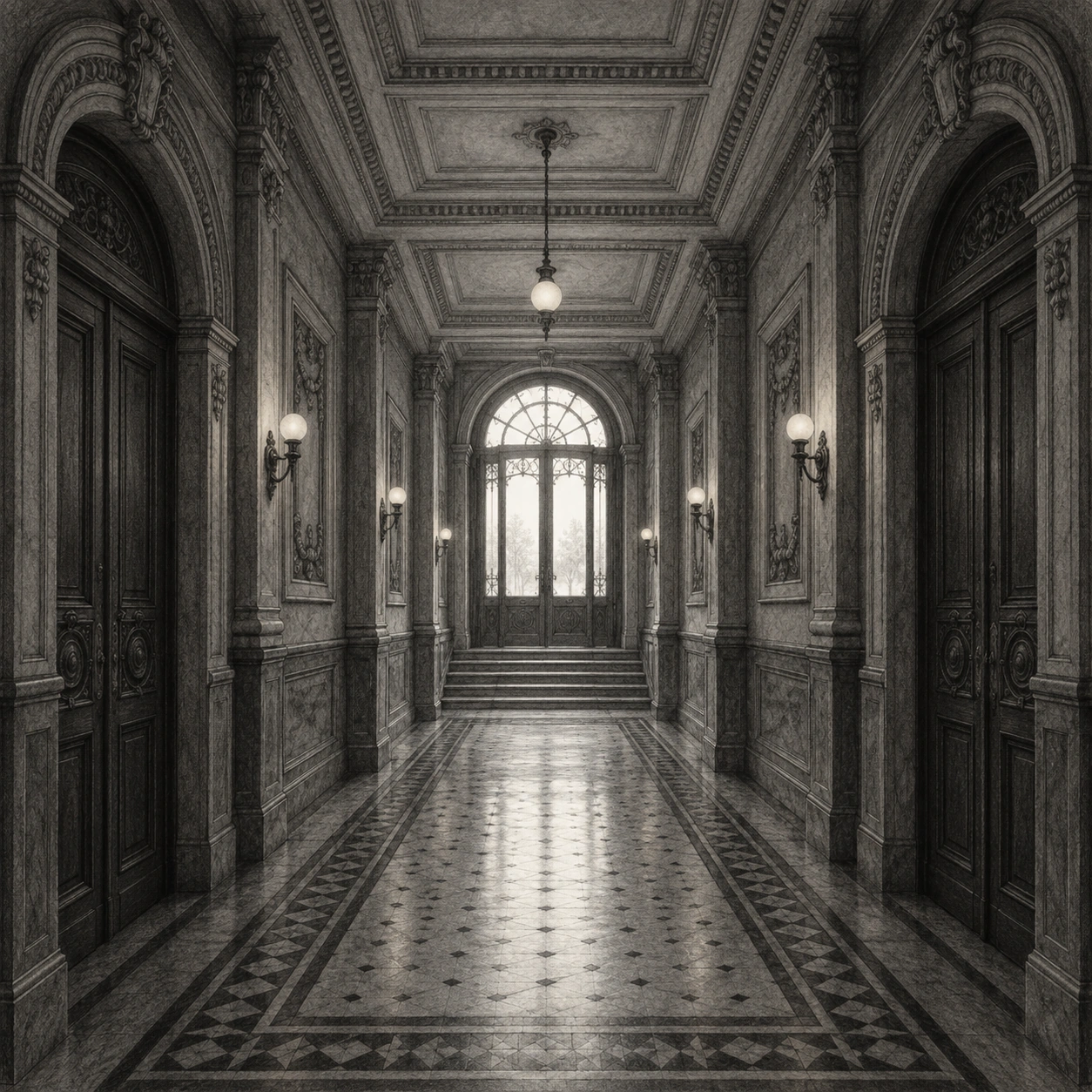 GPT Image 2.5
Reference details
- Reference ID
- 1034
- Category
- Painting
Reference prompts
Style prompt
Monochrome graphite-like drawing uses finely controlled linework, soft rubbed shading, and a broad range from near-white glow to charcoal recess. Precise repeated edges establish a disciplined perspective, while ornamental detail gradually thins and softens with distance. Hatching and grain give surfaces a dry tactile quality; blended tonal areas add volume without concealing the underlying drawn structure. A bright central opening pulls the eye through darker framing masses, and mirrored side elements make the composition feel measured and still. Local light is pale and diffuse, brightening the depth while leaving foreground corners densely shaded. Patterned lower planes guide the visual route without becoming as detailed as the focal area. The overall effect is architectural in rhythm but dreamlike in atmosphere, balancing exact spatial order with a gently worn, ghostly surface.Full example prompt
A square monochrome drawing depicts an empty ornate hallway leading to a bright arched glass door. The viewpoint is centered and level, looking along a symmetrical corridor whose walls and patterned floor converge at a short stair in the distance. On both sides of the foreground, heavy paneled wooden doors sit within elaborate arched surrounds. Moldings, cornices, and shallow decorative reliefs frame the doors and run across the ceiling in layered rectangular bands. Smaller framed wall panels and wall lamps repeat farther toward the center, tightening the perspective. A slender pendant light hangs near the corridor's middle, its pale bulb floating below the coffered ceiling. At the far end, a few steps rise to a set of tall glazed doors topped by a rounded transom. The glass glows almost white, giving the dark interior its main source of illumination. The floor has a central rectangular field bordered by denser geometric tile pattern; reflected gray light traces its route to the steps. Deep charcoal shading collects in the near door recesses, upper corners, and side walls, while the ceiling center and back doorway remain progressively lighter. Fine pencil-like hatching, smudged graphite, and softly rubbed tonal transitions render the carved surfaces without bright color. Structural lines stay precise enough to maintain the one-point perspective, yet some decorative detail fades into a grainy atmosphere. No people or readable writing appear. The overall composition is formal and quiet, using rigorous symmetry, repeated ornament, and a distant white opening to turn an unoccupied passage into a haunting spatial study.