
Styles
#1100
Nick Gentry style reference and prompts
Explore the “Nick Gentry” reference with scraped paint texture, paper collage textures, and a monochrome palette. View the images, copy the style or example prompt, and discover related styles on Looksift.
Compare the Qwen Image 2.1 and GPT Image 2.5 examples, choose the visual qualities you want, and copy the style prompt for your own project.
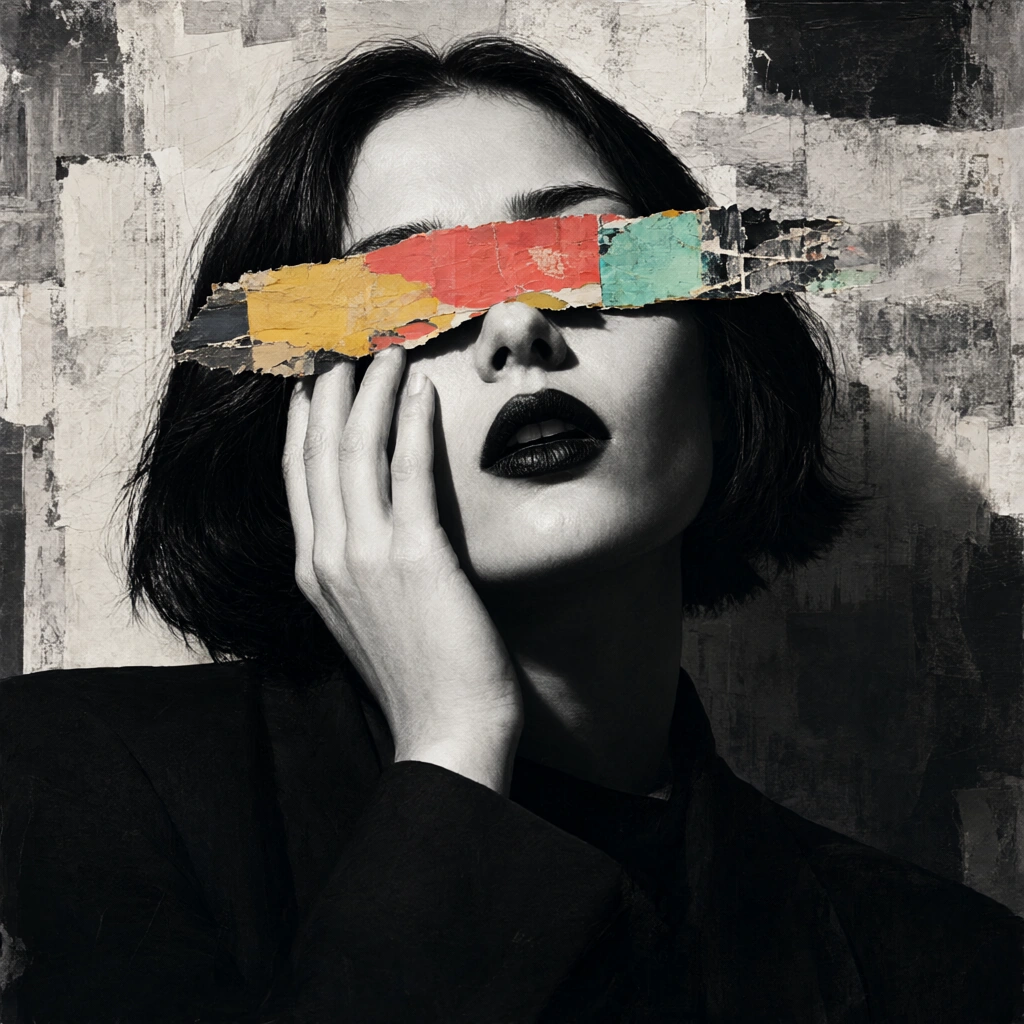 Qwen Image 2.1
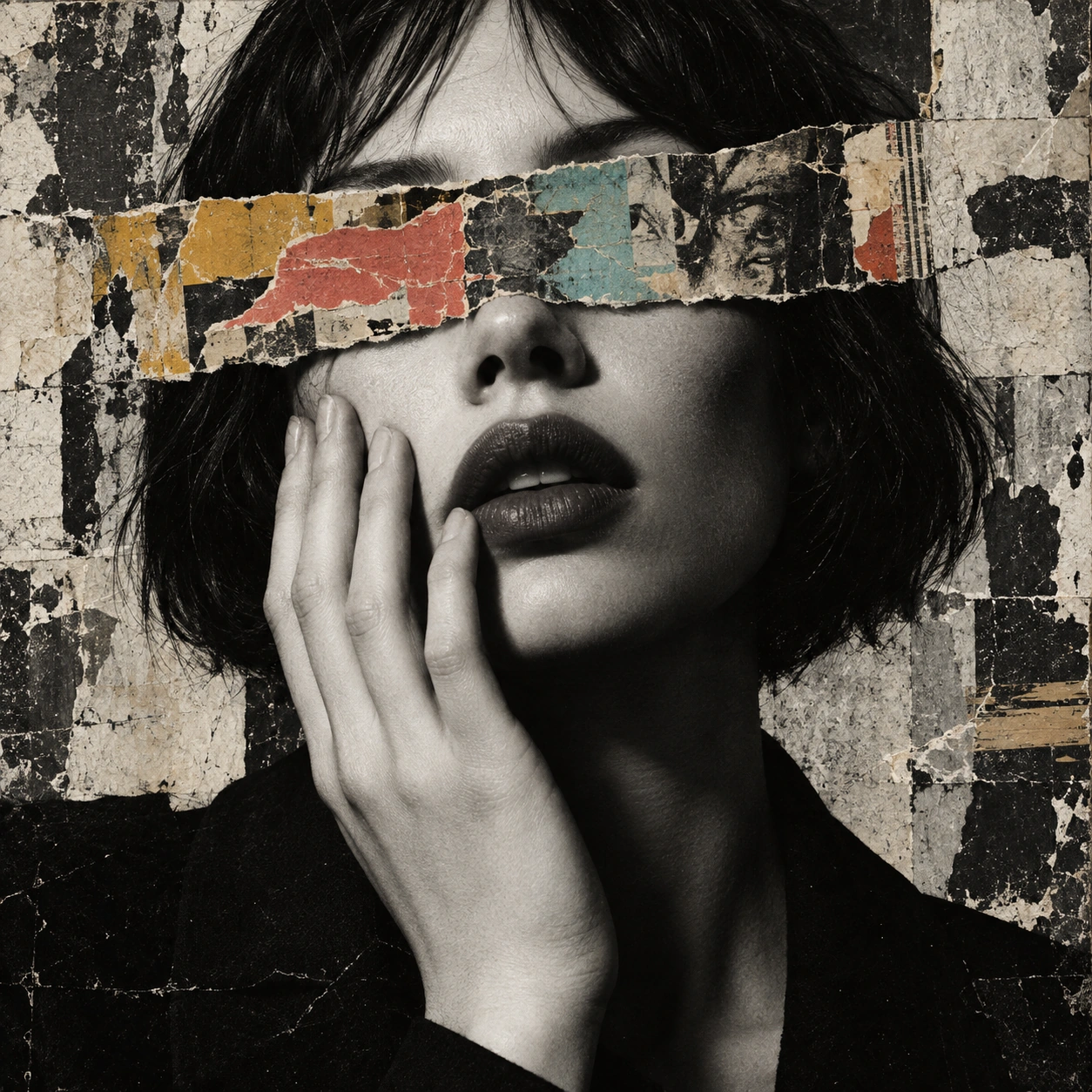 GPT Image 2.5
Reference details
- Reference ID
- 1100
- Category
- Collage & mixed media
Reference prompts
Style prompt
High-contrast grayscale photography meets rough analog collage and narrow accents of distressed color. Large light areas are chalky and large dark areas velvety black, with abrupt tonal boundaries rather than soft commercial retouching. Torn paper fragments, scraped paint, ghosted print residue, and slightly misregistered rectangles give every plane a physically pasted quality. One compact band of mustard, coral, and faded cyan interrupts an otherwise charcoal, gray, and dirty-ivory palette. A close, almost confrontational crop creates strong horizontal-versus-vertical shape tension. Sharp light from one upper side carves dimensional planes, while outer edges merge into shadow and abrasion. Paper fibers, grain, scuffs, irregular seams, and uneven ink density remain visible. The finished image resembles an experimental editorial photomontage with both photographic clarity and handmade damage.Full example prompt
A square mixed-media fashion portrait presents a woman in stark black and white with a narrow band of distressed color. A woman with a short dark bob and black jacket fills the frame from the shoulders upward. She faces nearly forward, tilting her head slightly, her mouth parted. One pale hand rises to her cheek and partly covers the lower face; its fingers are long and close together. A horizontal strip of torn, layered magazine color crosses directly over both eyes, masking them. Within the strip, muted mustard yellow, coral red, faded turquoise, and gray-black fragments overlap with scratches and misaligned edges. The rest of her face and hand are rendered as a high-contrast grayscale photograph: pale forehead, smooth cheek, hard dark nose shadow, full black lips, and a deep neck shadow. Behind her, a rough wall-like collage of charcoal and dirty ivory rectangles shows scrapes, pasted paper edges, faint printing residue, and irregular painterly swipes. The lower border breaks into nearly solid black. The close editorial crop makes the blindfold strip the only significant colored line, while the hand provides a vertical counter-shape. Photographic realism coexists with physically torn paper and dry paint; surface scratches and glue-like seams remain visible. Lighting is dramatic from the upper left, leaving the right side of the head and neck in heavy shadow. The image feels mysterious, gritty, and tactile, like an experimental magazine cover or gallery photomontage. There are no readable words, logos, or frames.