
Styles
#1239
Grete Stern style reference and prompts
Explore the “Grete Stern” reference with paper collage textures, soft tonal transitions, and a monochrome palette. View the images, copy the style or example prompt, and discover related styles on Looksift.
Compare the Qwen Image 2.1 and GPT Image 2.5 examples, choose the visual qualities you want, and copy the style prompt for your own project.
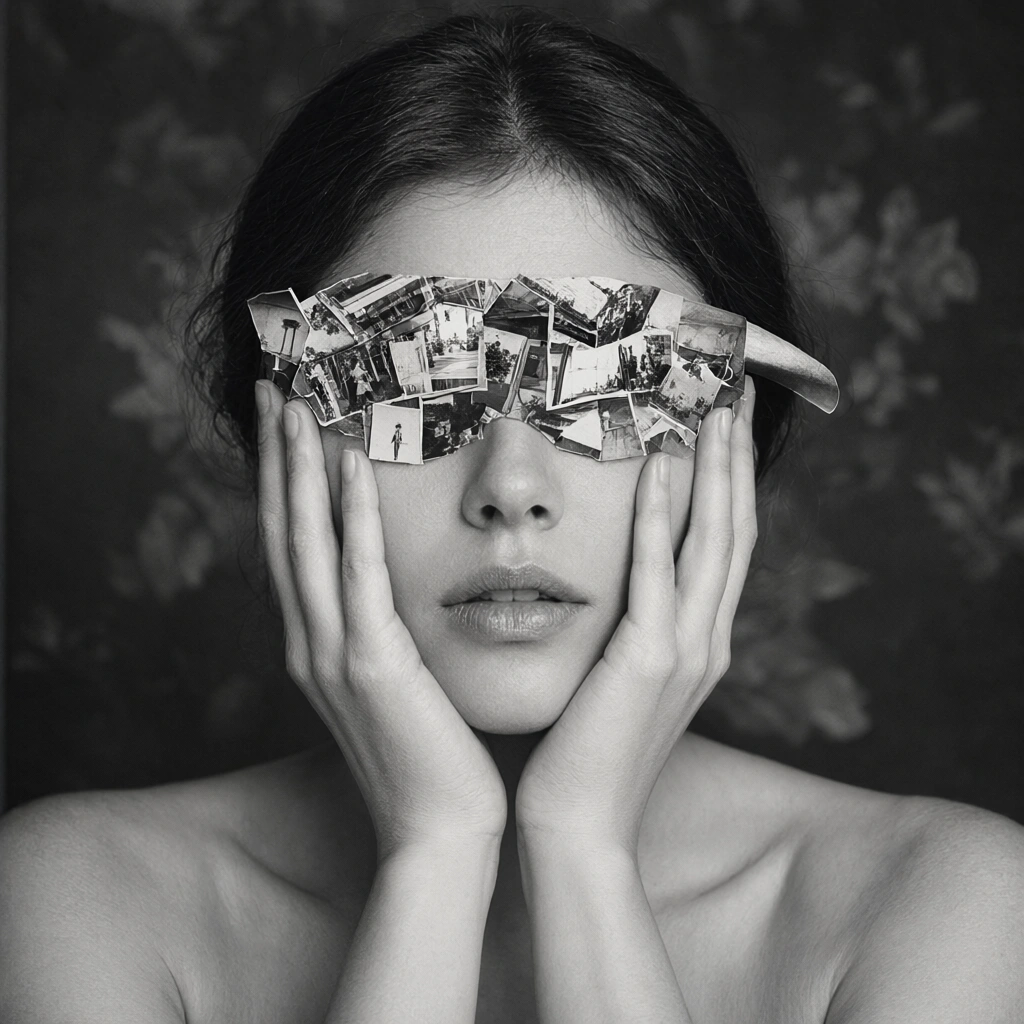 Qwen Image 2.1
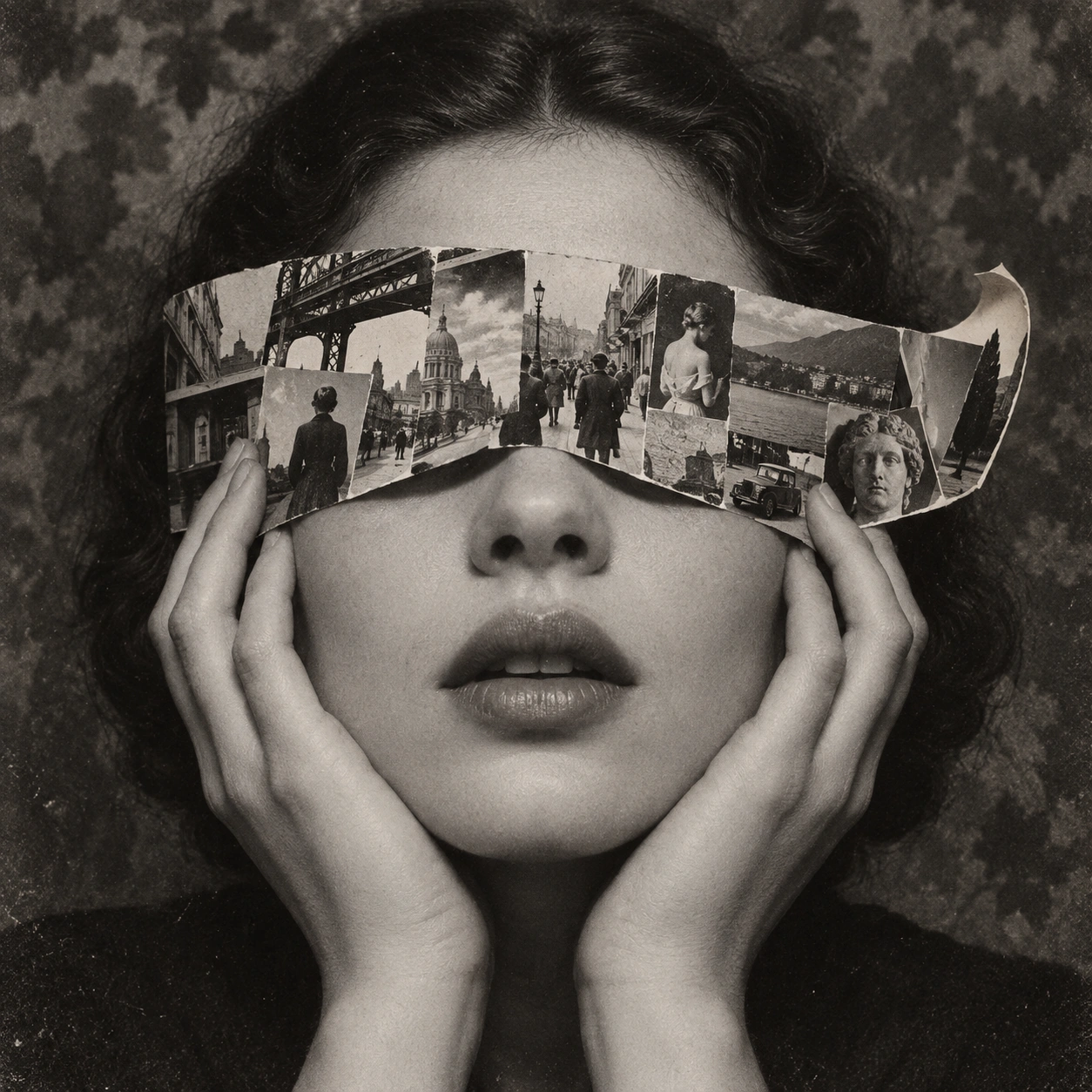 GPT Image 2.5
Reference details
- Reference ID
- 1239
- Category
- Photography
Reference prompts
Style prompt
Combine softly modeled black-and-white photography with hard-edged cut-paper photomontage. Place small printed image fragments in a curved, overlapping band that interrupts a continuous visual field. Preserve visible paper curl, ink texture, fine film grain, and aged tonal variation. Use gentle frontal light against a mottled dark ground, with enough symmetry to feel iconic and enough irregular collage movement to make the image uncanny. Keep a restrained grayscale range from silver skin-like highlights to charcoal shadows.Full example prompt
The image shows a woman facing forward in a tight black-and-white portrait. Her hands rise on either side of the face, fingertips touching the temples and palms supporting the cheeks. Her lips are slightly parted, but the eyes are completely hidden by a curved strip of cut-out picture fragments. The strip sits like an improvised blindfold across the brow and upper cheeks. It contains tiny photographs or printed scenes: architectural beams, figures, streets, and other miniature views crowd together at different angles. One end of the paper curls outward near the right edge, exposing its thin materiality. The woman's skin is softly modeled in silver-gray tones, while the paper carries harder edges, darker ink, and more fragmented texture. Behind her is a mottled dark surface with a subtle leafy or clouded pattern that gives the head depth without identifying a room. Soft frontal illumination reveals the smooth bridge of the nose, lips, and the curve of both hands; shadows sit under the fingers and around the hairline. The square crop is symmetrical enough to feel iconic, though the irregular strip breaks that balance. There is no separate frame around the collage; the pasted imagery directly replaces the missing gaze. Film grain and aging unify the photograph and paper components. The overall image feels like a visual riddle about looking and imagining, poised between an elegant studio portrait and a deliberately impossible dream image.