
Styles
#4143
Robert Rauschenberg style reference and prompts
Explore the “Robert Rauschenberg” reference with paper collage textures, asymmetric composition, and frontal lighting. View the images, copy the style or example prompt, and discover related styles on Looksift.
Compare the Qwen Image 2.1 and GPT Image 2.5 examples, choose the visual qualities you want, and copy the style prompt for your own project.
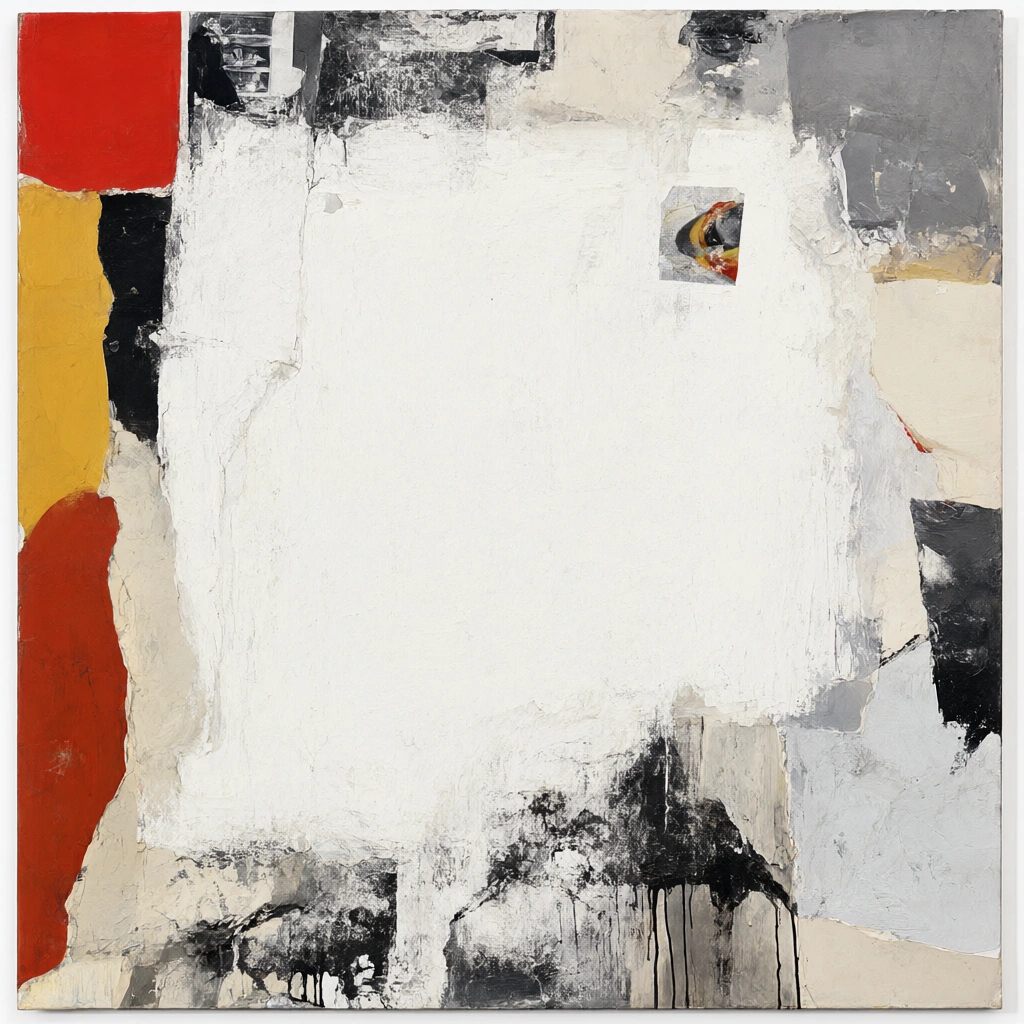 Qwen Image 2.1
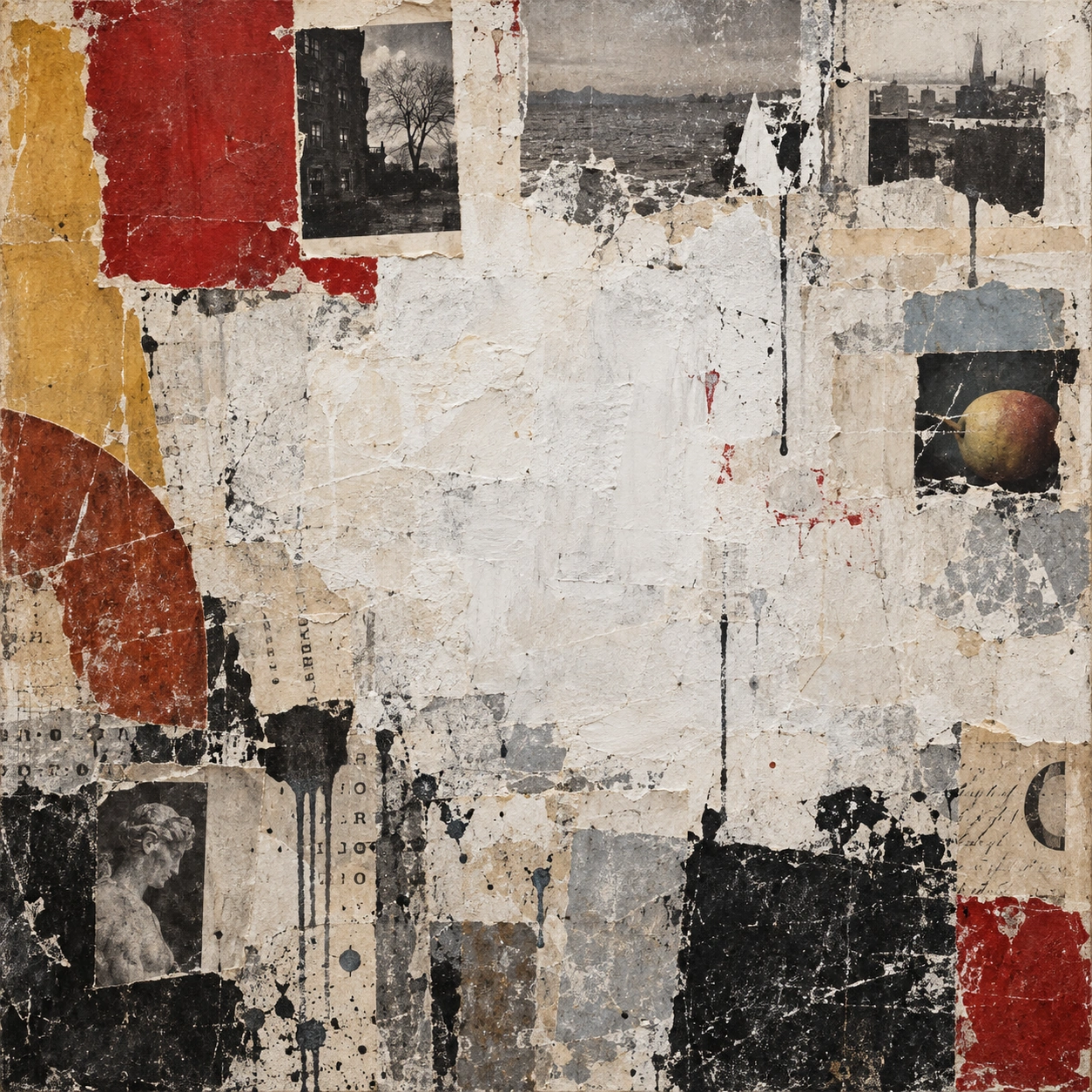 GPT Image 2.5
Reference details
- Reference ID
- 4143
- Category
- Photography
Reference prompts
Style prompt
Mixed-media collage combines torn paper edges, photographic grain, transferred marks, broad paint, and scraped areas on a visibly layered support. A large abraded pale region allows smaller red, ochre, charcoal, and gray clusters to carry disproportionate visual weight. Edges range from crisp rectangular cuts to frayed overlaps and near-erased stains. Even frontal light reveals tiny relief shadows where layers lift, while deeper ink and paint patches create tonal anchors. The arrangement is asymmetrical and loose, with active margins around a quieter center. Its effect is found, weathered, and materially complex.Full example prompt
A square mixed-media collage fills a pale canvas with torn photographic fragments, broad painted patches, and exposed paper. At the upper left, a red rectangular field sits beside a small dark black-and-white photograph. Additional gray photographic pieces appear along the upper edge, their subjects partly obscured by overpainting and abrasion. A warm yellow vertical shape and a rust-red curve anchor the far left, while the center is a large rough white area that seems scraped or transferred rather than evenly painted. Near the right, a small colored image of a rounded object peeks through a pale layered field. Along the bottom, black and gray stains accumulate in irregular blocks, with drips and rubbed marks extending upward. The pieces do not align to a strict grid; their edges overlap, tear, and fade into one another. The surface is materially busy despite the mostly pale palette: paper fibers, scratches, embedded grain, and uneven paint thickness remain visible. Broad studio light falls evenly across the flat canvas, but tiny shadows at lifted edges and darker recesses among layers reveal its physical depth. Red, ochre, black, gray, and cream carry the limited color, with small found-image details adding local contrast. Some fragments include marks too obscured to read as text. The overall composition is open yet restless, balancing a large abraded white center against colored and photographic weight around the margins.