
Styles
#1293
Kenneth Josephson style reference and prompts
Explore the “Kenneth Josephson” reference with a centered composition, a monochrome palette, and negative space. View the images, copy the style or example prompt, and discover related styles on Looksift.
Compare the Qwen Image 2.1 and GPT Image 2.5 examples, choose the visual qualities you want, and copy the style prompt for your own project.
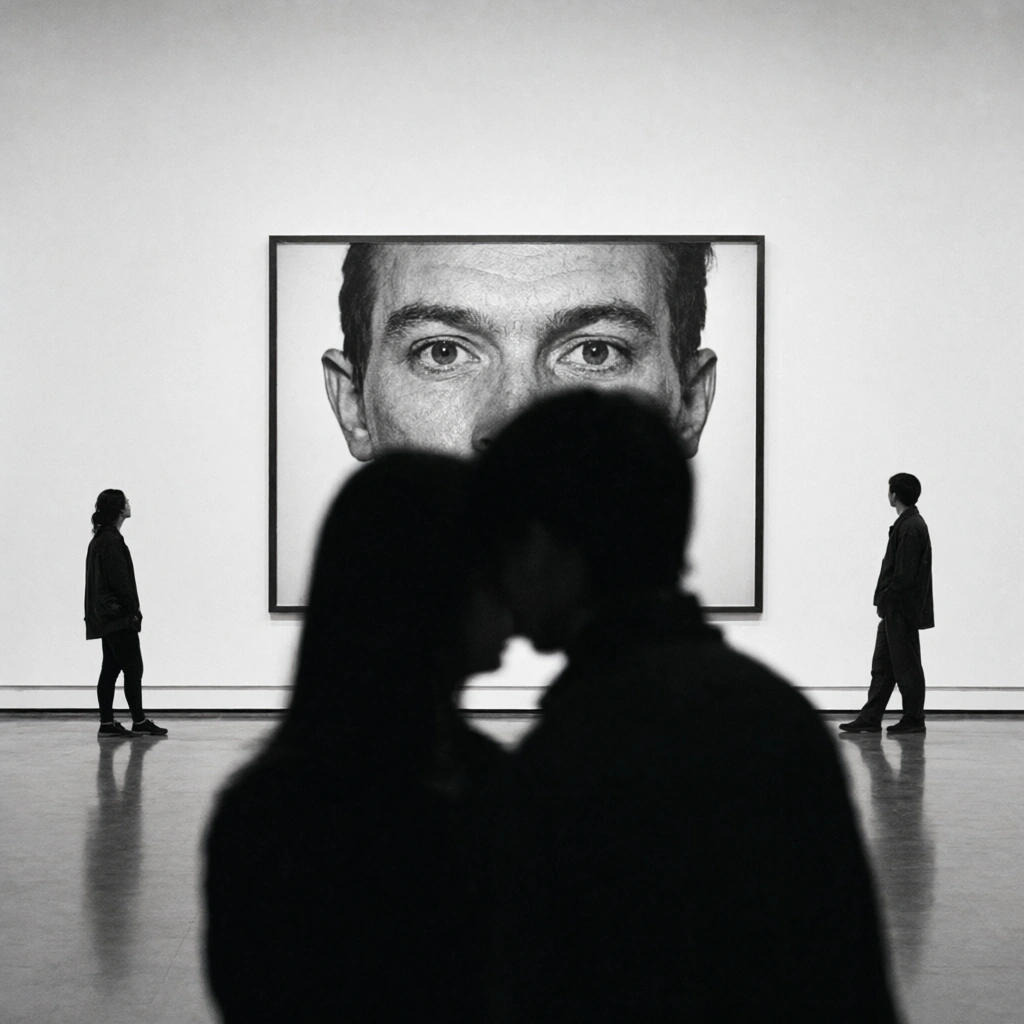 Qwen Image 2.1
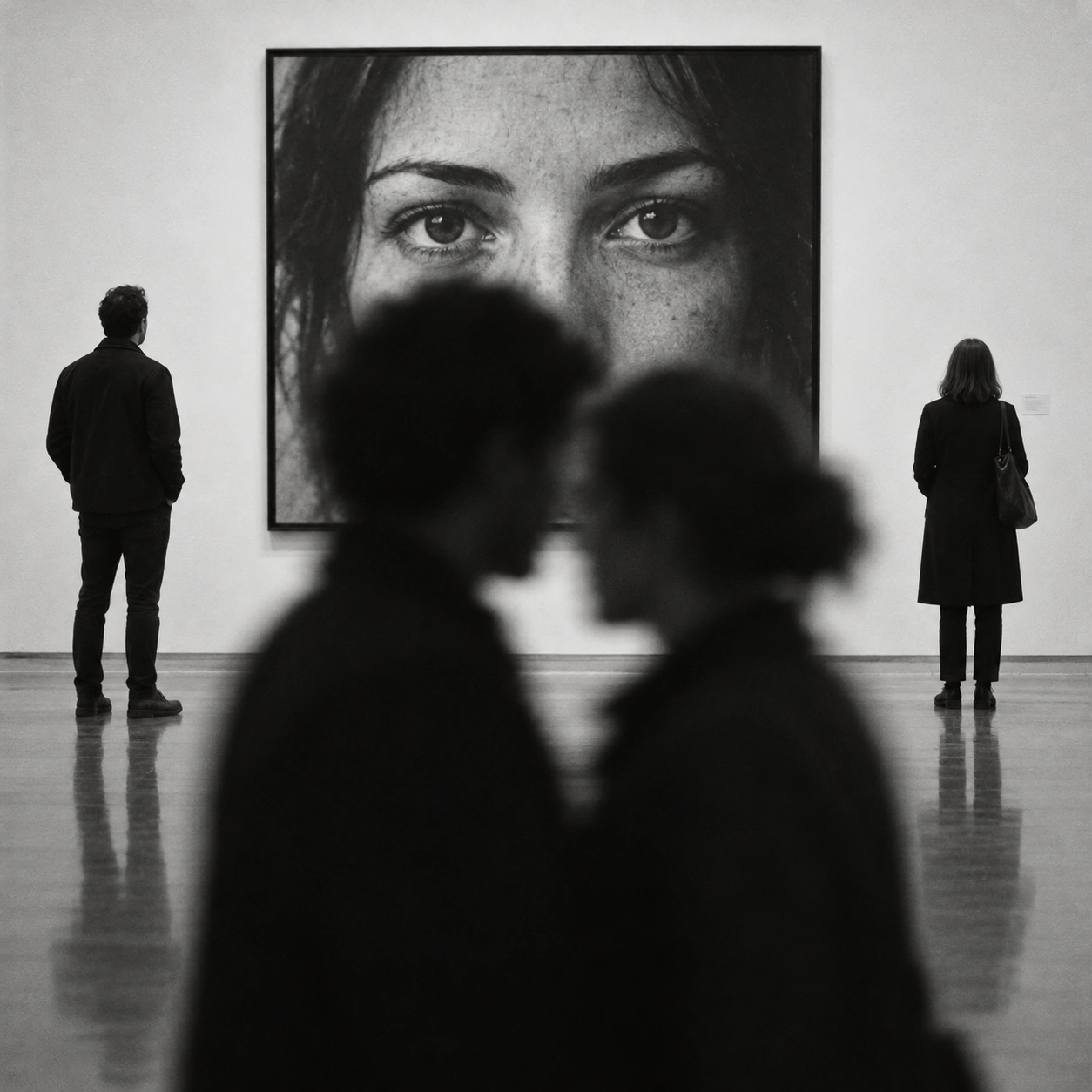 GPT Image 2.5
Reference details
- Reference ID
- 1293
- Category
- Photography
Reference prompts
Style prompt
The style is monochrome conceptual photography using photographic recursion, scale shifts and layered focus. Broad pale negative space meets near-black soft foreground silhouettes and sharply framed middle-distance planes. A balanced central arrangement gains tension from partial occlusion and small peripheral observers. Fine analog grain, restrained gray transitions and faint floor reflection preserve documentary plausibility. The square composition encourages the viewer to reconsider which layer is subject, image or audience without graphic effects or explanatory symbols.Full example prompt
A square black-and-white conceptual photograph records a museum gallery where scale and focus play against one another. A large framed photographic face hangs on a plain light wall at the back, its eyes looking outward over the room. Two visitors stand far apart near the frame, one on each side, examining the display. In the near foreground, two other people pass close to the camera as dark out-of-focus silhouettes, their heads partly merging to cover the lower half of the exhibited face. The polished floor carries faint reflections of the standing visitors, while the wall stays almost featureless. The camera focuses more clearly on the framed image and distant figures than on the soft foreground shapes, producing layered planes of looking and being looked at. Tonal organization is stark: near-black silhouettes, broad white gallery wall, and middle-gray photographic face. The composition is deliberately balanced around the central image but interrupted by the moving foreground pair, so no single interpretation settles easily. There are no dramatic gestures, artworks beyond the one large portrait, or decorative museum details. Fine analog grain and subtle softness make the photograph feel observed rather than digitally assembled. Its visual idea is simple and precise: actual viewers, photographed viewers and the face within the picture overlap into one unstable field of perception.