
Styles
#1374
Bob Coonts style reference and prompts
Explore the “Bob Coonts” reference with directional brush marks, tactile surfaces, and faceted color planes. View the images, copy the style or example prompt, and discover related styles on Looksift.
Compare the Qwen Image 2.1 and GPT Image 2.5 examples, choose the visual qualities you want, and copy the style prompt for your own project.
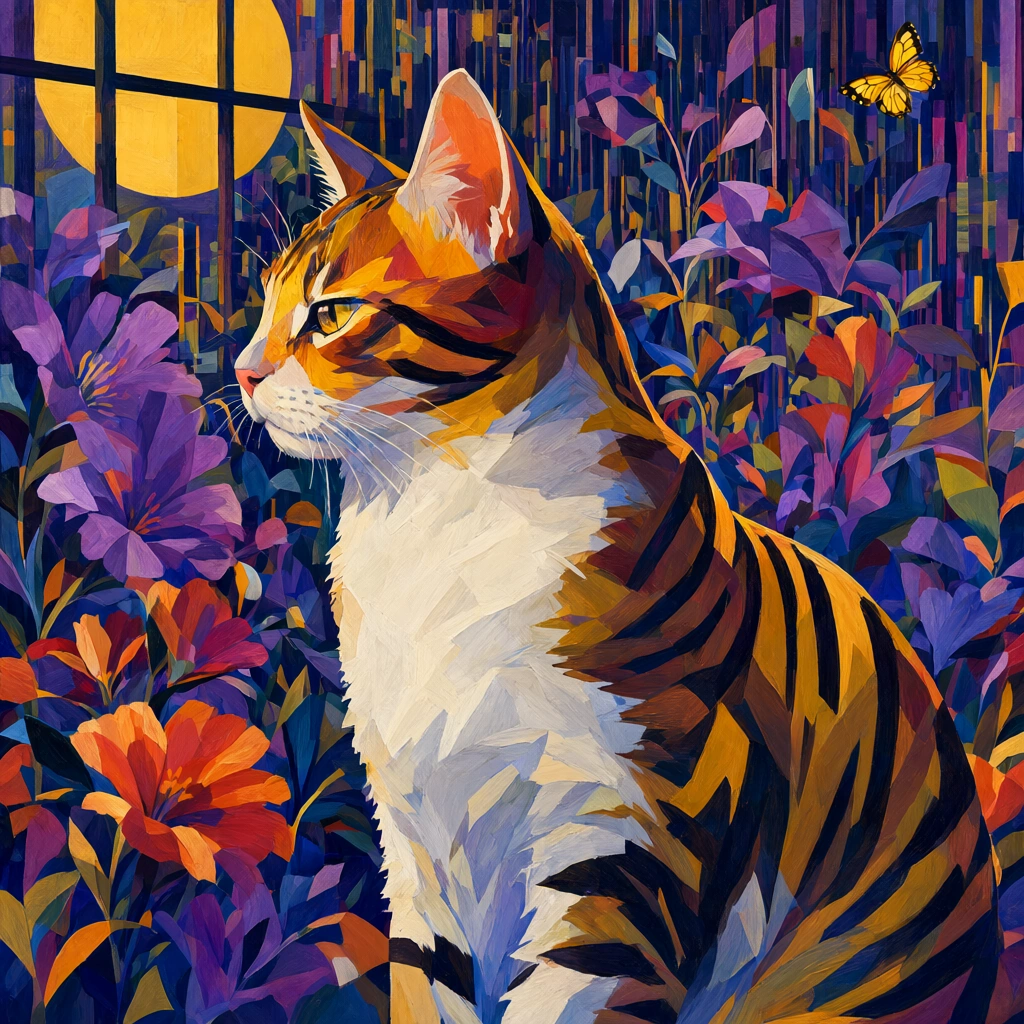 Qwen Image 2.1
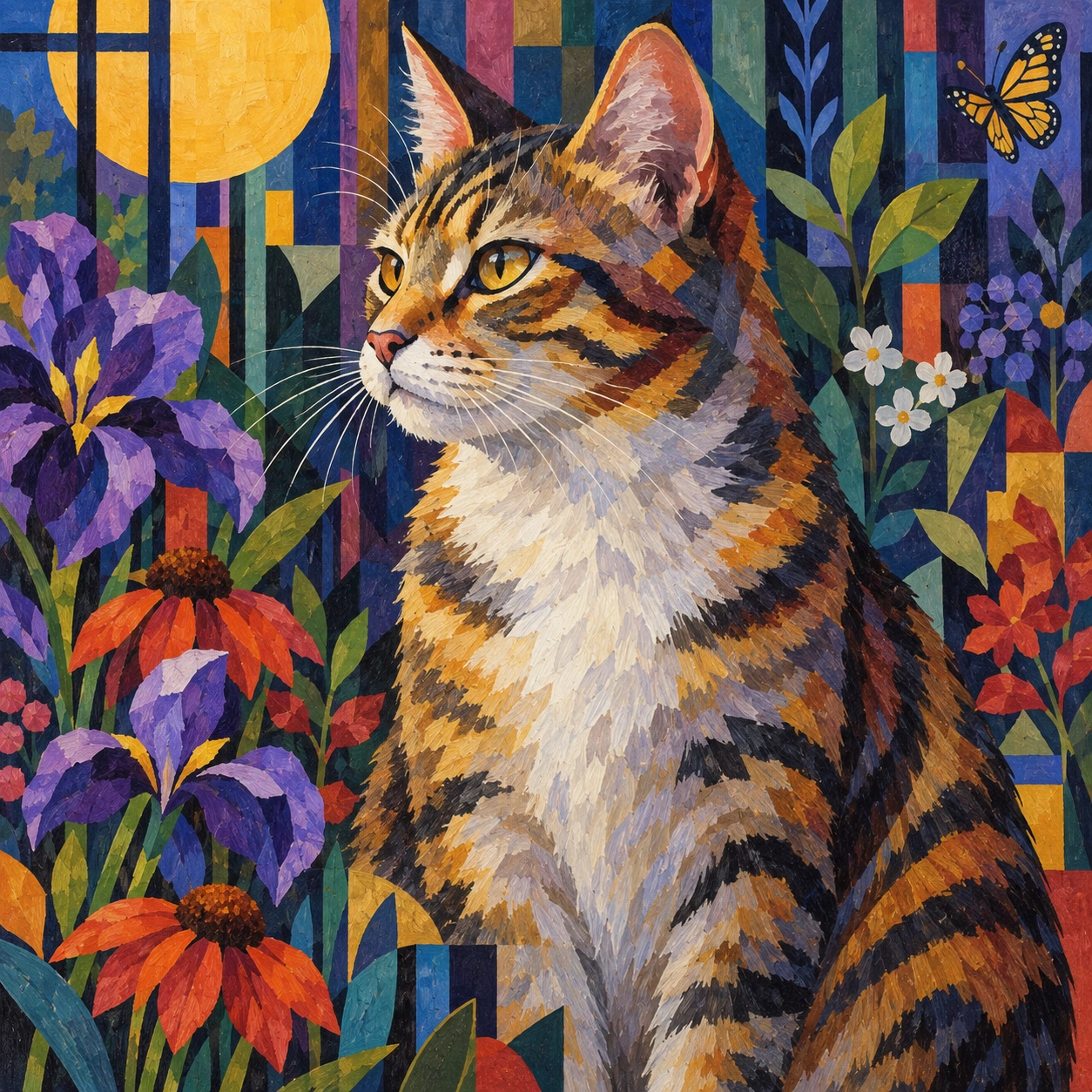 GPT Image 2.5
Reference details
- Reference ID
- 1374
- Category
- Painting
Reference prompts
Style prompt
The painted style uses angular color facets and overlapping graphic shapes to build volume without smooth photographic blending. A warm gold-orange core is countered by deep violet, blue, burgundy, and small bright floral accents, creating saturation through contrast rather than a single uniform hue. Broad planes carry the main form, while short directional strokes add tactile detail where the eye rests. Dark contours appear selectively and break into adjacent color patches instead of enclosing every edge. Repeated straight bars and curving organic marks create a lively tension across a shallow, tightly packed space. Warm upper light lifts selected facets; cooler shadow colors remain visible rather than turning neutral black. Small high-contrast accents circulate around one dominant silhouette and keep the crowded field readable. The overall effect is ornate and energetic, with faceted brushwork, bold color adjacency, and layered surface rhythm controlling the abundance of detail.Full example prompt
A square painted illustration shows a tabby cat sitting among oversized flowers and layered geometric garden shapes. The background is a dense patchwork of narrow verticals, rectangles, leaves, and dark blue-purple spaces, rather than a distant natural landscape. Near the upper left, a large warm yellow circle is partly cut by the frame and crossed by dark straight bars. The cat fills the central area from its raised ears to the lower edge, with its head turned toward the left. One amber eye catches light beneath a sharply angled brow; the pink nose and pale whiskers project into the darker flower-filled side of the image. The upright ears are coral and gray inside, while the forehead and cheek are built from facets of yellow, orange, rust, burgundy, and cool blue shadow. A broad white-gray chest occupies the middle lower portion, broken by short painted strokes that suggest soft fur without copying each strand. Across the right shoulder and flank, curved dark stripes make a strong rhythmic pattern over warm golden patches. On the left, large purple blossoms and red-orange flowers rise from crowded stems. Smaller leaves and flower shapes spread behind the cat on the right, and a small yellow-and-black butterfly hovers near the upper right corner. The vegetation, bars, and animal contours overlap in shallow layers, creating a lively graphic surface. Painted marks are angular and visibly placed, with crisp color boundaries interrupted by smaller soft strokes in the fur and petals. Light appears warm from the upper left, brightening the face and ears while cooler blue and violet shadows settle into the background. The overall composition is exuberant but organized: a large warm central silhouette anchors a tapestry of jewel-colored botanical and geometric accents.