
Styles
#4113
Palette-knife painting style reference and prompts
Explore the “Palette-knife painting” reference with thick paint texture, tactile surfaces, and faceted color planes. View the images, copy the style or example prompt, and discover related styles on Looksift.
Compare the Qwen Image 2.1 and GPT Image 2.5 examples, choose the visual qualities you want, and copy the style prompt for your own project.
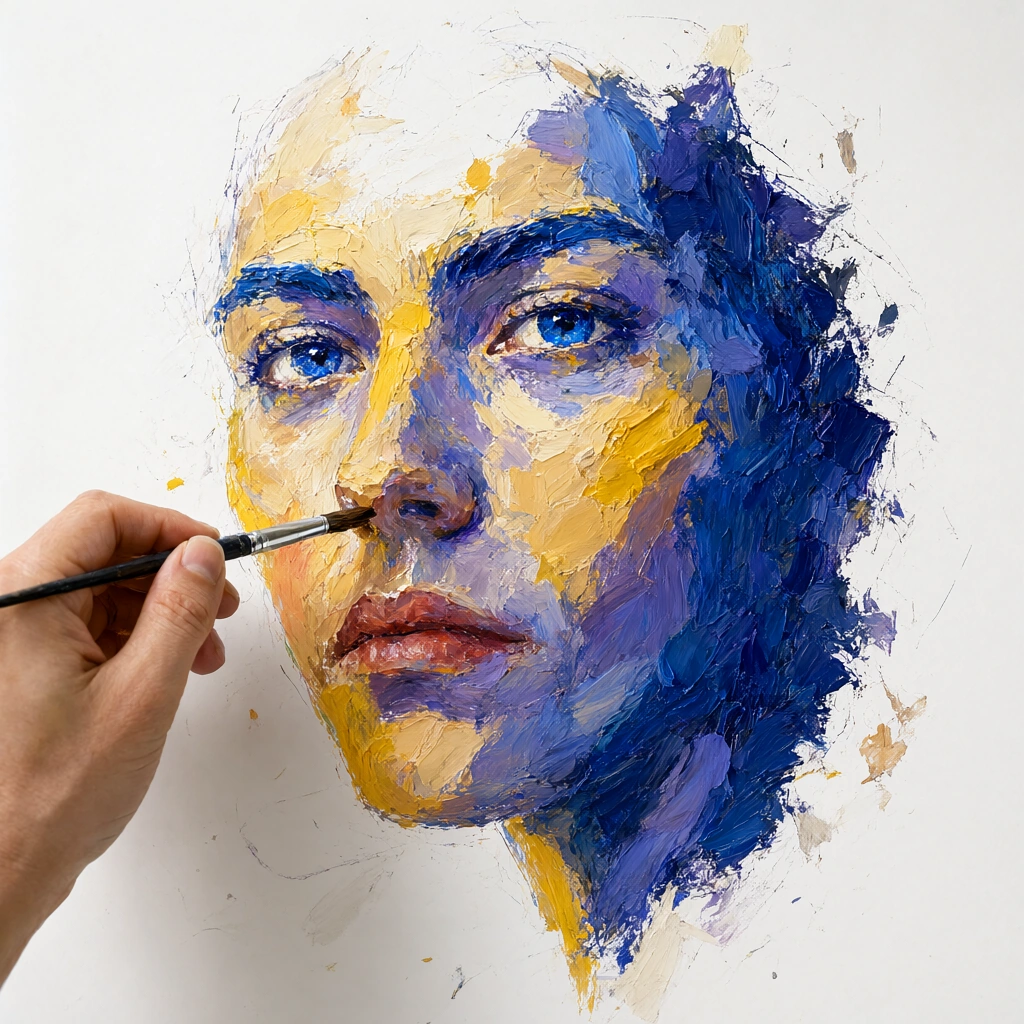 Qwen Image 2.1
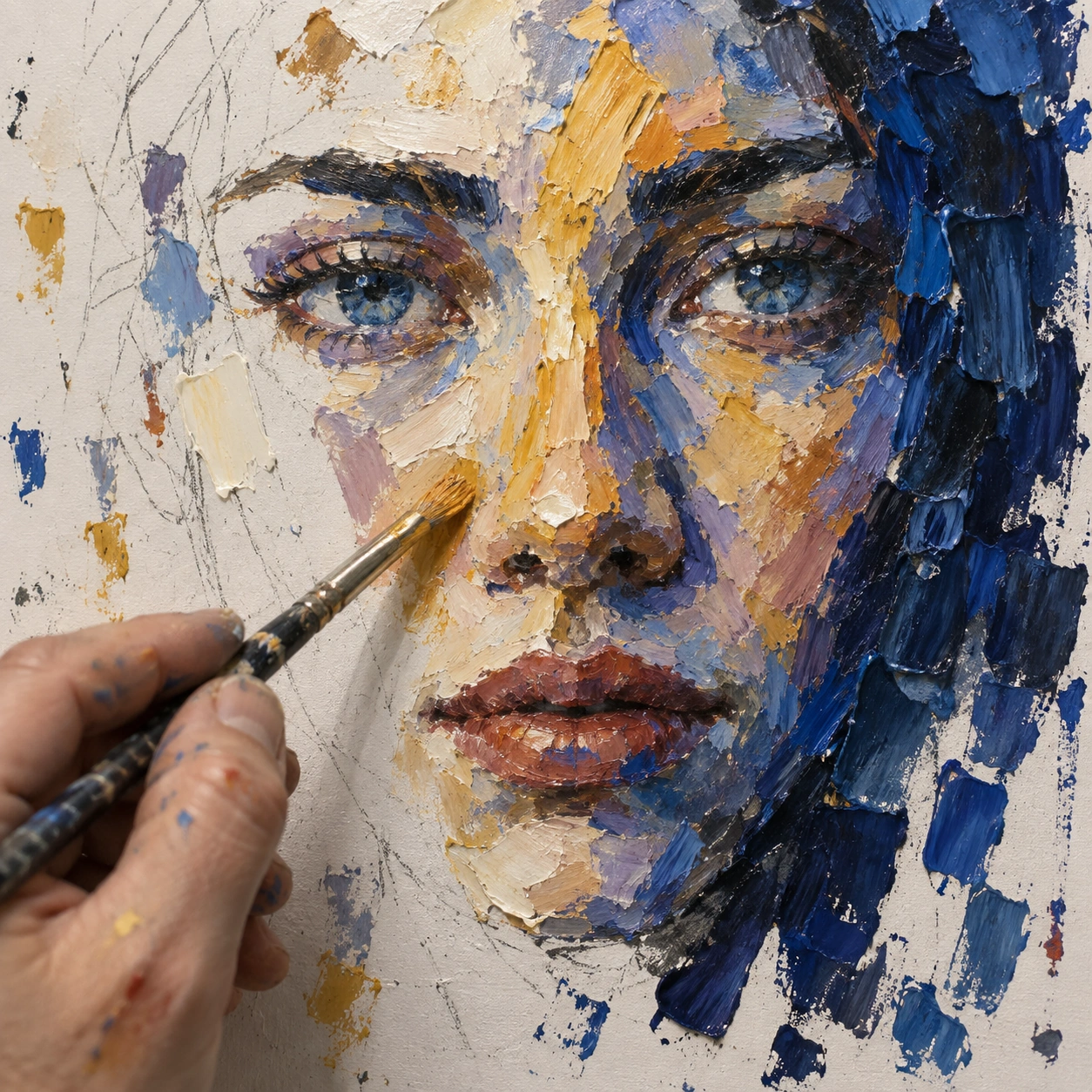 GPT Image 2.5
Reference details
- Reference ID
- 4113
- Category
- Painting
Reference prompts
Style prompt
The image has a thick impasto painting surface, with palette-knife slabs, dragged edges, and raised ridges fully visible. Broad angular color facets meet abruptly, while a few finer linear strokes articulate small focal transitions. Cobalt, indigo, violet, bright yellow, rusty orange, cream, and exposed pale ground create a lively warm-cool mosaic. Physical light catches the thickest deposits and leaves tiny crevice shadows; pictorial depth comes from dark cool patches set beside warm luminous ones. The arrangement concentrates dense worked texture in one region and lets marks fragment into open ground around it. Irregular squared ends and scraped underlayers keep the surface convincingly handmade rather than smoothly blended. The overall effect is energetic, tactile, and provisional, with color blocks and material height carrying the form.Full example prompt
A square close photograph shows a partly finished painted face on a white surface, constructed from thick, angular deposits of blue, yellow, violet, ocher, and cream paint. Both eyes occupy the upper middle; their blue irises stay sharply recognizable amid broad broken strokes around the brows and lids. A yellow-orange ridge runs down the bridge of the nose, while the cheeks split into cool blue-violet shadow and warm ocher planes. The lips near the lower center are modeled with rusty red, mauve, and blue marks rather than a smooth outline. On the right side, darker cobalt and navy paint forms a heavy vertical mass that dissolves into separate palette-knife fragments at the lower edge. The left side of the face is much less complete, with pale ground still visible between thin sketch lines and isolated colored strokes. From the lower left, a real hand holds a narrow brush whose tip touches the warm area beside the nose, revealing the scale and unfinished process. The background remains mostly blank white, with small accidental dabs and scratches scattered around the portrait. Thick paint ridges throw tiny physical shadows, and dragged blades leave squared ends and exposed undercolors. The camera is close and nearly frontal to the painted surface, allowing both the emerging facial expression and the coarse material to be read. Soft light from the upper left picks out the raised paint and the brush ferrule, while dark blue strokes create the stronger pictorial shading on the face. No writing is legible. The overall composition concentrates rough, bright color around the eyes and nose, balancing a nearly finished focal center against open working space.