
Styles
#1616
Coloring-in sheet style reference and prompts
Explore the “Coloring-in sheet” reference with stippled texture, geometric forms, and a low viewpoint. View the images, copy the style or example prompt, and discover related styles on Looksift.
Compare the Qwen Image 2.1 and GPT Image 2.5 examples, choose the visual qualities you want, and copy the style prompt for your own project.
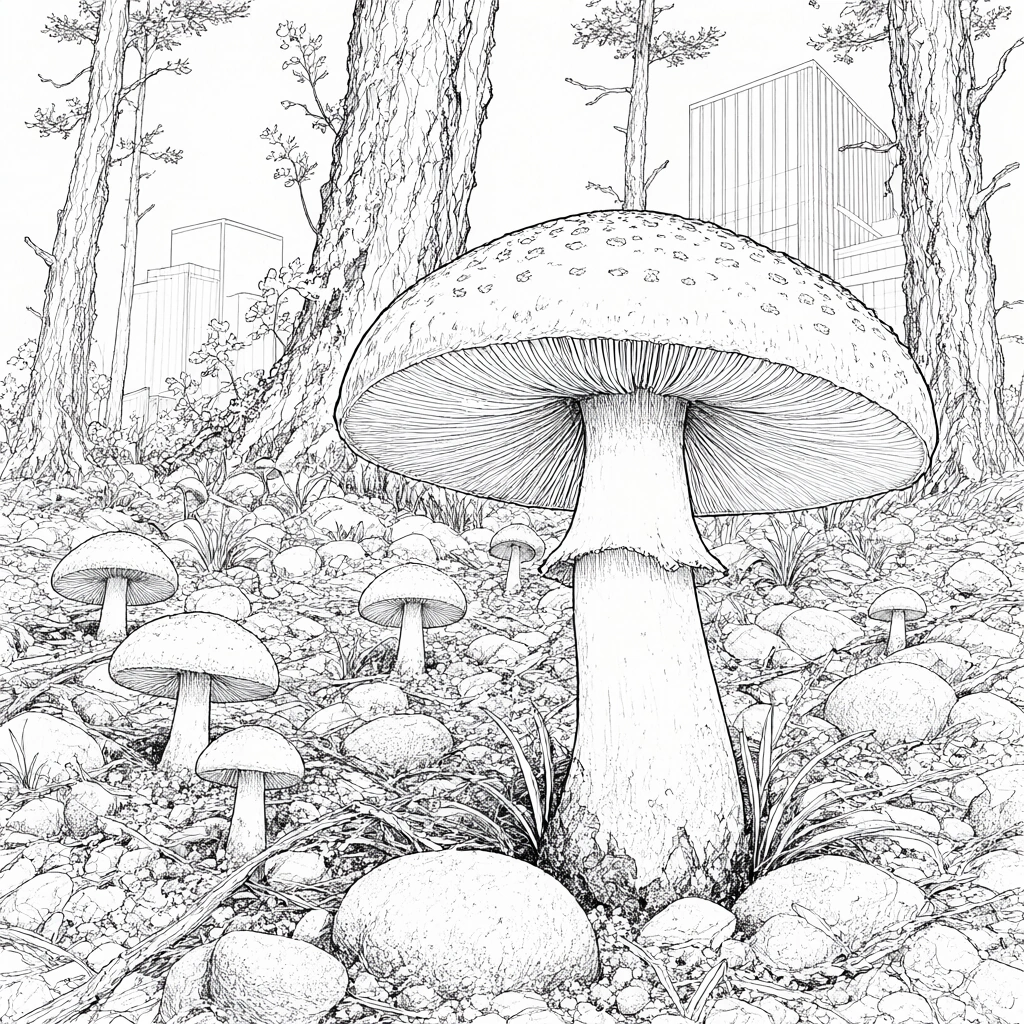 Qwen Image 2.1
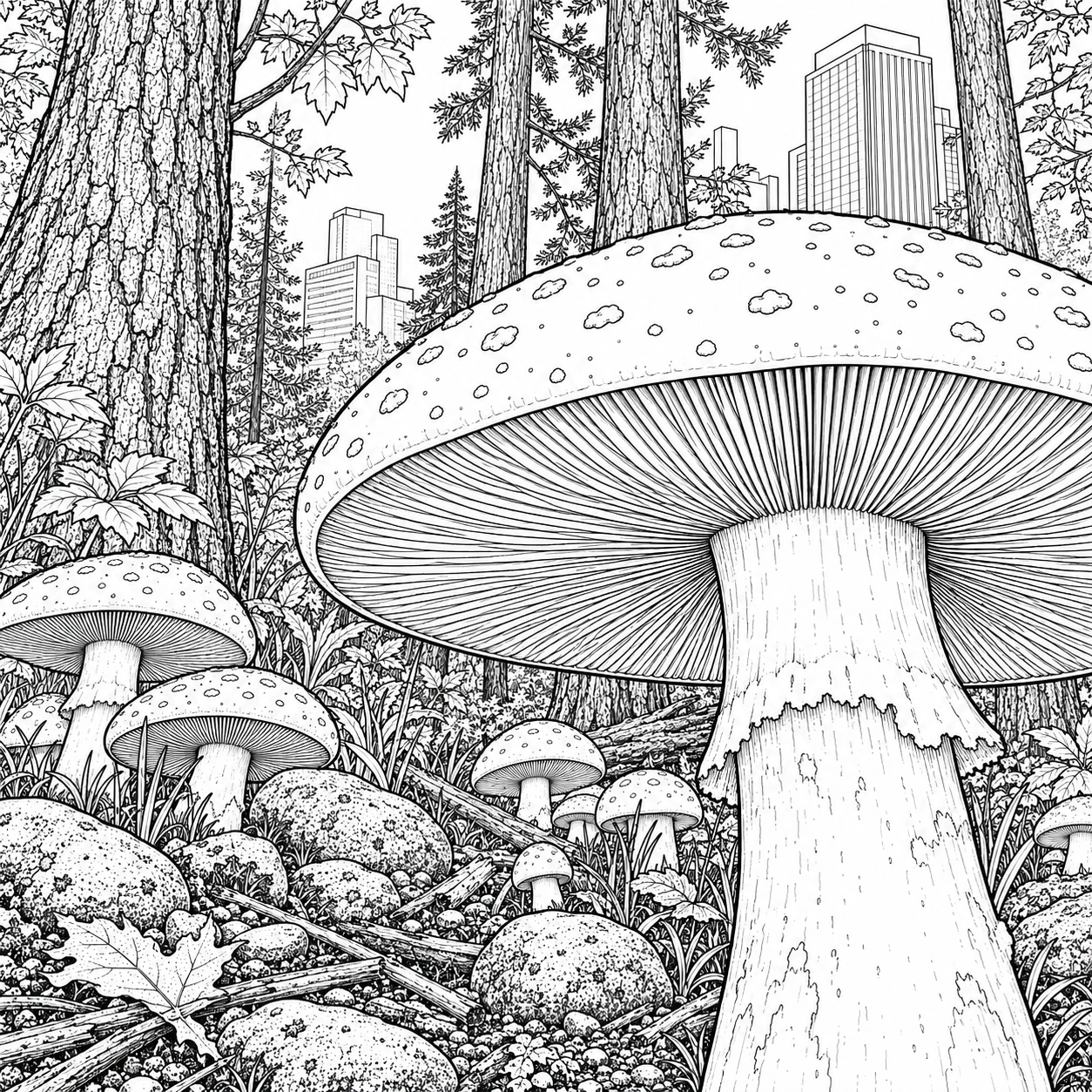 GPT Image 2.5
Reference details
- Reference ID
- 1616
- Category
- Ink & line
Reference prompts
Style prompt
Crisp black linework on open white paper establishes a printable coloring-sheet surface. Firm outer contours organize the main silhouettes, while thinner parallel strokes, stippling, short crosshatches, and repeated texture marks supply volume without filling the shapes. Large quiet white interiors alternate with intricate clusters of tiny marks, giving both easy colorable areas and passages for close attention. Foreground forms carry stronger ink weight and denser detail; distant rectilinear planes are lighter, simpler, and partly screened by organic verticals. A low viewpoint magnifies a central curved mass and allows small elements to overlap densely across the lower edge. There is no color fill or tonal wash; depth comes from line weight, spacing, occlusion, and changes in detail. The overall impression is meticulous, illustrative, and slightly whimsical, with natural curves set beside restrained geometric forms.Full example prompt
A square monochrome coloring sheet shows a woodland floor where one enormous mushroom dominates the right foreground. Its broad domed cap rises across the middle of the image, with a clean curved contour and fine scattered spots. Under the cap, closely spaced gill lines radiate toward a thick pale stem that descends beyond the bottom edge. Smaller mushrooms cluster at the left and along the midground, their cap rims and short stalks partly hidden by stones. The lower field is packed with rounded rocks, broken twigs, tufts of grass, and granular soil markings. Several tall trunks climb vertically behind the fungi, with irregular bark textures, small branches, and leafy or needle-like foliage. In the distance, a few sharply rectilinear building forms appear between the trunks, including a ribbed high facade on the right and stepped boxes on the left. Those remote planes stay lighter and less densely inked than the objects in front. The scene is drawn entirely in black, gray, and open white paper. Strong contour lines define the mushroom cap, gills, stalk, tree edges, and stones; fine hatching, stippling, and short repeated marks supply local volume and texture. There is no filled-in color, wash, or shading gradient beyond line density. White spaces inside major shapes are deliberately broad enough to accept coloring, while the ground and bark give more intricate small areas. The view is low, near the level of the smaller fungi, making the main cap feel unusually large. No human figure or readable caption appears. The result combines a detailed natural-history line drawing with a curious glimpse of modern geometry in the background, all held in crisp printable outlines.