
Styles
#1964
Aaron James Draplin style reference and prompts
Explore the “Aaron James Draplin” reference with geometric forms, teal and ochre tones, and tonal contrast. View the images, copy the style or example prompt, and discover related styles on Looksift.
Compare the Qwen Image 2.1 and GPT Image 2.5 examples, choose the visual qualities you want, and copy the style prompt for your own project.
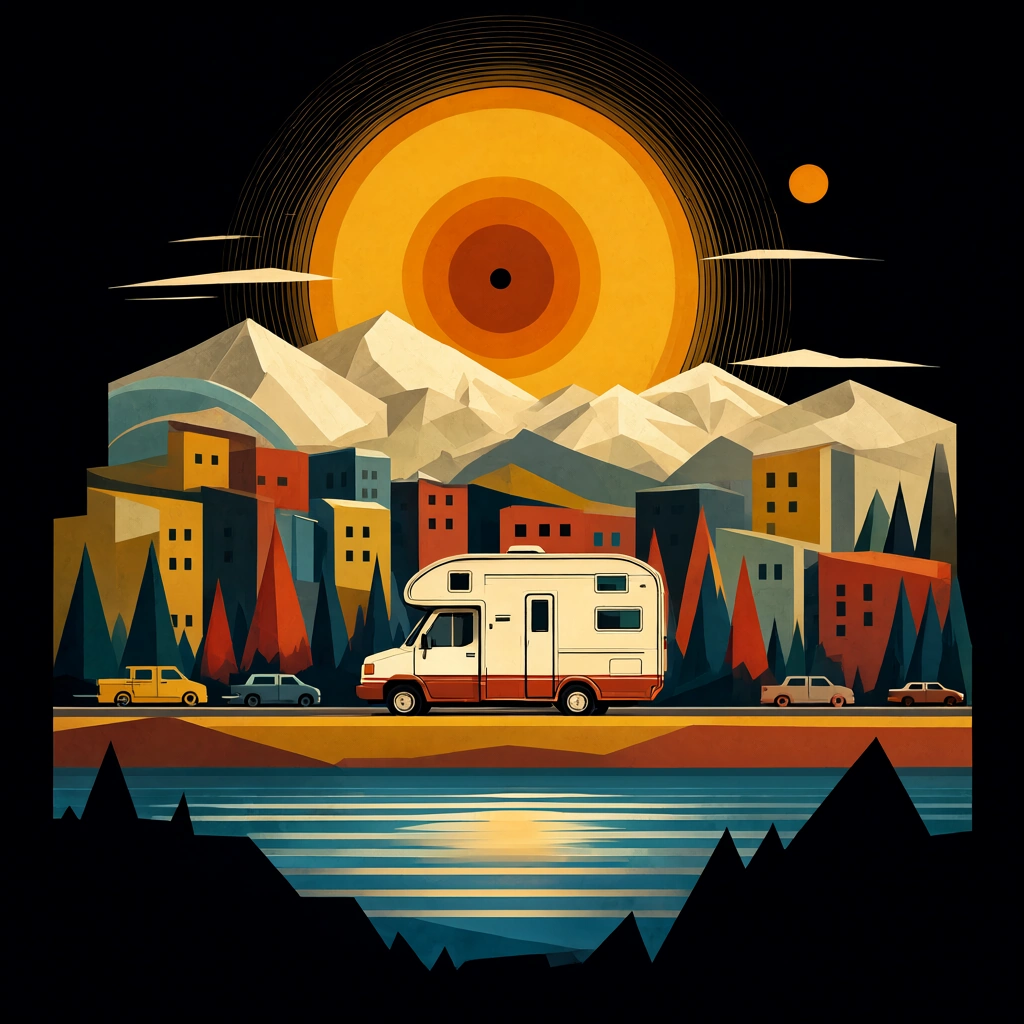 Qwen Image 2.1
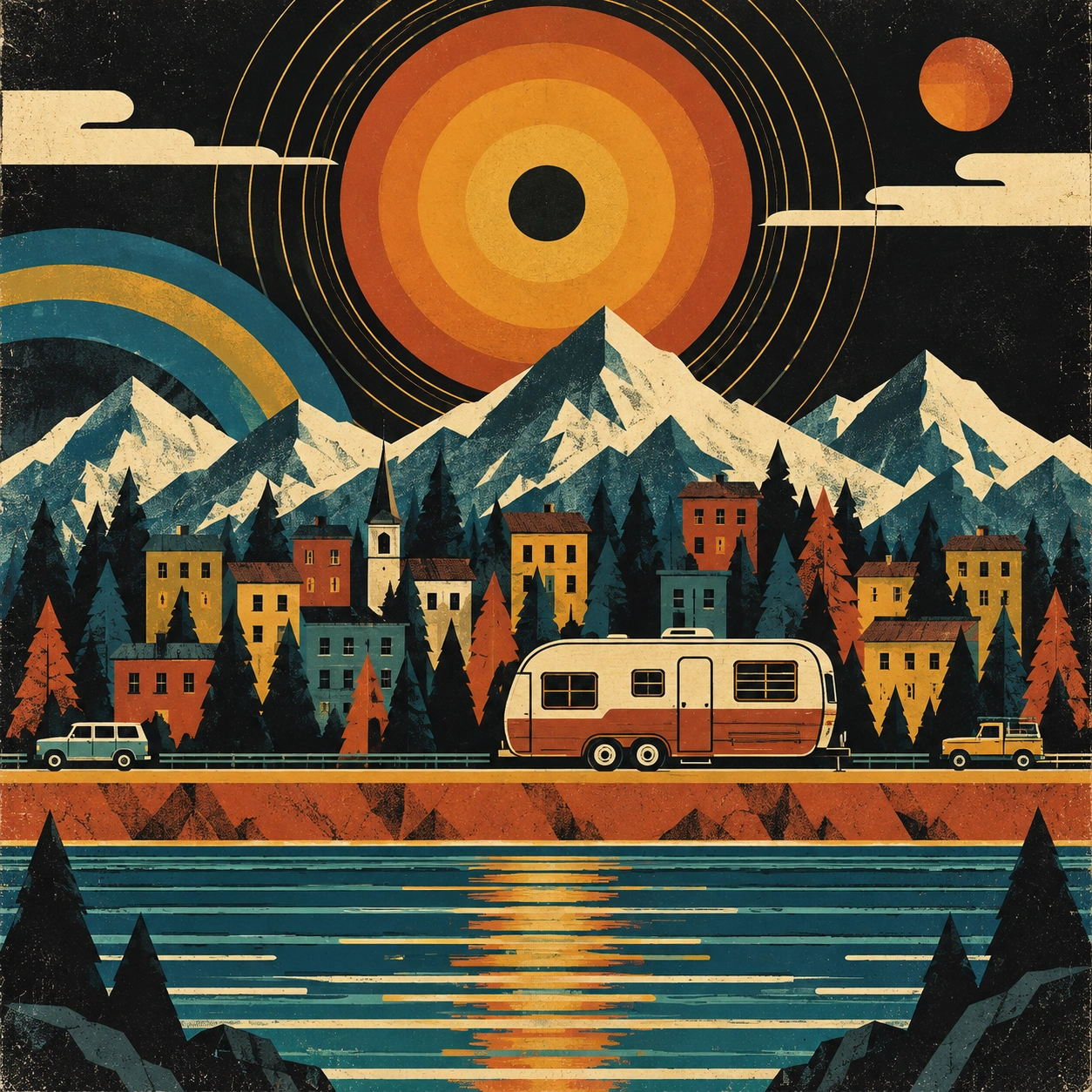 GPT Image 2.5
Reference details
- Reference ID
- 1964
- Category
- Flat illustration
Reference prompts
Style prompt
The image has a retro graphic print finish built from flat, hard-edged geometric shapes and densely nested line patterns. Broad areas of near black provide a base for warm ochre, burnt orange and brick red, balanced by compact teal and blue green passages. Concentric curves, horizontal bars and sharp triangular accents repeat at different scales, turning the surface into an ordered rhythm. Small details appear as short marks, slots and seams rather than naturalistic modeling, while a faint worn grain softens the otherwise precise color boundaries. Illumination is conveyed through high contrast placement of pale cream and gold within dark fields; gradual shading remains limited. Shallow stacked layers and clear overlaps establish depth without giving up the poster-like flatness. The overall effect is bold and nostalgic, with disciplined color blocks and fine decorative lines sharing the frame.Full example prompt
A square retro vector-like illustration layers a camper and a compact mountain town beneath an enormous circular golden sun, all against a nearly black sky. The upper center holds the sun as nested amber, orange and rust rings around a small dark core. Thin curved lines repeat beyond its rim, so the glow reads as a graphic pattern rather than soft photographic light. Flat pale cloud bands enter from both upper sides, and a smaller orange disk hangs near the upper-right edge. Across the middle distance, cream-colored mountain peaks rise in sharp angular planes. A second set of muted blue and ochre arcs sits to the left, while blocky buildings in mustard, red, teal and charcoal overlap the mountains below. Their windows are reduced to short dark rectangles. Pointed conifer silhouettes stand between the facades, alternating dark blue green and warm red orange. The foreground is anchored by a cream and brick-red camper placed just right of center. Its rounded roof and rectangular side panels carry a few small windows and crisp black seams, while its two circular wheels rest on a narrow horizontal road. Much smaller vehicles sit near the left and right edges, reinforcing the difference in scale without drawing attention away from the central camper. A thick ochre strip and a terracotta embankment separate the road from the water along the lower edge. Beneath them, the water is built from horizontal blue, teal and pale gold bars with a small warm reflection near the center. Dark triangular forms crop into the bottom corners and echo the pointed trees above. The image uses hard-edged shapes, limited flat color, closely packed decorative lines and a subtly worn print surface. Light is expressed by the pale mountain planes, the large warm disk and narrow gold accents rather than by continuous shading; the black gaps keep every bright area distinct. The overall composition stacks circular sky, jagged mountains, rectilinear town and horizontal water into a dense but orderly travel image in warm ochre and deep teal.