
Styles
#2781
Atelier Olschinsky style reference and prompts
Explore the “Atelier Olschinsky” reference with teal and ochre tones, central perspective, and warm color tones. View the images, copy the style or example prompt, and discover related styles on Looksift.
Compare the Qwen Image 2.1 and GPT Image 2.5 examples, choose the visual qualities you want, and copy the style prompt for your own project.
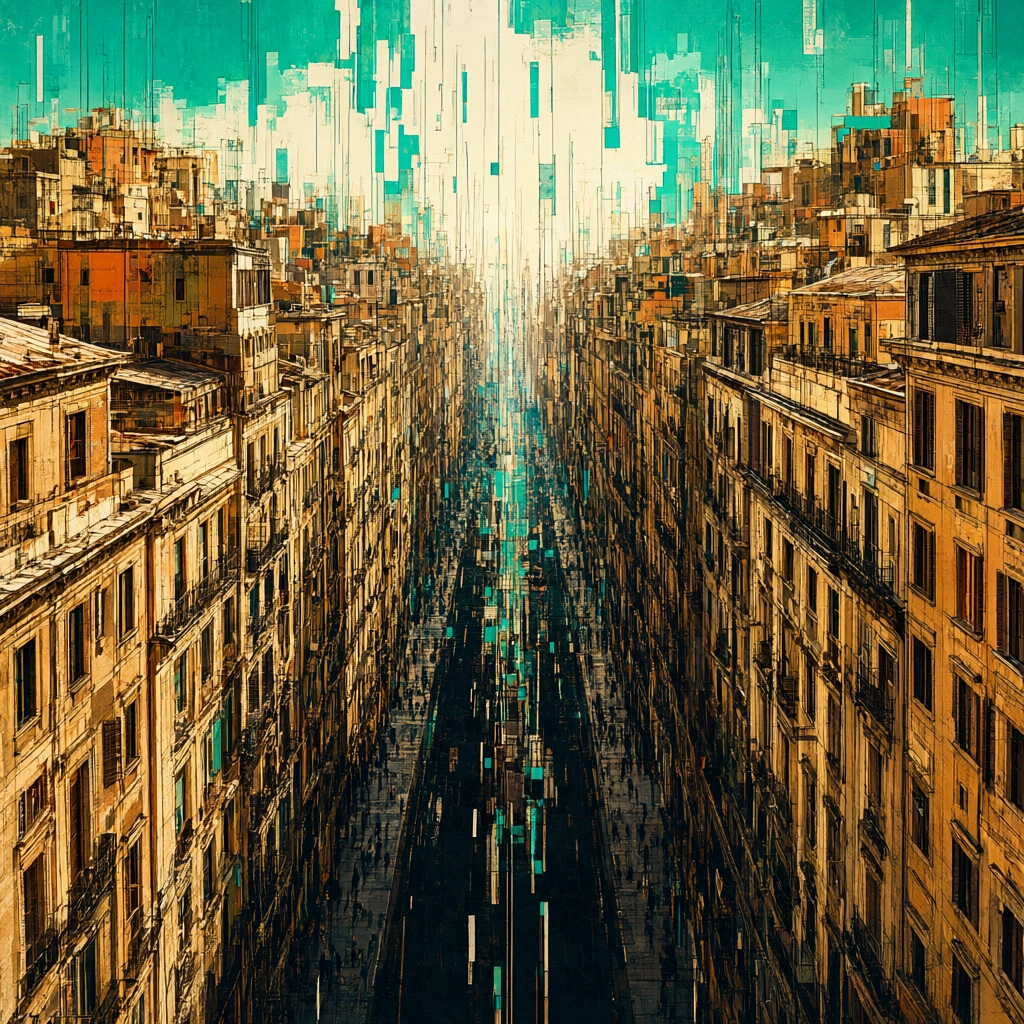 Qwen Image 2.1
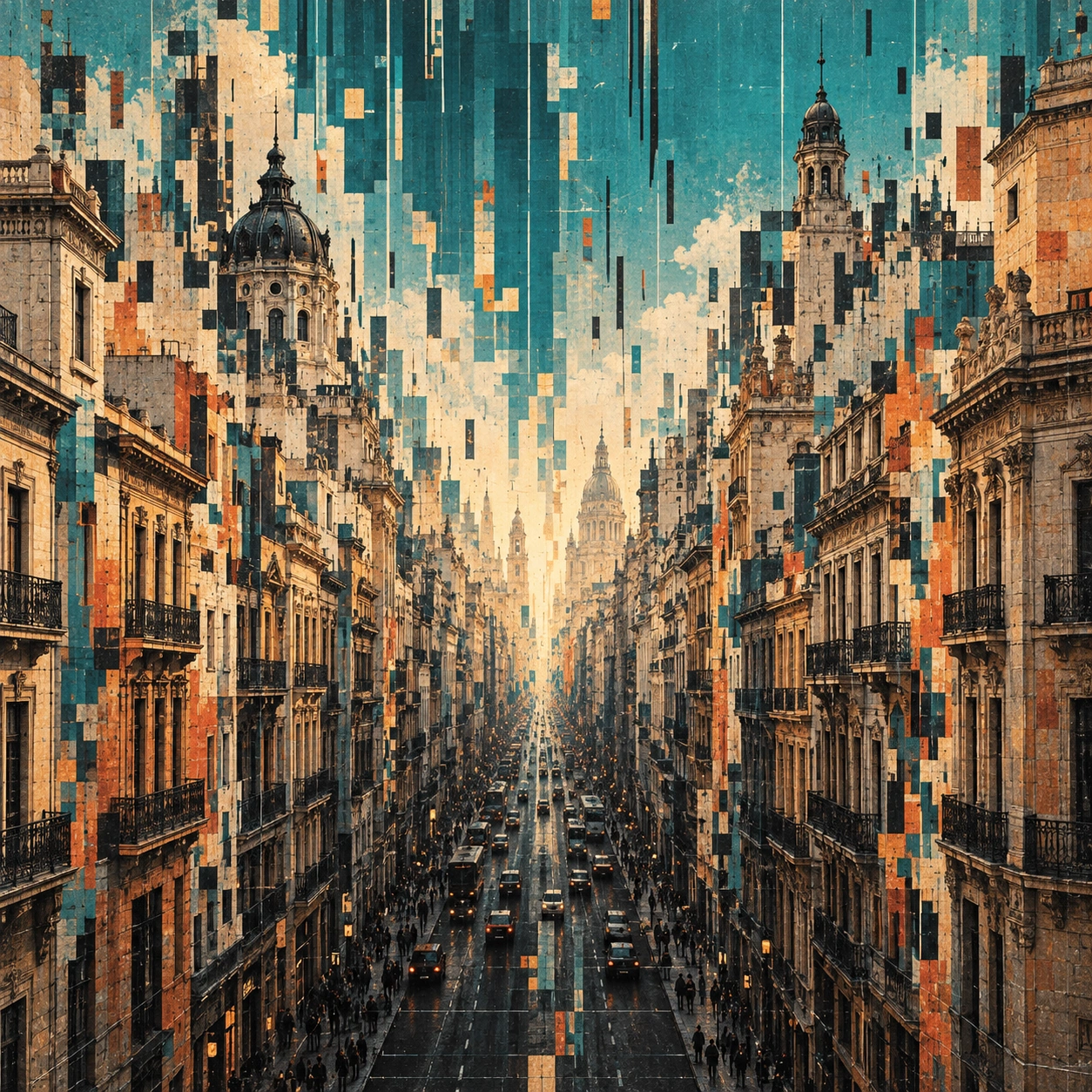 GPT Image 2.5
Reference details
- Reference ID
- 2781
- Category
- Collage & mixed media
Reference prompts
Style prompt
A detailed illustration is disrupted by modular digital fragmentation. Strong central perspective and repeated vertical ranks establish depth, then rectangular blocks, narrow bars, and offset grid cells break the contours into rhythmic discontinuities. Warm ochre and aged cream surfaces contrast with cool teal and turquoise fields; near-black lines reinforce the deepest receding channel. Fine drawing and worn print grain coexist with crisp pixel edges, giving the surface both historical texture and electronic precision. Light gathers near a central distance and cooler upper region, while lower corners remain dense and dark. Repetition creates visual order, and localized glitch cascades disturb that order without erasing the underlying spatial structure. The finished image feels intricate, rhythmically dense, and slightly unstable, with a long inward pull and a rainlike fall of geometric fragments.Full example prompt
A square digital architectural illustration looks down a long old-city avenue between rows of tall historic buildings. The street begins wide at the bottom edge and narrows toward a bright central vanishing point. Dense facades line both sides, their windows, balconies, rooflines, and cornices stacked in repeating tiers. At ground level, tiny dark marks suggest traffic and pedestrians, but the street is mostly a receding channel of shadow. Warm ochre, faded orange, cream, and dark brown describe the buildings, while saturated teal and turquoise fill the sky and many vertical fragments. The upper skyline breaks into rectangular pixels and thin downward stripes, as if pieces of the buildings are sliding into the air. At the street center, blocks and narrow lines cascade down into the avenue, partially obscuring its depth. The image holds a believable urban perspective underneath the digital disruption: the facades remain recognizable, but their edges splinter into grids, bars, and offset shards. Fine outlines and a lightly worn print texture cover the surface. Light seems to come from the distant center and the upper sky, making the far end luminous while the lower near street stays dark. The composition is symmetrical enough to draw the eye deeply inward, yet its fragmenting pattern keeps the frame unsettled. It feels like a memory of a city interrupted by data loss, balancing old architectural detail with precise digital decay.