
Styles
#1974
Rose Wylie style reference and prompts
Explore the “Rose Wylie” reference with scratch-like marks, soft pastel colors, and soft diffused light. View the images, copy the style or example prompt, and discover related styles on Looksift.
Compare the Qwen Image 2.1 and GPT Image 2.5 examples, choose the visual qualities you want, and copy the style prompt for your own project.
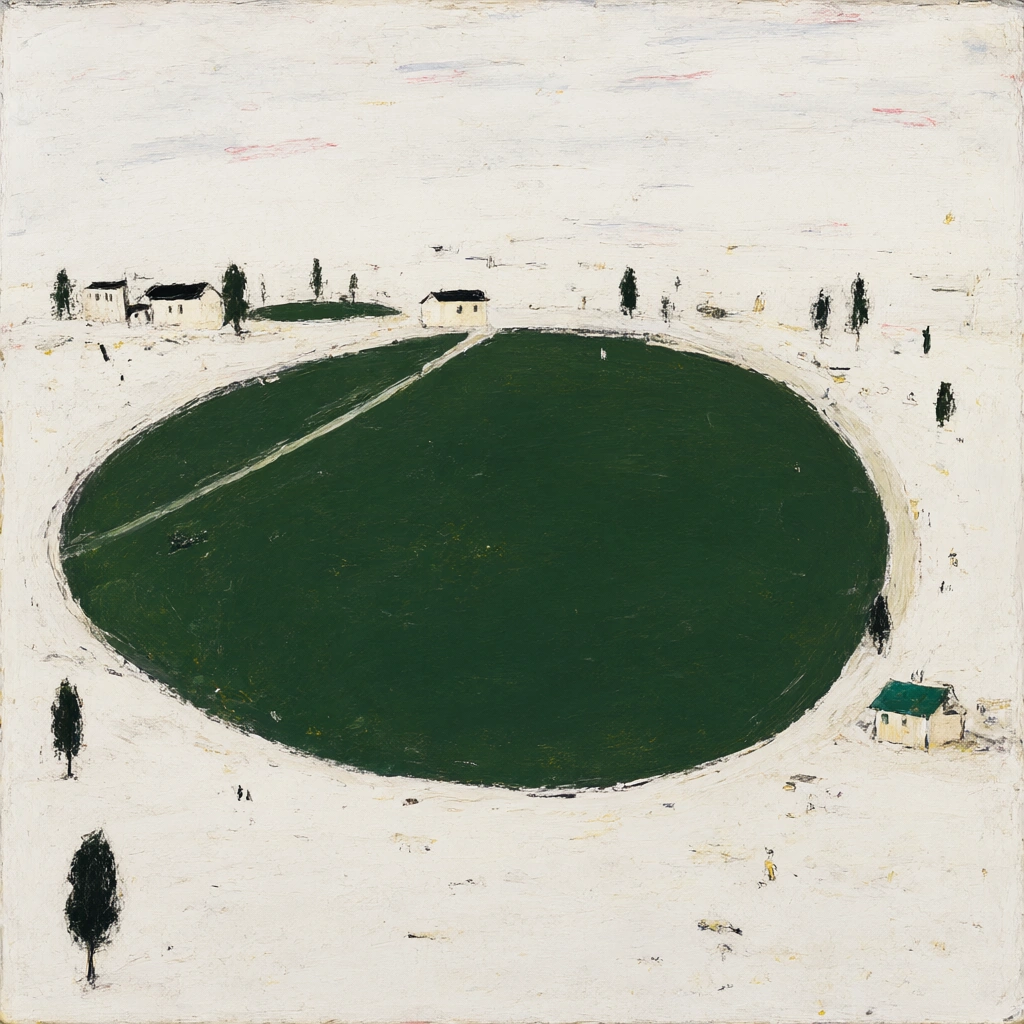 Qwen Image 2.1
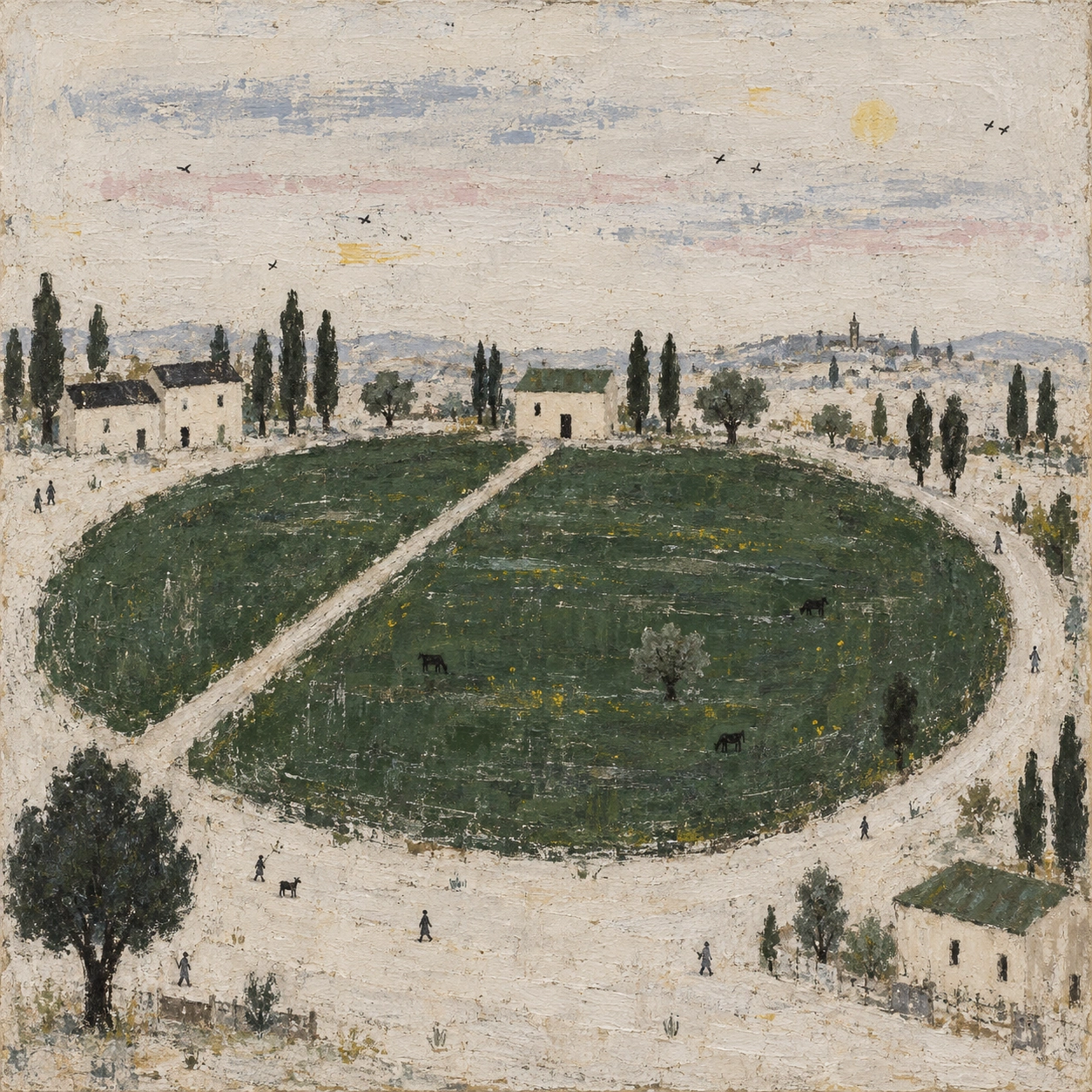 GPT Image 2.5
Reference details
- Reference ID
- 1974
- Category
- Painting
Reference prompts
Style prompt
The image has a rough, naive painted surface in which dry scumbles, sparse scratches and uneven outlines remain visible. A wide off-white field carries thin gray blue, pale pink and occasional yellow traces, while one or two broad deep green areas create the strongest tonal weight. Forms are reduced to short upright marks, simple blocks and irregular curves, with small details left suggestive rather than fully modeled. Color sits thinly over a worn pale ground, and gaps in the pigment become part of the texture. Diffuse light keeps the surface nearly flat; contrast comes chiefly from the placement and scale of dark areas, not from cast shadows. The space is loosely elevated and compressed, with disparate small forms distributed around larger quiet masses. The overall effect is intimate and unpolished, using deliberate sparseness and rubbed color to give the composition its character.Full example prompt
A square, naive painted landscape spreads a small settlement across an off-white, visibly worked surface. The upper half remains mostly pale, with thin gray blue and pink horizontal scumbles, tiny dark marks, and a few loose yellow accents interrupting the open space. Short upright tree shapes stand in uneven groups across the middle distance. On the left, a pair of low pale buildings with black roof areas and a few dark window marks sit beside narrow vertical trees. Near the center, another small cream building occupies the far edge of a broad dark green oval. A light diagonal causeway or path runs from the lower left across that oval toward the central building, dividing the large green area into unequal parts. The oval itself holds thin gray green scratches, yellow flecks and a few small uncertain dark shapes, all kept subordinate to its broad deep tone. Around its right edge, a pale curved strip separates the green from more scattered marks and trees. A dark isolated tree rises near the lower-left corner, while a small green-roofed building sits at the lower-right edge. Tiny dark strokes distributed over the pale ground suggest distant activity without resolving into detailed figures. The perspective feels gently elevated, allowing the eye to look down across the enclosed area while still seeing the buildings face-on. The painted surface is dry, rubbed and irregular; rough outlines sometimes break apart, and the pale ground shows through loosely applied color. Light is diffuse and nearly even, with the off-white ground providing the brightest field and the dark green oval supplying most of the contrast. There are no strong cast shadows or polished highlights. The overall composition holds a large dark central shape inside a wide pale margin, using sparse marks and uneven spacing to create a quiet, handmade landscape.