
Styles
#2338
David Driskell style reference and prompts
Explore the “David Driskell” reference with scratch-like marks, teal and ochre tones, and tactile surfaces. View the images, copy the style or example prompt, and discover related styles on Looksift.
Compare the Qwen Image 2.1 and GPT Image 2.5 examples, choose the visual qualities you want, and copy the style prompt for your own project.
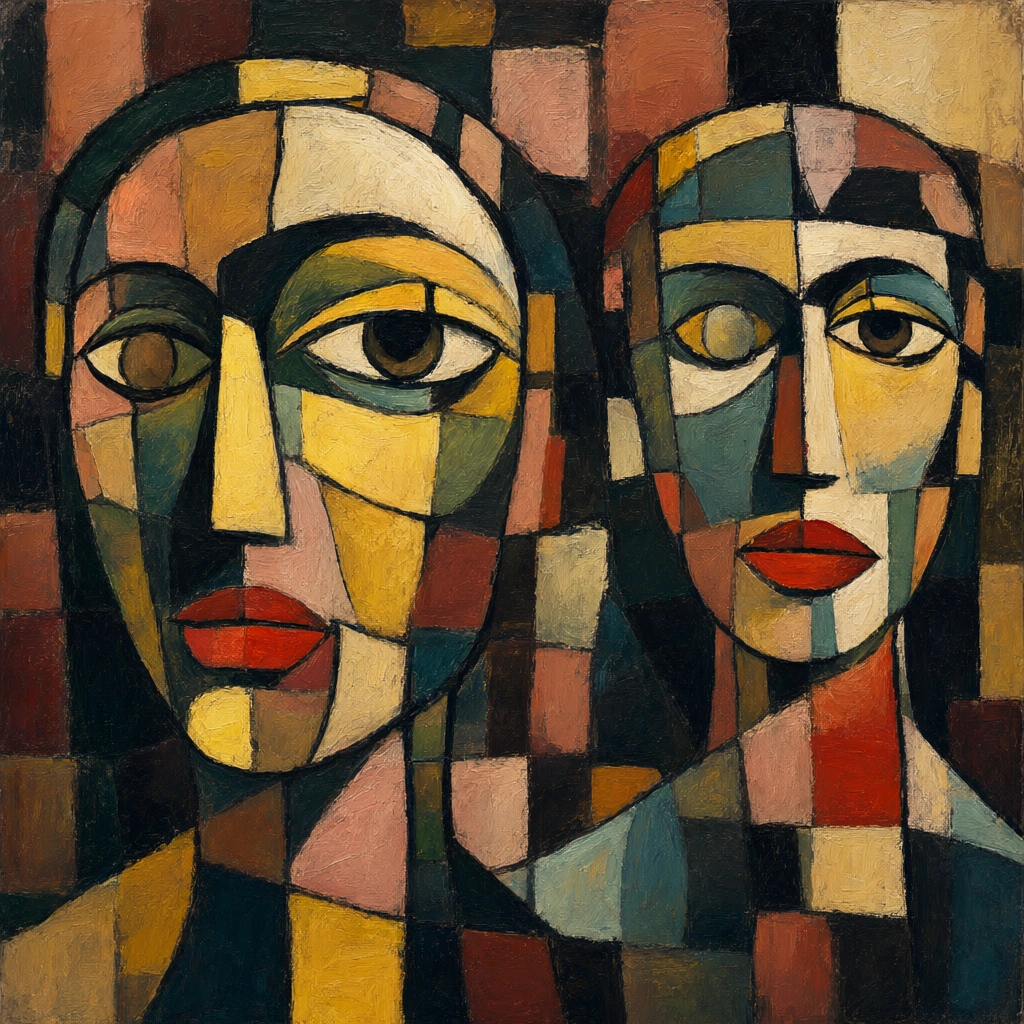 Qwen Image 2.1
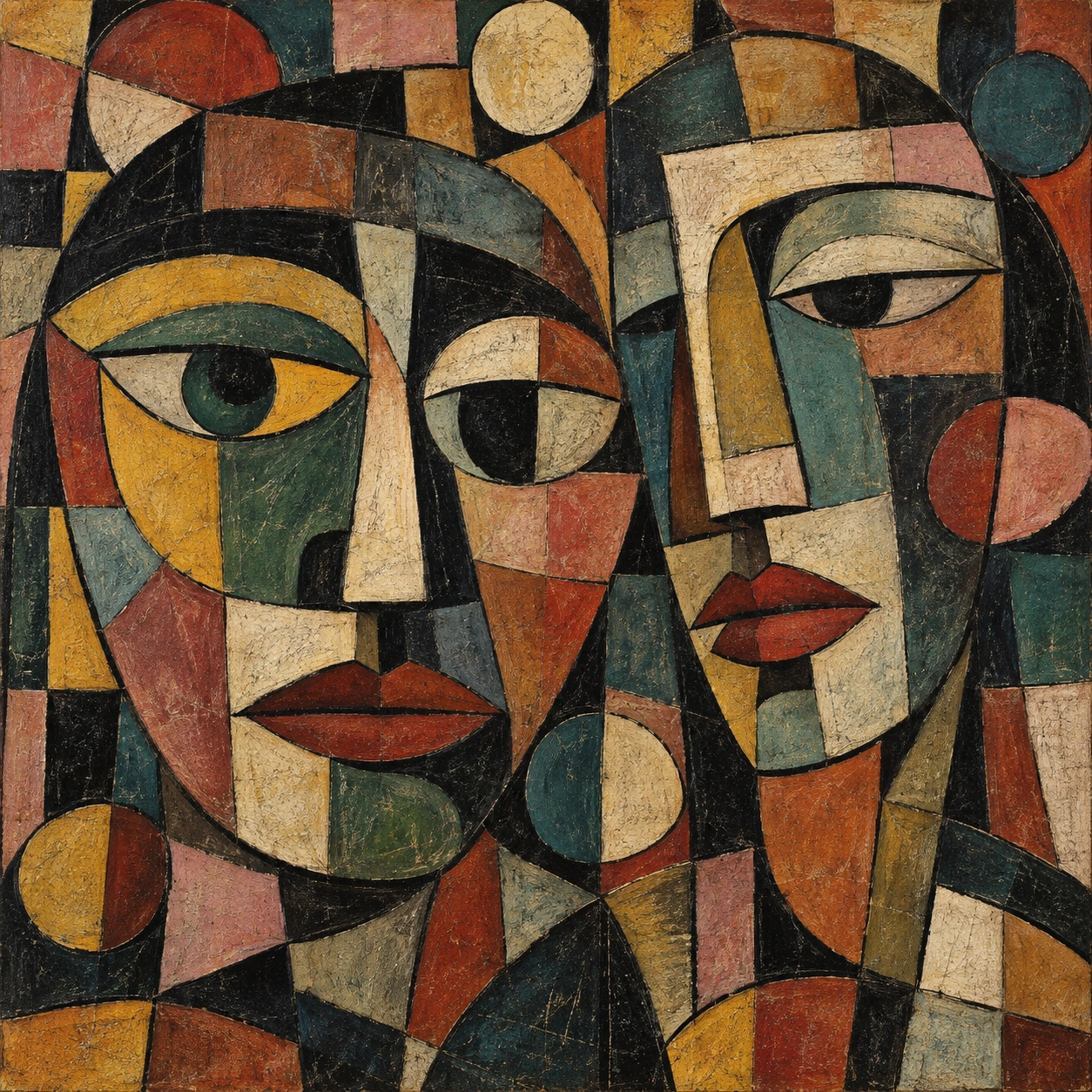 GPT Image 2.5
Reference details
- Reference ID
- 2338
- Category
- Painting
Reference prompts
Style prompt
Cubist painting fragments rounded and angular forms into overlapping color planes joined by heavy charcoal seams. Ochre, brick red, muted pink, teal, cream, and black sit in a dense but balanced pattern, with small bright patches activating deep gaps. Dry scumble, scratches, and granular pigment make the surface visibly worked rather than smooth. Some contours remain sharply partitioned while others are softened by layered wear. Lighting reads as a distributed contrast of colored planes, not a single cast-shadow system. Repeated arcs and broken rectangles create a crowded, syncopated rhythm with a strong frontal presence.Full example prompt
A square, densely layered cubist painting presents two large abstracted faces assembled from irregular blocks of color and thick dark lines. The background does not form a separate room or landscape; fragments of ochre, brick red, dusty pink, dark teal, and cream continue behind and through the heads like a mosaic. On the left, a broad face occupies nearly half the frame. One eye is built from a large curved yellow and green area beneath a dark arch, while a second rounded feature and a flat red mouth emerge from stacked painted pieces. To the right, a narrower face rises slightly higher, with a pale horizontal brow, a half-lidded dark eye, and full red lips set into a patchwork of muted teal and warm earth tones. Circular disks, curved bands, and squared-off patches crowd the upper edge and fill the space between the two heads. Black painted seams bind these pieces together and give the otherwise fractured image a firm underlying structure. The paint appears dry, scumbled, and layered, with scratches and grain visible in both the bright and dark fields. Some edges are sharply divided by black line, while others blur through overlapping pigment and rough surface wear. Light is distributed across the picture rather than coming from a single realistic source; brighter yellow and cream patches lift the eyes and surrounding arcs from the deep charcoal gaps. No lettering is apparent. The overall composition is packed and rhythmic, balancing repeated facial curves with a grid of broken rectangular color planes.