
Styles
#2539
Heinrich Kley style reference and prompts
Explore the “Heinrich Kley” reference with crosshatching, scratch-like marks, and negative space. View the images, copy the style or example prompt, and discover related styles on Looksift.
Compare the Qwen Image 2.1 and GPT Image 2.5 examples, choose the visual qualities you want, and copy the style prompt for your own project.
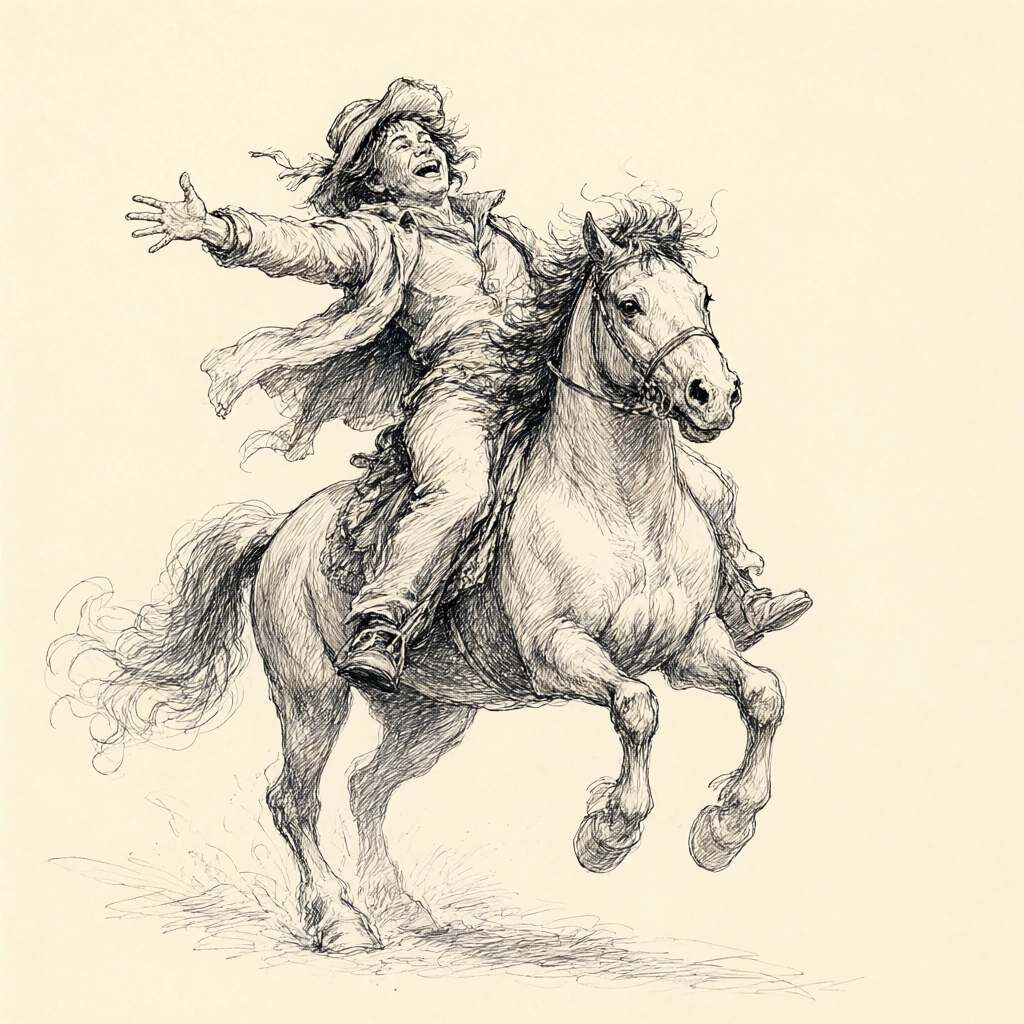 Qwen Image 2.1
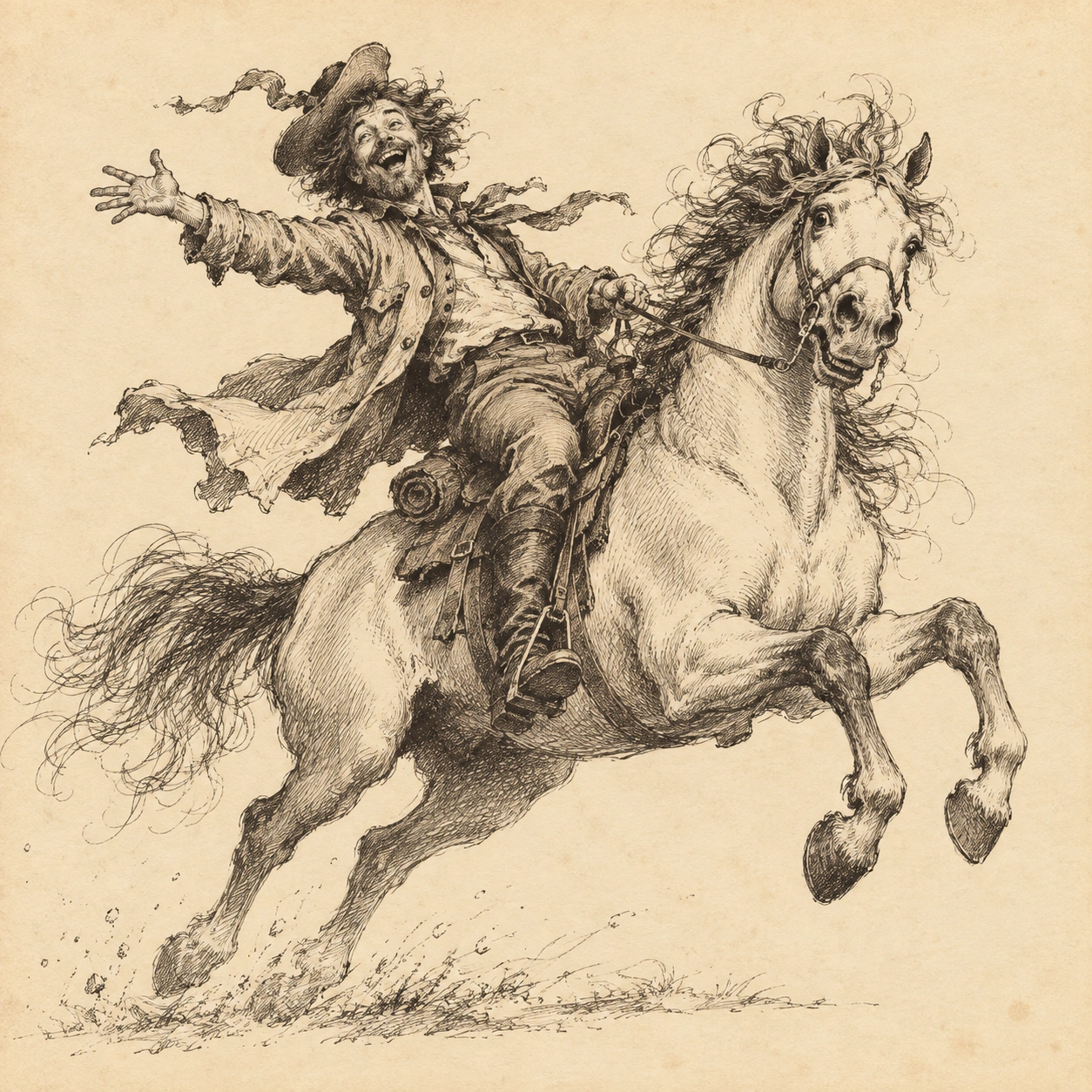 GPT Image 2.5
Reference details
- Reference ID
- 2539
- Category
- Ink & line
Reference prompts
Style prompt
Pen-and-ink drawing uses elastic contours, curling gesture lines, and dense crosshatching on aged cream paper. Black and sepia-gray carry the whole image; open paper provides the highlights. Marks alternate between anatomical precision and fast comic exaggeration. Dark hatch clusters give weight beneath light, almost unmarked surfaces. A strong diagonal sweep drives the composition through generous negative space. Edges stay lively and broken, with loose incidental scratches around the focal movement. The finish feels hand-drawn, witty, and energetic rather than polished flat.Full example prompt
A square pen-and-ink drawing on warm cream paper shows a wild-haired traveler riding a horse that bounds toward the right. The rider leans back with one arm flung outward, mouth open in an exuberant grin. A floppy hat, loose coat, and trailing fabric fly in the same direction as the horse's movement. The animal's front legs lift high, its head turned slightly toward the viewer, mane and tail broken into energetic curls of line. No landscape is fully described; a few faint ground strokes beneath the hooves establish contact and leave most of the paper open. Thin contour lines alternate with dense crosshatching on the rider's face, clothing folds, horse's neck, and shadowed belly. Some strokes are precise and anatomical; others spiral or dash freely, giving the pose a comic speed. The palette is almost entirely black ink and sepia-gray marks against aged beige, with no solid painted color. Light is implied by untouched paper on the horse's back, raised face planes, and coat edges, while hatch masses define the undersides. The composition is diagonally charged from lower left to upper right, but the generous blank margin lets every wild gesture remain legible. The result feels lively, satirical, and spontaneous, like a quick performance caught in a highly skilled sketch.