
Styles
#4395
Tsutomu Nihei style reference and prompts
Explore the “Tsutomu Nihei” reference with crosshatching, scratch-like marks, and negative space. View the images, copy the style or example prompt, and discover related styles on Looksift.
Compare the Qwen Image 2.1 and GPT Image 2.5 examples, choose the visual qualities you want, and copy the style prompt for your own project.
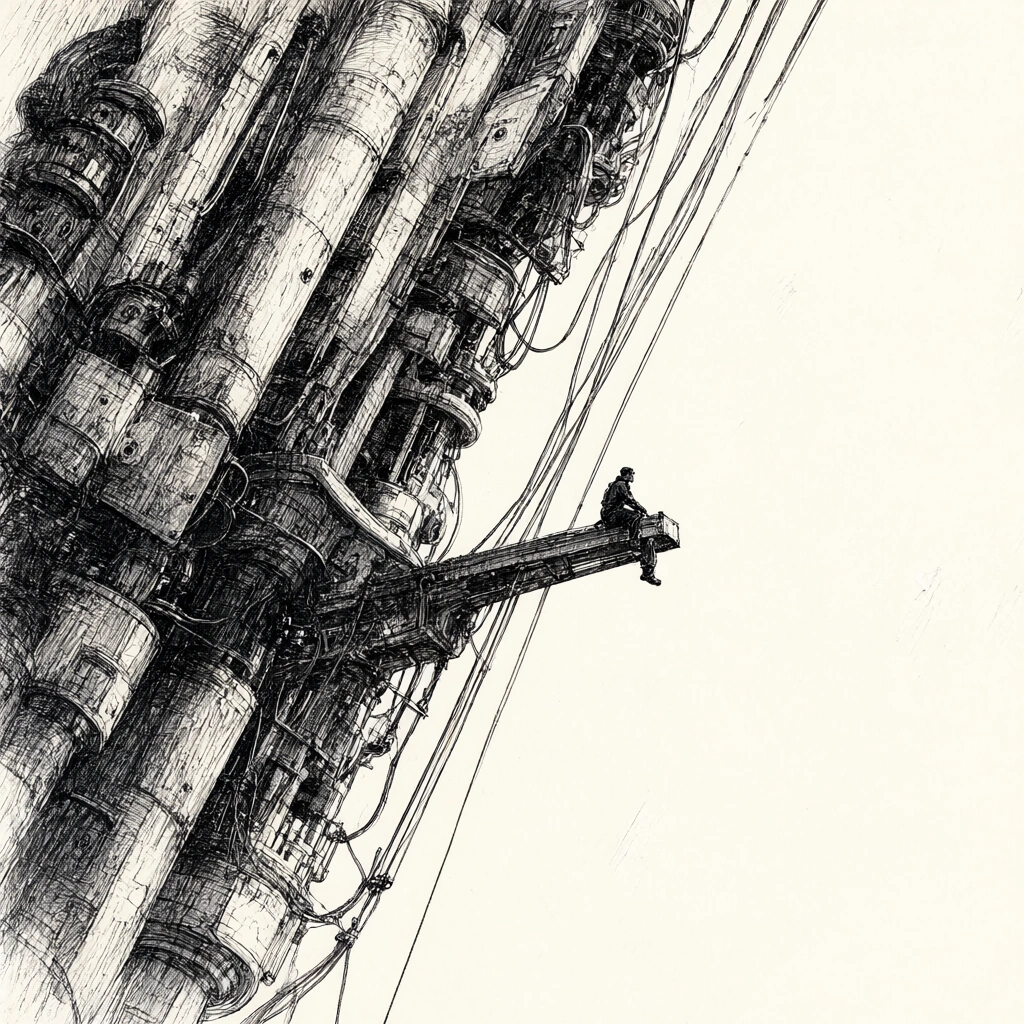 Qwen Image 2.1
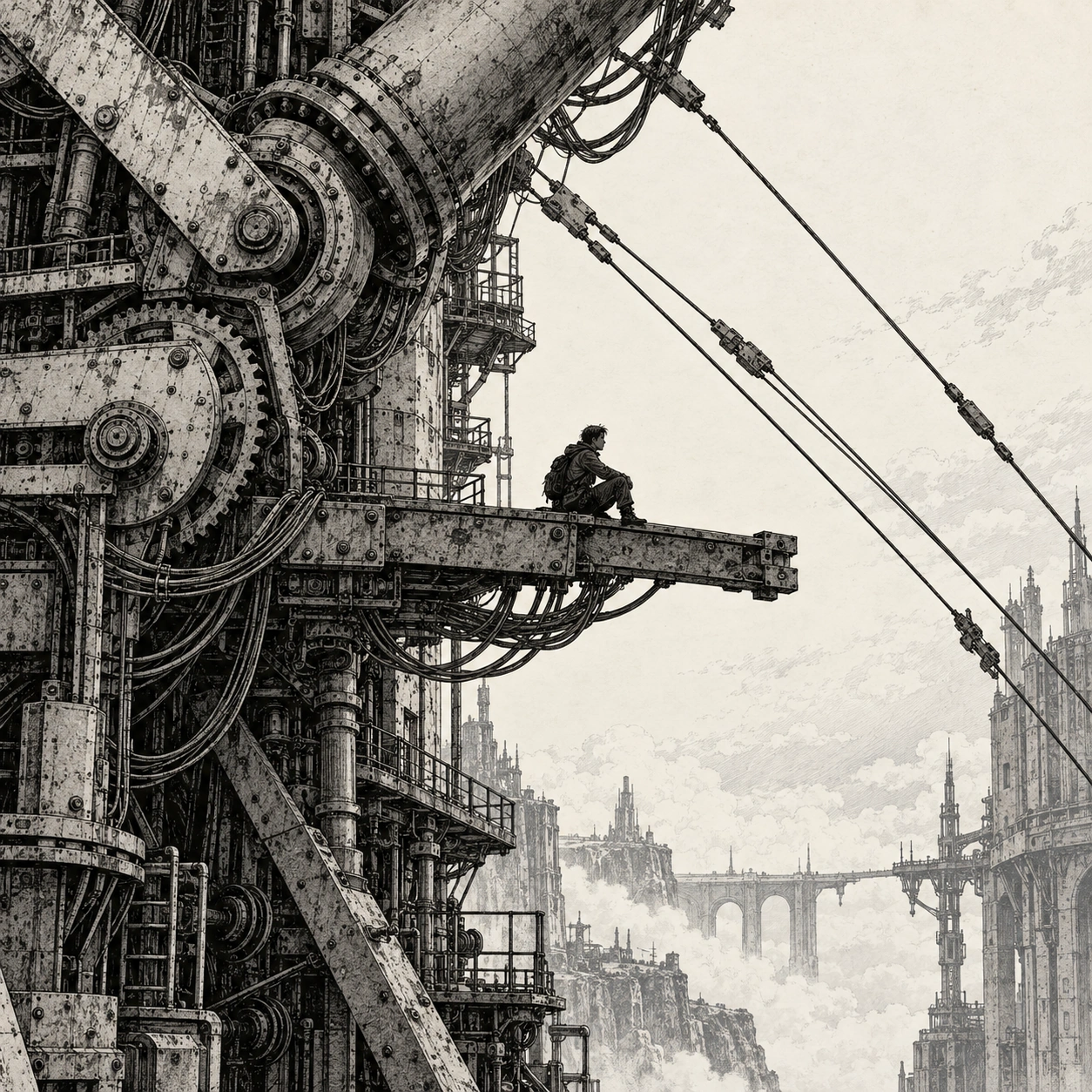 GPT Image 2.5
Reference details
- Reference ID
- 4395
- Category
- Ink & line
Reference prompts
Style prompt
A highly detailed monochrome science-fiction ink style combines immense mechanical density with open cream-paper negative space. Diagonal pipes, cables, and beams create forceful perspective and a sense of scale. Fine technical contours, cross-hatching, grime, and scratched-metal marks cluster in dark structural areas, then abruptly yield to untouched light fields. A small simple focal silhouette can clarify the architecture's size without dominating it. Overcast illumination keeps the palette black, gray, and paper white, with form carried by line density rather than gradients. Slight print wear and deliberate irregularity prevent the technical drawing from feeling sterile. The mood is austere, precarious, and contemplative.Full example prompt
A square black-and-white science-fiction illustration shows a lone traveler sitting on a narrow beam amid the exposed mechanisms of a towering machine. The figure is small and dressed in dark practical clothes, viewed in profile near the center. Massive angled pipes, joints, gears, and plates occupy the upper left, while taut cables streak diagonally toward the open pale sky at the right. The structure seems both mechanical and architectural, with nested parts extending beyond the frame. Extremely fine ink lines describe bolts, wire bundles, scratched metal, and dense grime. Deep black cross-hatching pools in the inner machinery, while untouched cream paper creates bright negative space around the silhouette and cables. The composition is strongly diagonal, making the precarious perch and scale of the machine immediately clear. The light is broad and overcast, with little tonal gradation outside the hatched shadows. There is no colorful science-fiction glow; the atmosphere comes from contrast between tiny human presence and immense engineered complexity. The drawing feels like a detailed graphic novel plate, patient and austere, with meticulous line density and a slightly weathered printed surface. The whole frame suggests a pause during a journey through an industrial world.