
Styles
#2777
Chris Riddell style reference and prompts
Explore the “Chris Riddell” reference with directional strokes, scratch-like marks, and a monochrome palette. View the images, copy the style or example prompt, and discover related styles on Looksift.
Compare the Qwen Image 2.1 and GPT Image 2.5 examples, choose the visual qualities you want, and copy the style prompt for your own project.
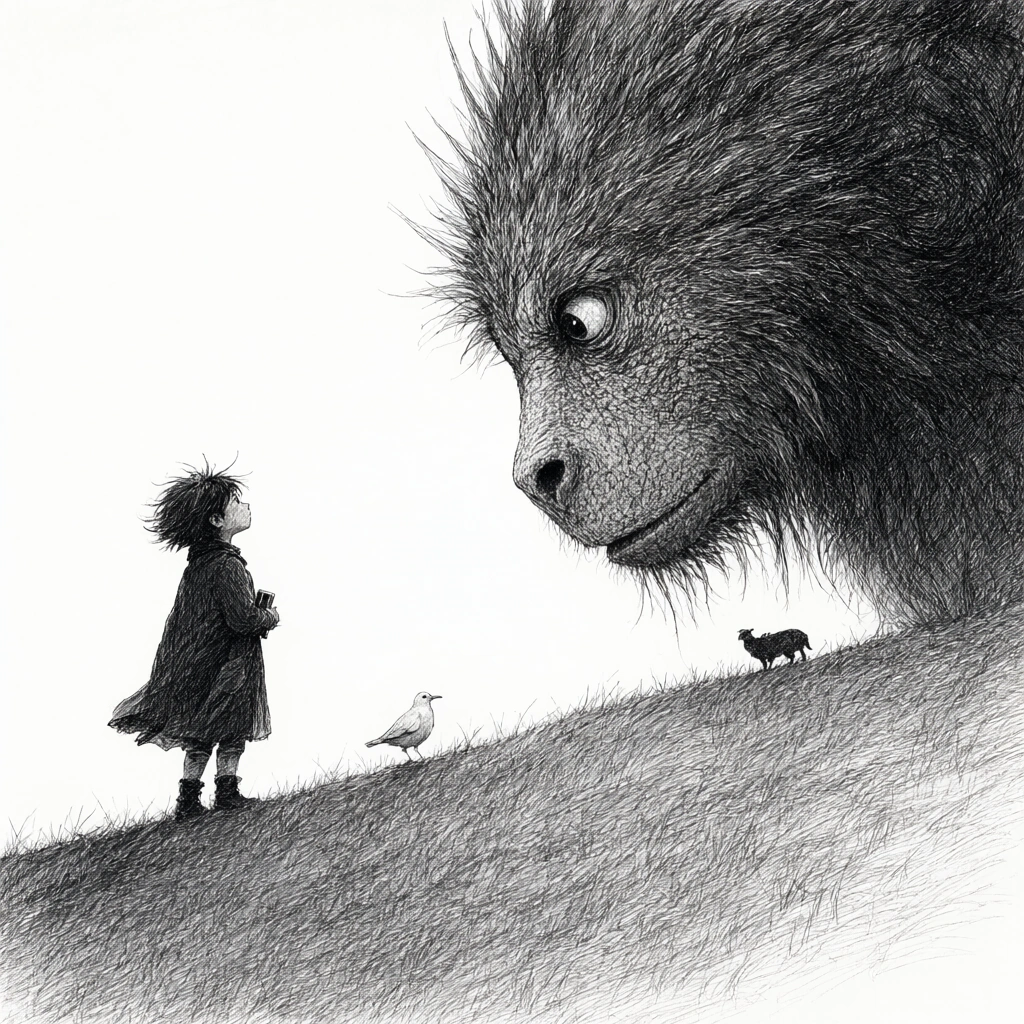 Qwen Image 2.1
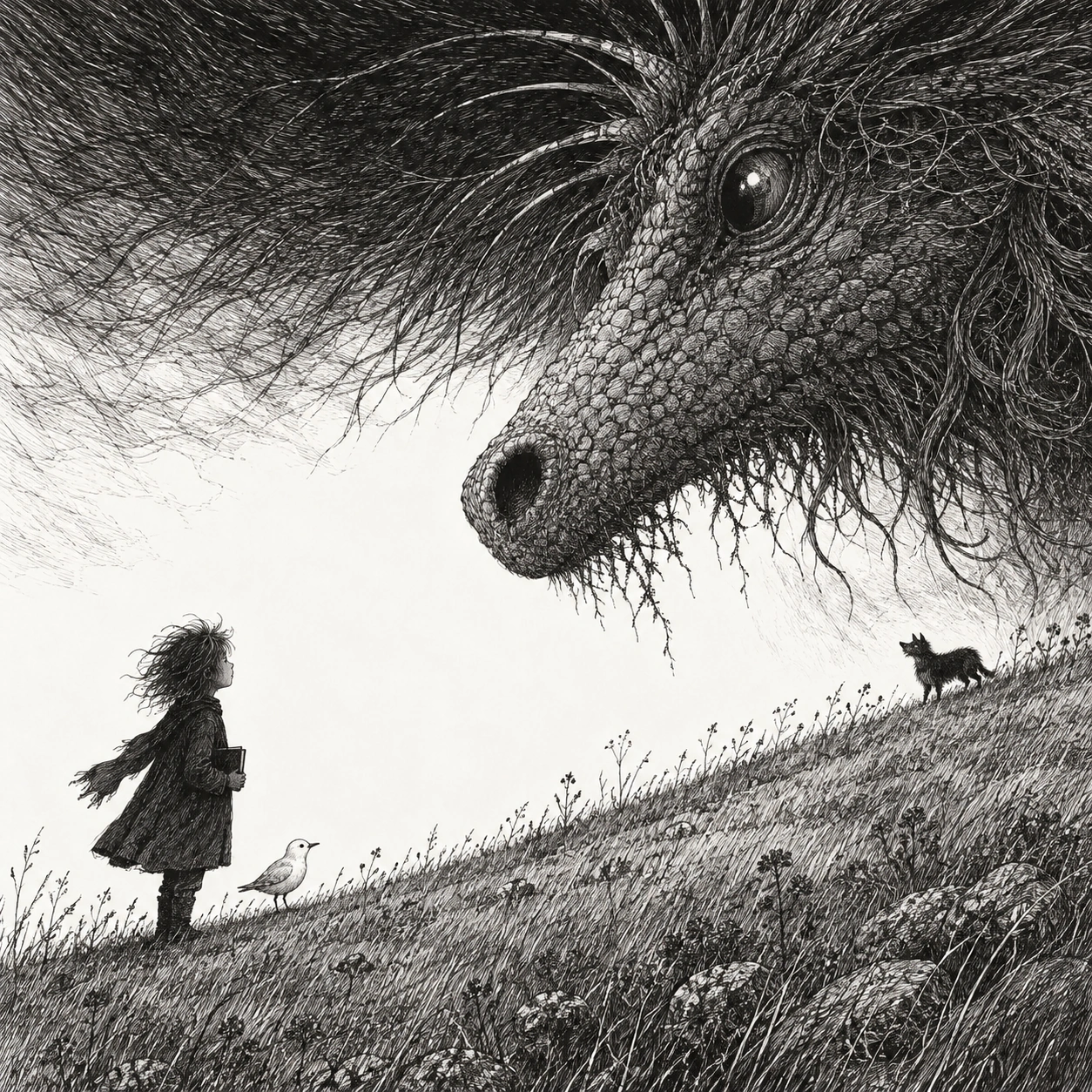 GPT Image 2.5
Reference details
- Reference ID
- 2777
- Category
- Ink & line
Reference prompts
Style prompt
Monochrome pen-and-ink drawing creates gray values through close hatching, crosshatching, stipple, and broad untouched white paper. Fine directional strokes accumulate into dense dark masses, while irregular scratch marks fray their edges. A large textured form presses against a much smaller isolated mark, with a wide blank interval holding tension between them. Angular diagonals organize the ground and upper shadow, countered by a smooth open negative field. The darkest passages have layered line depth rather than flat black fill; lighter passages depend on sparing contour and exposed surface. The result is intricate and tactile, balancing crowded microtexture with generous silence in the center.Full example prompt
A square monochrome pen-and-ink illustration shows a small child standing on a grassy incline while an enormous shaggy creature's head looms from the upper right. The child occupies the lower left, shown in profile facing right. Spiky hair blows outward, and a dark long coat or cloak falls to the knees over narrow legs and boots. One hand holds a short rectangular object close to the body. A small pale bird stands on the slope just ahead, its round body and fine legs drawn with only a few lines. Farther up the incline at right, a tiny dark animal silhouette stands among sparse grass. Above them, the huge creature thrusts a long scaled snout toward the center. Its nostril is a dark oval; one enormous round eye glistens under tangled hair and radiating spines. Loose wiry strands hang beneath the jaw, while dense hatch marks give the cheek a rough pebbled texture. The upper half is dark with innumerable diagonal ink strokes, like a stormy mass of hair and shadow spreading from the right. A broad untouched white opening separates the creature's snout from the small figures and gives the encounter an eerie stillness. The hillside rises sharply from left to right, its ground covered with fine scratchy grass marks and shifting gray stipple. There is no colored paint. Gray values are built entirely from line density, crosshatching, and unmarked white paper; the darkest zones lie in the coat, the animal silhouette, and the creature's upper mane. Light appears to come from the open white center, leaving silhouettes crisp against it and allowing the textured masses to taper at their edges. The extreme scale contrast between the tiny child and giant face, held across a clear gap, gives the intricate drawing a quiet storybook tension.