
Styles
#2584
William Henry Fox Talbot style reference and prompts
Explore the “William Henry Fox Talbot” reference with fine grain, sepia tones, and backlighting. View the images, copy the style or example prompt, and discover related styles on Looksift.
Compare the Qwen Image 2.1 and GPT Image 2.5 examples, choose the visual qualities you want, and copy the style prompt for your own project.
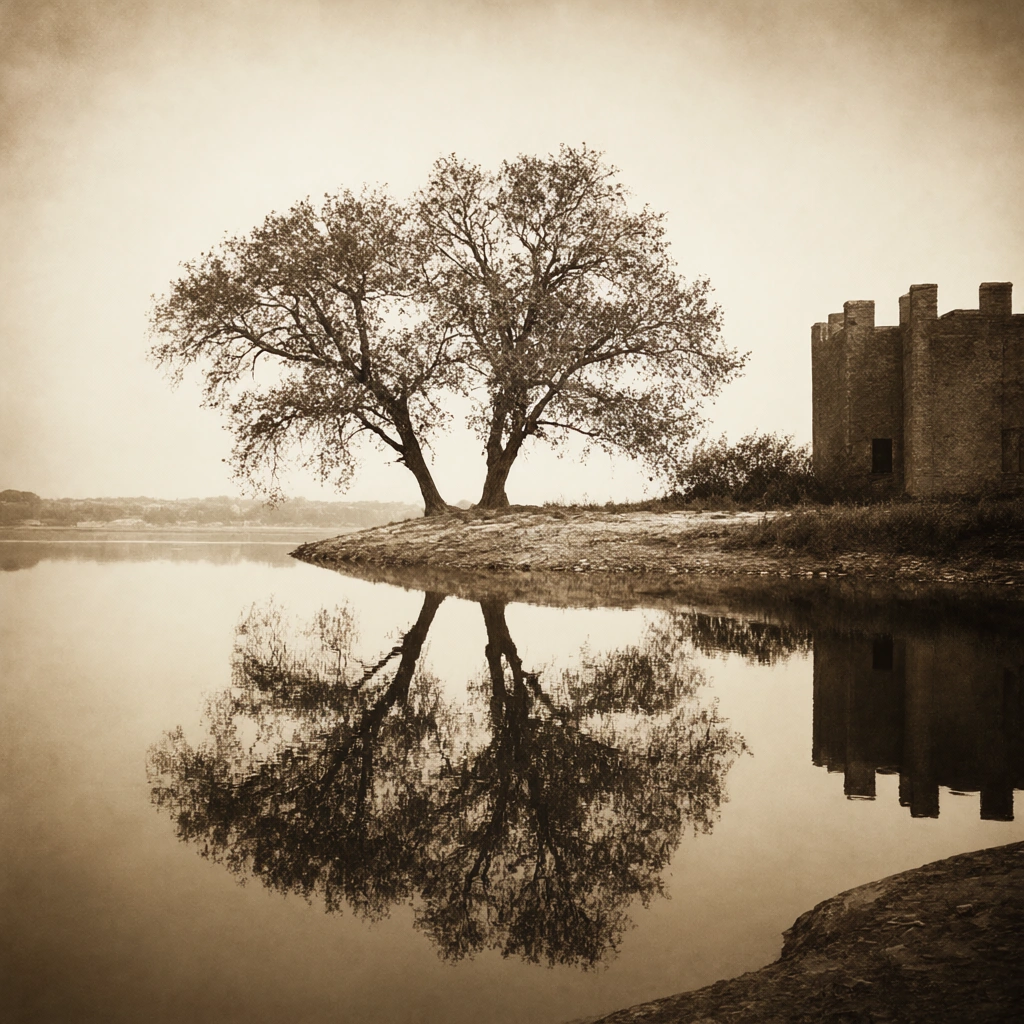 Qwen Image 2.1
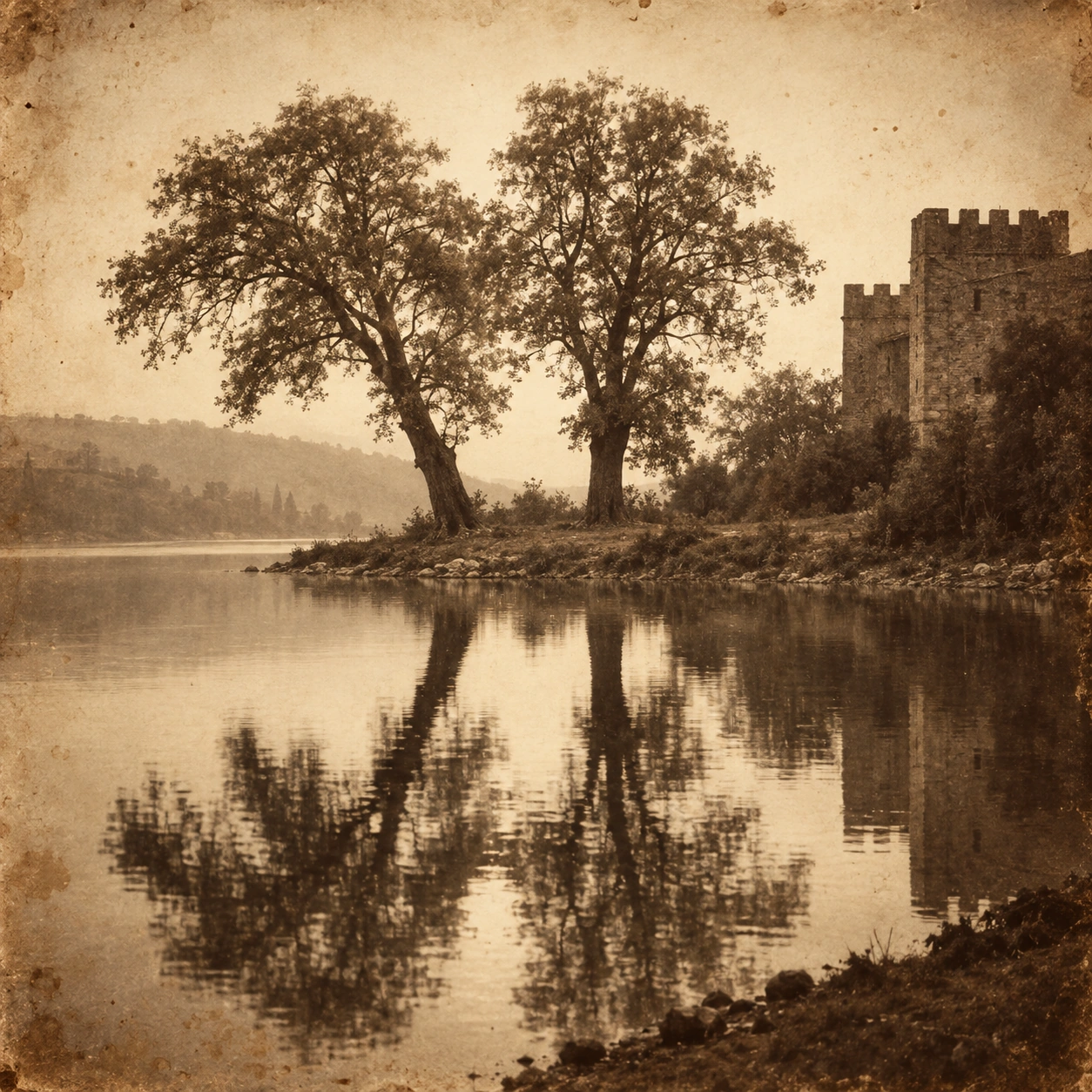 GPT Image 2.5
Reference details
- Reference ID
- 2584
- Category
- Photography
Reference prompts
Style prompt
A warm sepia photographic treatment turns visible forms into broad umber silhouettes against creamy light. Soft focus, haze, gentle vignetting, and mottled age marks reduce sharp detail without erasing the main spatial layers. Diffuse backlight makes dark vertical masses readable by their outline, while lighter intervals and reflected tonal bands create quiet depth. Edges are softened most in the distance and in mirrored areas; nearer boundaries remain slightly firmer. The palette stays within brown, cream, and deep near-black, giving the entire image one continuous tonal atmosphere. An upper field with generous pale space balances a denser lower region, and repeated vertical rhythms link the two. The overall finish is still, weathered, and contemplative, with texture arising from photographic grain and uneven tonal deposition rather than painted strokes.Full example prompt
The image is a square, warm sepia photographic landscape of two large trees beside calm water, with a crenelated stone building at the right and their reflections filling the foreground. The upper sky is a pale cream field darkened gradually toward the corners by stains and a soft vignette. Across the left middle distance, a low hazy bank recedes behind the nearer shore. Two close trees rise from a narrow, uneven spit of land slightly left of center. Their trunks are dark and substantial, while their broad branching crowns divide into many small soft-edged marks against the light sky. One crown leans left and the other opens more upright, giving the pair an irregular rhythm. Near the right edge, a blocky building presents tall wall sections and square-topped crenellations; its dark surface is partly screened by shrubs at the waterline. The central bank is a rough strip of pale earth, small stones, and darker scrub, separating the solid forms from their image in the water. The lower half is a quiet reflective surface with dark mirrored trunks, broken silhouettes of branches, and a pale vertical opening between them. Near the bottom right, a darker near bank curves into the frame and interrupts the reflection. Fine detail is softened by the photographic process and atmospheric haze; the trees, structure, and shoreline remain readable through broad tonal masses rather than sharp modern clarity. The light appears diffuse from the pale sky behind the scene, leaving trunks and masonry in brown shadow and brightening the water in the gaps between reflections. The monochrome brown palette ranges from creamy highlights to deep umber, with mottling and age marks distributed across the image. The overall composition balances an irregular pair of verticals with a heavier architectural block, then doubles them in still water for a quiet, weathered sense of depth.