
Styles
#2591
Tomer Hanuka style reference and prompts
Explore the “Tomer Hanuka” reference with faceted color planes. View the images, copy the style or example prompt, and discover related styles on Looksift.
Compare the Qwen Image 2.1 and GPT Image 2.5 examples, choose the visual qualities you want, and copy the style prompt for your own project.
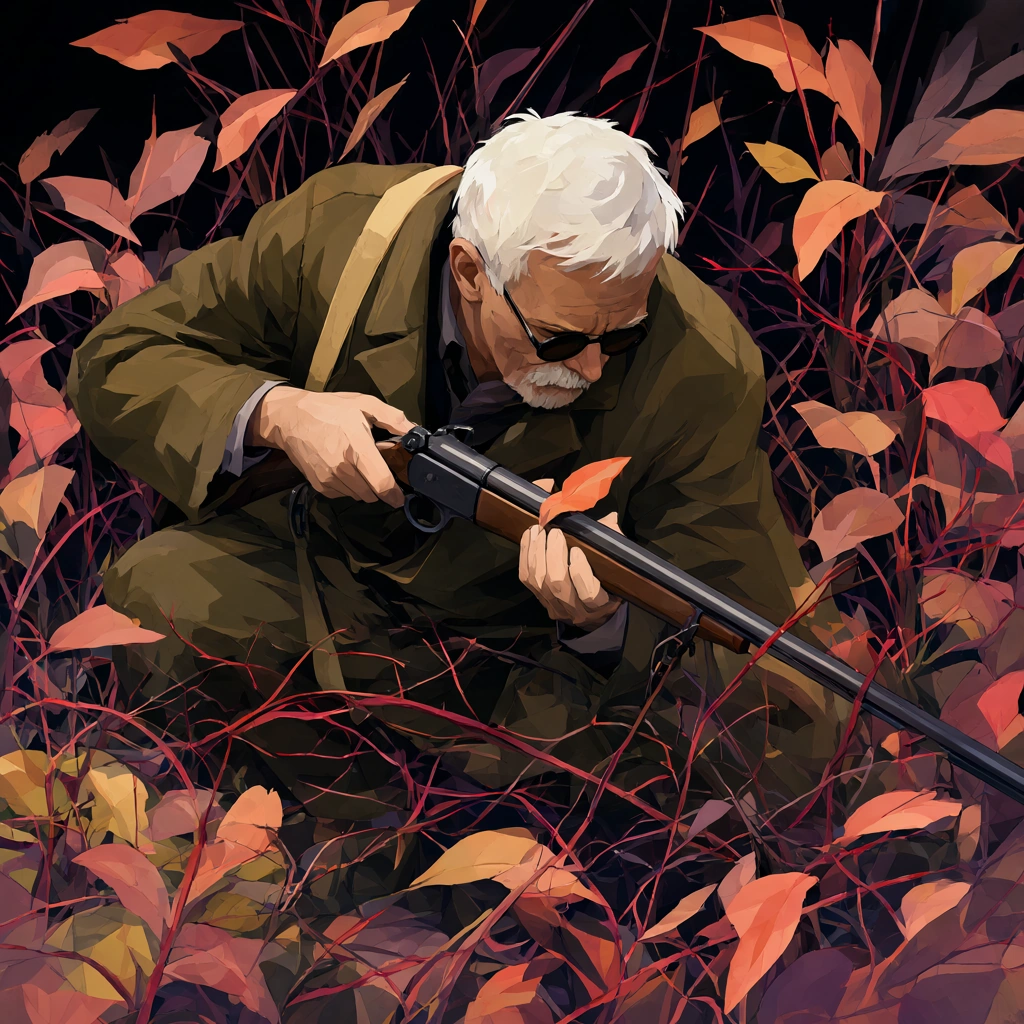 Qwen Image 2.1
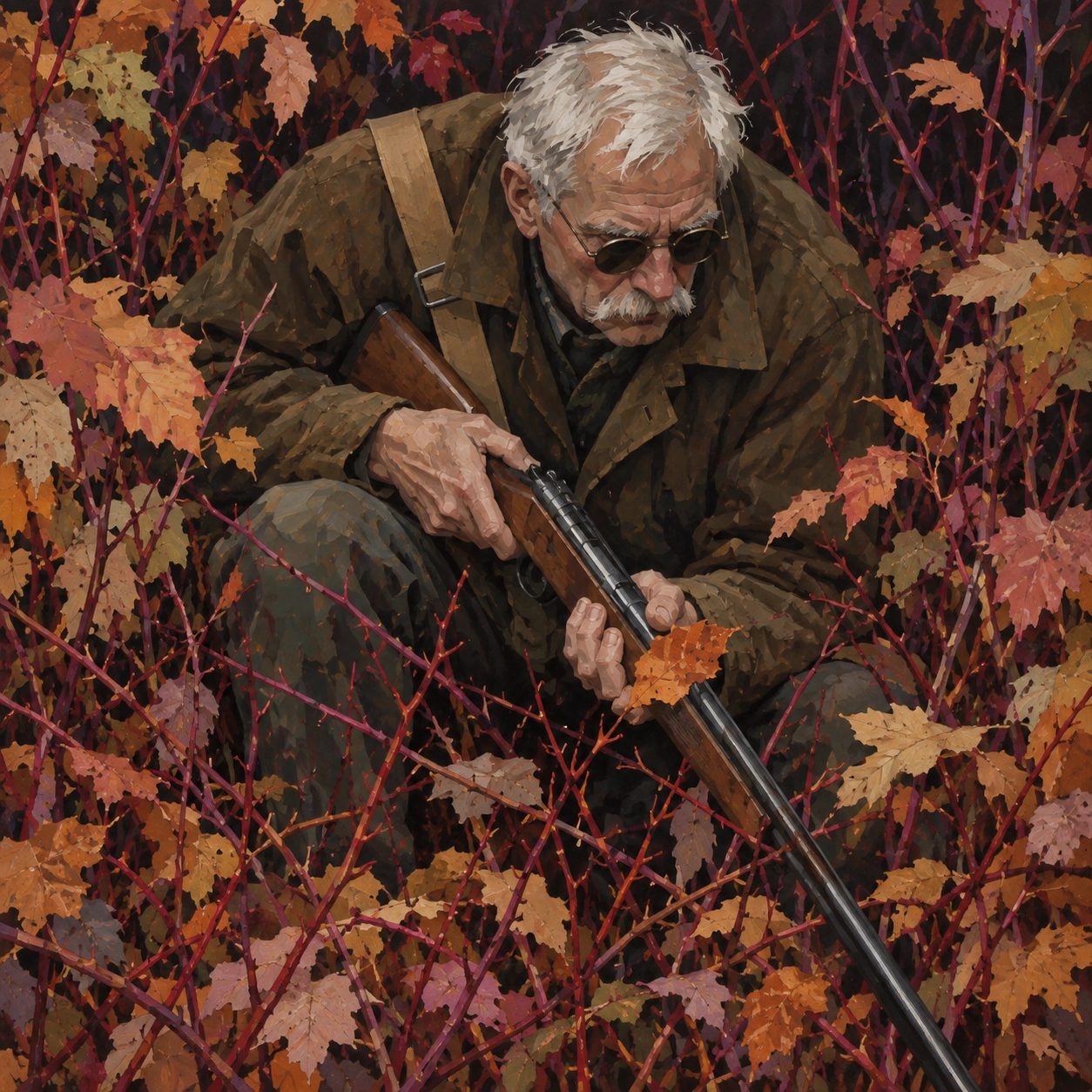 GPT Image 2.5
Reference details
- Reference ID
- 2591
- Category
- Flat illustration
Reference prompts
Style prompt
The painted illustration uses interlocking angular color facets and fine, wiry contour lines to produce a dense but readable surface. Muted olive and charcoal masses carry the weight, while ochre, peach, crimson, and mauve accents appear as scattered bright planes and branching strokes. Layered shapes overlap tightly, flattening conventional depth into a tapestry of near and far fragments. Small pale highlights focus attention amid extensive dark color, and sharply directed diagonals interrupt the more tangled linear field. Edges alternate between clean graphic cuts and rough hand-drawn marks; smooth digital gradients give way to abrupt tonal steps and faint grain. Light is implied through relative color intensity and a few selected highlights rather than uniform illumination. The overall treatment is vivid, uneasy, and richly woven without losing the main silhouette.Full example prompt
A square, graphic painted illustration shows an older white-haired man crouching low among dense autumn foliage, with a long firearm angled diagonally down through the frame. The upper background is almost black, crowded with thin red and violet stems that climb behind his head. Broad leaves in peach, ochre, muted orange, and dusty pink overlap the branches around his shoulders and along both sides. The man sits slightly above the center, bent forward so his rounded back and heavy olive-brown coat occupy much of the middle. Short white hair and a white moustache surround a face partly shadowed by dark round glasses; his gaze points downward into the thicket. A wide tan strap crosses one shoulder and disappears behind the coat. His pale hands gather around the wooden stock and dark metal barrel of the firearm, which extends from the middle of the picture toward the lower right. An orange leaf crosses the barrel near the center, and a tangle of slender red twigs spans the lower foreground, partly veiling his trousers and the weapon. No open horizon or clear ground plane appears; foliage and figure fill the frame in close layers. Flat, angular color pieces model the face, coat folds, and leaves, while thin irregular lines give the stems a brittle, branching motion. Shadows are built mostly from deep olive, maroon, and purple color blocks rather than smooth gradients, making the warm leaves shine against the darker interior. Diffuse light from above and the left catches the hair, hands, and selected leaves, while the torso and background remain subdued. The overall composition is compact and tense, with the diagonal firearm cutting through a woven rhythm of warm leaf shapes and red linework.