
Styles
#2603
The Adventures of Tintin style reference and prompts
Explore the “The Adventures of Tintin” reference with pale neutral tones. View the images, copy the style or example prompt, and discover related styles on Looksift.
Compare the Qwen Image 2.1 and GPT Image 2.5 examples, choose the visual qualities you want, and copy the style prompt for your own project.
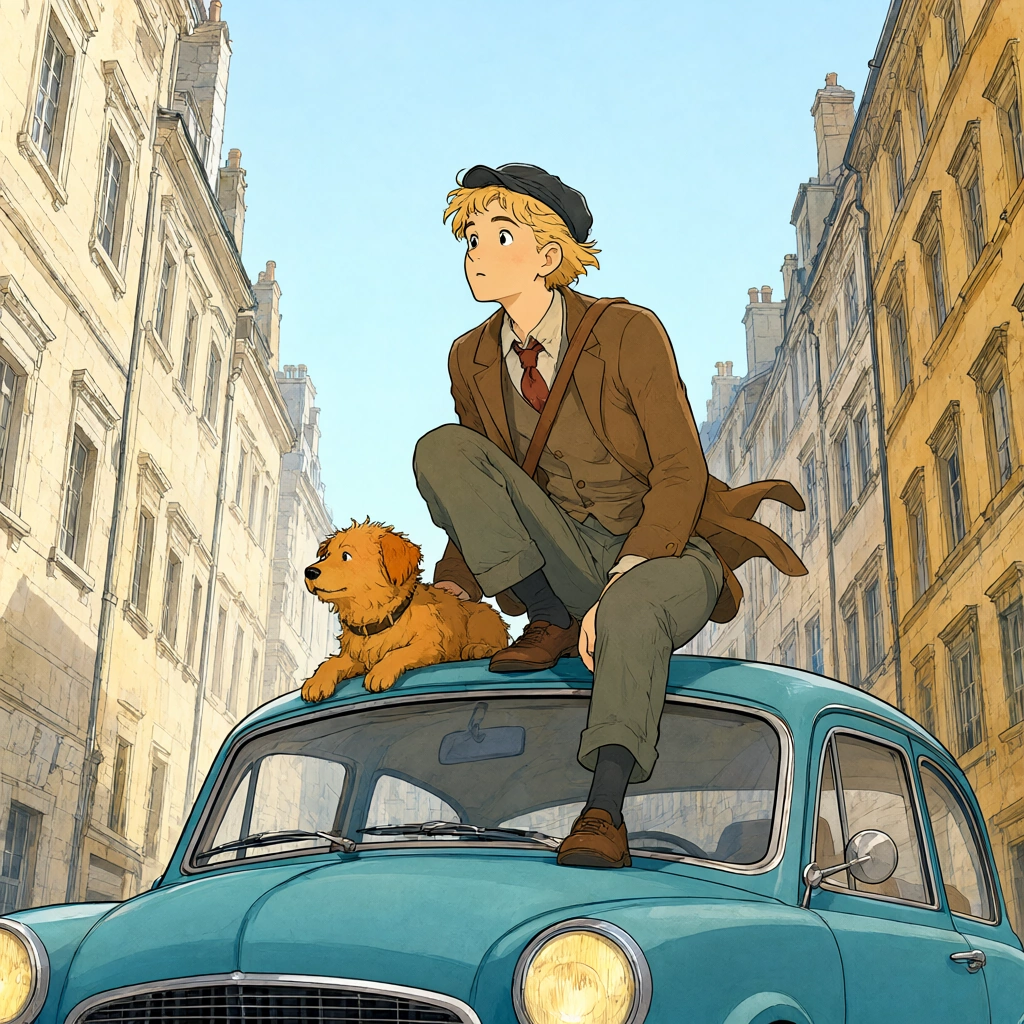 Qwen Image 2.1
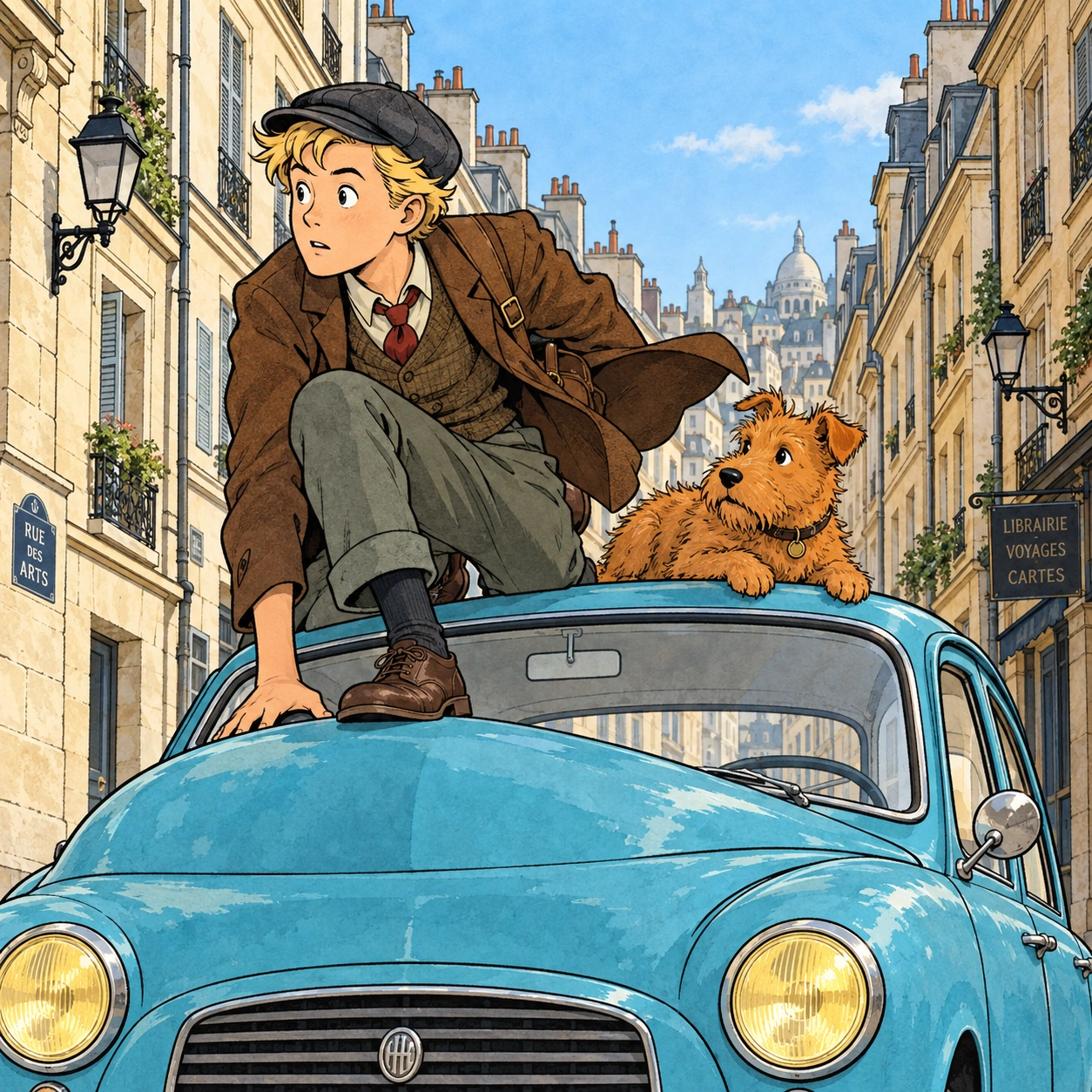 GPT Image 2.5
Reference details
- Reference ID
- 2603
- Category
- Anime & cartoons
Reference prompts
Style prompt
The comic illustration uses firm, economical dark outlines and cleanly readable shapes over lightly mottled color. Warm cream, tan, and ochre fields meet cool blue-green areas, with a few saturated orange and red accents sharpening the focal rhythm. Architectural or structural repetition builds stable perspective, while animated curves and diagonals add movement in the foreground. Fine linear marks describe folds and texture without replacing the broad, simple color masses. Edges stay crisp enough for immediate recognition, but the fills have a soft printed or watercolor grain that prevents a sterile vector look. Daylight is bright and even, with small contact shadows and restrained highlights providing volume. The overall visual language is precise, buoyant, and narrative, balancing graphic clarity with hand-drawn warmth.Full example prompt
A square, clear-line comic illustration shows a blond young traveler and a small orange dog perched on a rounded blue car in a narrow city street. The pale blue sky opens above their heads, while cream and ochre stone buildings rise tightly along the left and right edges and converge toward the middle distance. Their repeated windows, cornices, and chimneys create an orderly perspective corridor without overwhelming the foreground action. The car enters from the lower edge, its turquoise hood and roof filling the bottom half of the image. Round yellow headlights and a small dark grille appear near the lower border, and the right-side window reveals a simple light interior. The traveler crouches high on the front of the car with one knee raised and one foot pressed onto the hood. He wears a small dark cap over loose blond hair, a brown coat and vest, a pale shirt with a reddish necktie, gray-green trousers, dark socks, and brown shoes. A strap crosses his shoulder; the coat tail lifts to the right as his body leans forward. His wide eyes look toward the left with an alert, slightly surprised expression. Beside him, an orange, rough-haired little dog lies on the car roof, its paws reaching over the curved edge and a dark collar visible at its neck. Crisp dark outlines and fine interior strokes define faces, clothing folds, windows, and masonry, while watercolor-like fills remain subtly mottled rather than perfectly flat. The warm buildings contrast with the cool car and sky, and the small orange dog becomes a bright accent beside the central figure. Clear daylight falls from the upper left, giving the car and pale walls gentle highlights and leaving compact shadows beneath the figures. The overall composition feels lively and adventurous, with readable character silhouettes set against a tidy, receding city backdrop.