
Styles
#3037
Quentin Tarantino style reference and prompts
Explore the “Quentin Tarantino” reference with dry-brush texture, a monochrome palette, and hatching. View the images, copy the style or example prompt, and discover related styles on Looksift.
Compare the Qwen Image 2.1 and GPT Image 2.5 examples, choose the visual qualities you want, and copy the style prompt for your own project.
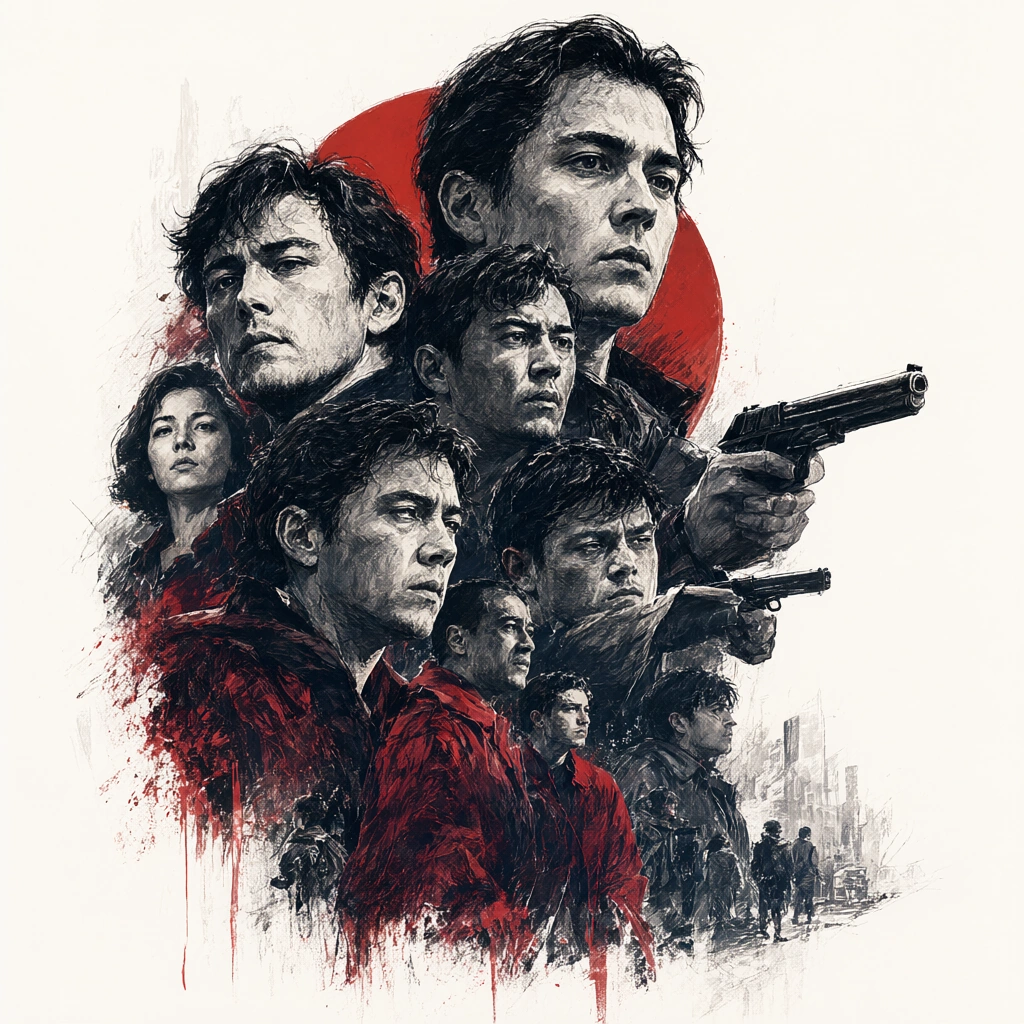 Qwen Image 2.1
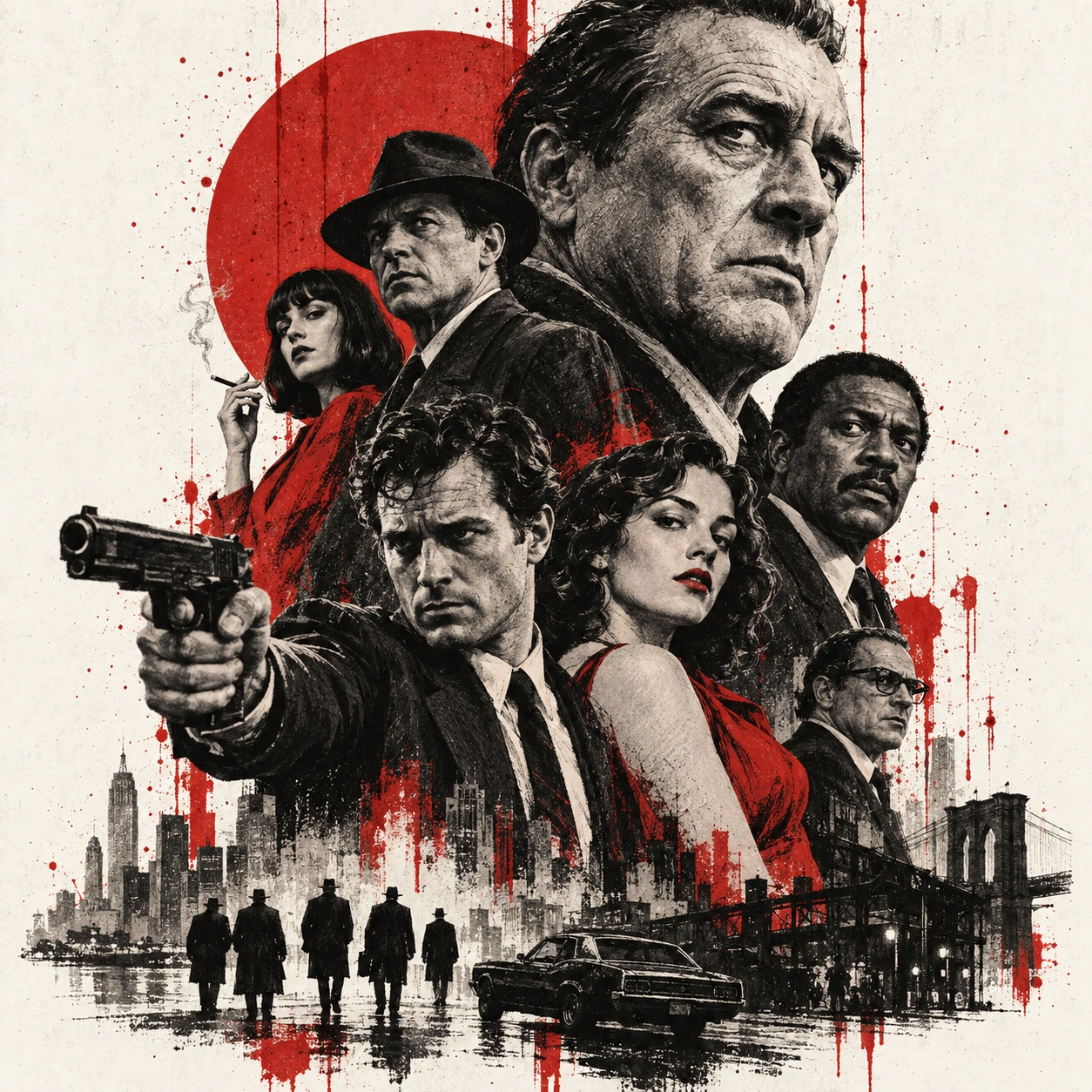 GPT Image 2.5
Reference details
- Reference ID
- 3037
- Category
- Flat illustration
Reference prompts
Style prompt
A vintage screen-printed poster with a steep stack of overlapping forms at its center and generous ivory space around it. Charcoal and warm gray hatching give the main shapes crisp volume; flat crimson circles and blocks interrupt the monochrome. Dry brush, splattered ink, thin drips, and rubbed edges give the print a weathered surface. Scale shifts dramatically from one large upper mass to small fragments below. Directional light cuts across the forms, while deep pockets of black collect at intersections. The effect is graphic, tense, and spacious despite the dense center.Full example prompt
A screen-printed crime film poster gathers a fictional ensemble into a steep, overlapping pyramid of faces and figures. The largest face rises on the upper right, rendered in cool black and gray pencil-like strokes. Smaller characters press forward below, some in sharp red garments, with a dark horizontal prop pointing into the open white margin. A flat red disc sits behind the upper group, while faint urban fragments and tiny figures dissolve along the base. The composition uses dramatic differences of scale like a vintage theatrical one-sheet: each layer is legible yet partly hidden by the next. Inked hatching and dry brush marks define the brows, hair, and folds; loose red splatters and vertical drips roughen the clean ivory field. The palette is deliberately narrow, with charcoal, warm gray, crimson, and off-white carrying almost all the drama. Light feels stark and directional across the main forms, leaving sharp dark pockets in the overlapping shapes. White space around the edges gives the dense center room to breathe. The whole poster combines crisp likeness drawing with expressive print damage, giving the scene a tense, pulpy energy without needing elaborate scenery or lettering.