
Styles
#3097
Otto Wagner style reference and prompts
Explore the “Otto Wagner” reference with pale neutral tones, luminous accents, and soft diffused light. View the images, copy the style or example prompt, and discover related styles on Looksift.
Compare the Qwen Image 2.1 and GPT Image 2.5 examples, choose the visual qualities you want, and copy the style prompt for your own project.
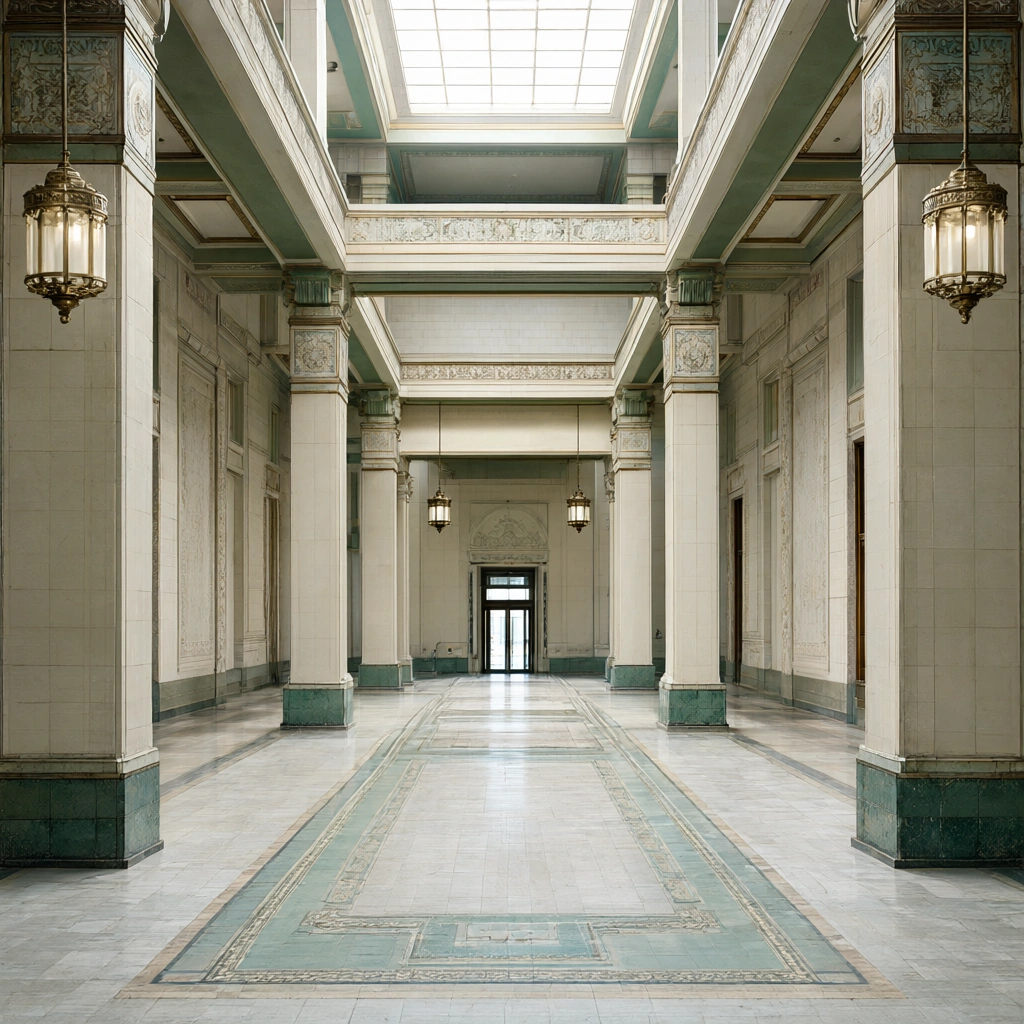 Qwen Image 2.1
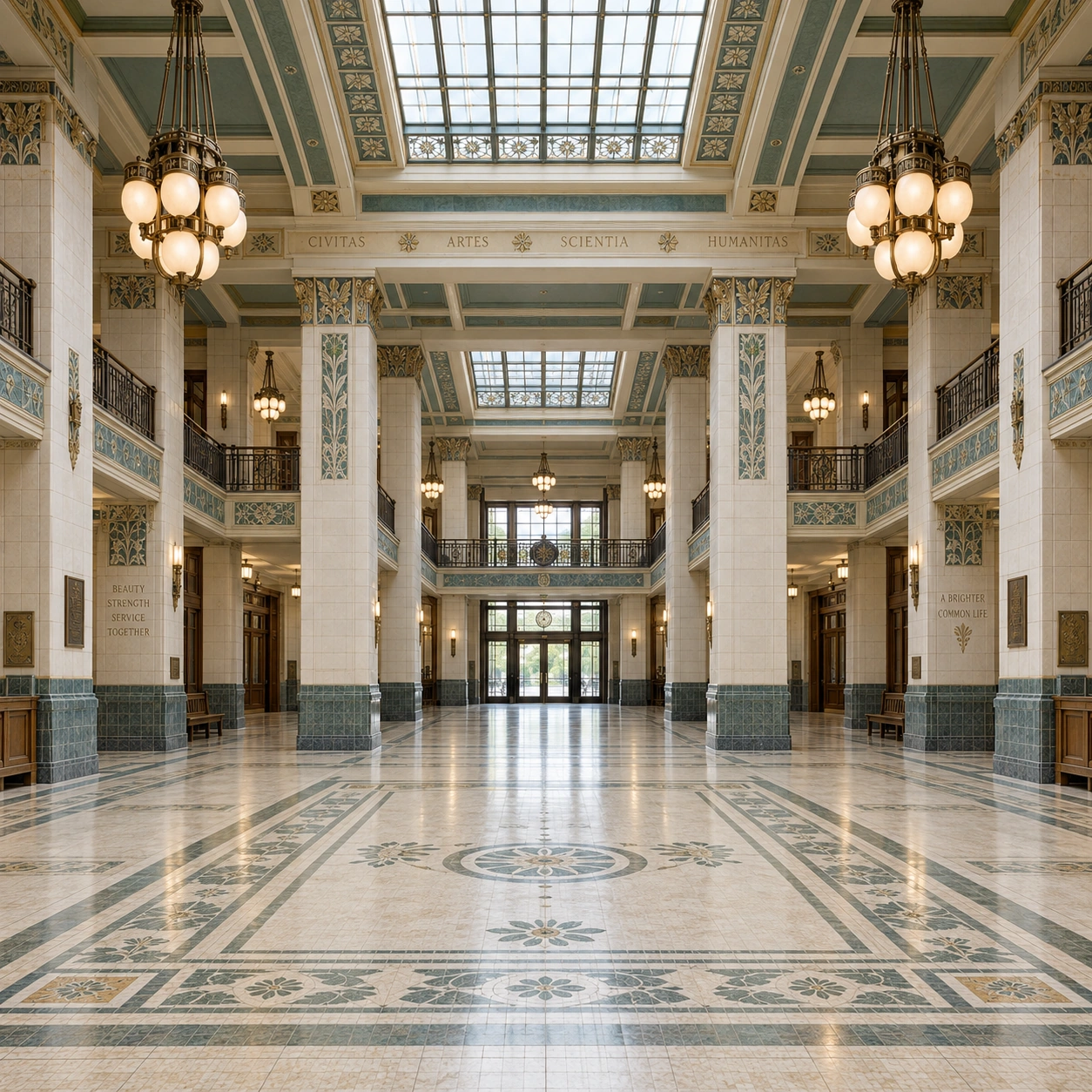 GPT Image 2.5
Reference details
- Reference ID
- 3097
- Category
- Photography
Reference prompts
Style prompt
A precise, centrally aligned architectural image organized by nested rectangles and repeated vertical supports. Ivory surfaces, sage and blue-green tile, muted brass, and warm wood create a restrained ornamental palette. Fine decorative linework gathers along borders and capitals, while broad walls remain calm. Soft daylight enters from above and far behind, leaving compact shadows beneath ledges. The foreground pattern leads toward a distant vanishing point, and paired luminous accents repeat at measured intervals. Subtle patina and material grain temper the clean symmetry with age.Full example prompt
An architectural interior shows a grand public hall viewed exactly along its central axis. A pale patterned floor opens wide in the foreground, then narrows between rows of squared columns toward a glass door at the back. Two large clustered lamps hang near the upper corners; smaller versions repeat deeper inside. A rectangular skylight brightens the ceiling, where teal-green beams and warm gold trim outline the structural bays. The walls are faced with pale tile and shallow ornamental panels, their floral and geometric details concentrated along cornices, column capitals, and borders rather than spread across every surface. The floor contains an inlaid rectangular field that repeats the building's strong symmetry. The palette is composed of ivory, sage and blue-green tile, muted brass, and honey-colored wood. Daylight from above and the far doorway keeps the space luminous but gentle, with shadows tucked under balconies and around the columns. Lines are exceptionally orderly: vertical supports, horizontal balcony rails, and nested rectangular frames carry the eye through the room. Fine surface wear and patina keep the metals and tiles from appearing new. The hall is empty and still, letting proportion, materials, and decorative rhythm become the subject. The image feels like a carefully observed architectural photograph with a measured, nearly ceremonial sense of space.