
Styles
#3191
Augustus Edwin Mulready style reference and prompts
Explore the “Augustus Edwin Mulready” reference with visible brushwork and pale neutral tones. View the images, copy the style or example prompt, and discover related styles on Looksift.
Compare the Qwen Image 2.1 and GPT Image 2.5 examples, choose the visual qualities you want, and copy the style prompt for your own project.
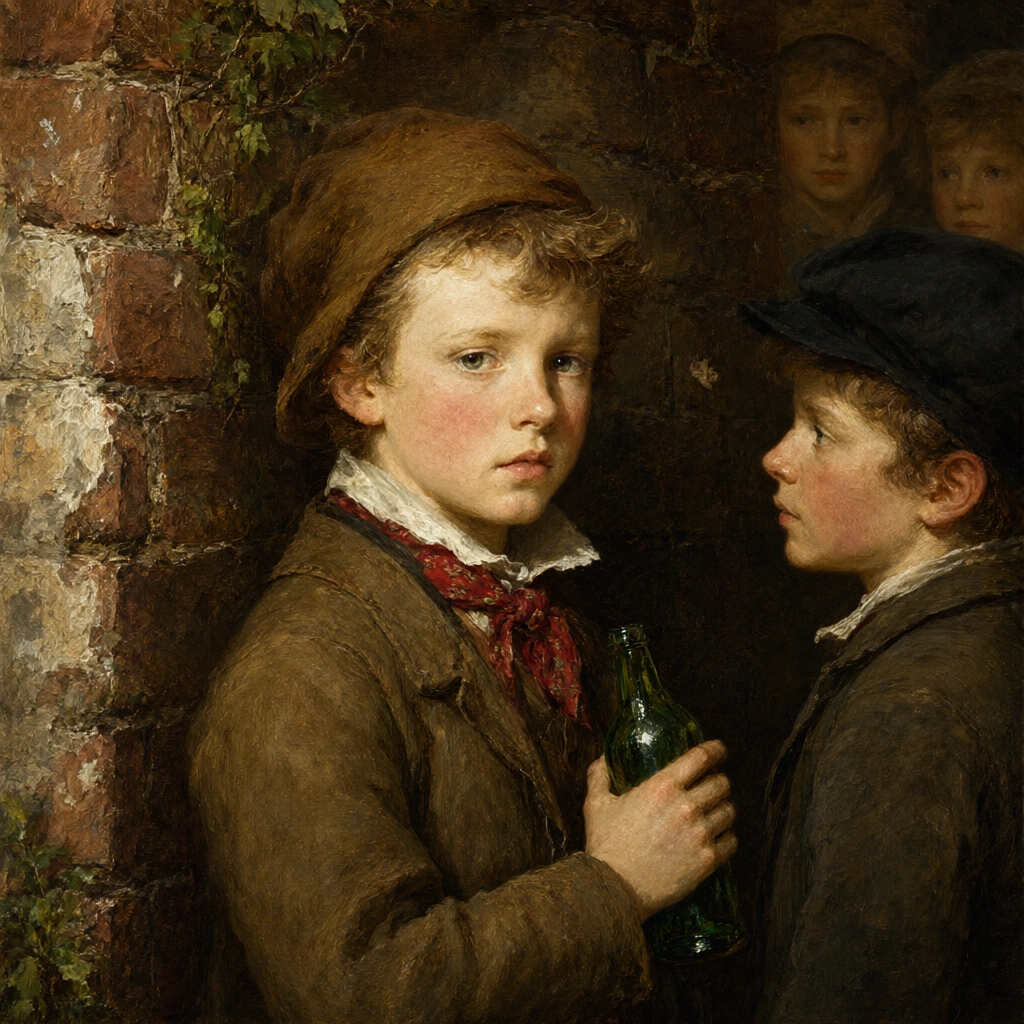 Qwen Image 2.1
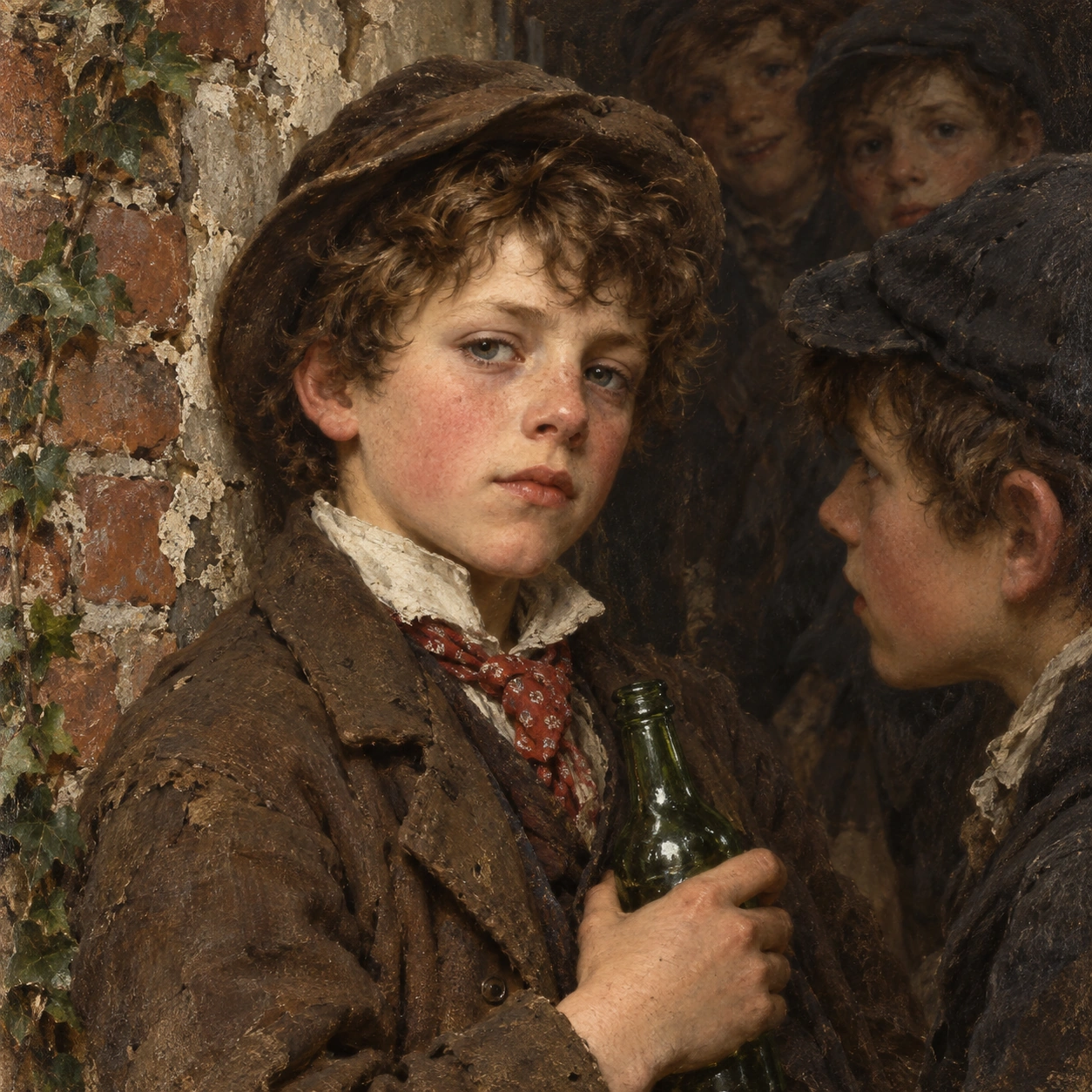 GPT Image 2.5
Reference details
- Reference ID
- 3191
- Category
- Painting
Reference prompts
Style prompt
Nineteenth-century genre oil painting with close naturalistic modeling, warm directional light, and weathered material detail. Earthy umber, red-brown, olive, and cream support small luminous skin and glass highlights. Several overlapping forms press toward the picture plane while background features dissolve into dark loose brushwork. Fine focal strokes and softer peripheral paint create intimate social depth and a slightly sentimental mood.Full example prompt
A square Victorian genre oil painting centers on a pale young boy facing the viewer beside an old brick wall. He wears a worn brown jacket, high white collar, small red patterned neckerchief, and a soft brown hat pushed back over curly hair. One hand holds a green glass bottle near his chest. His blue-gray eyes look outward with a guarded, slightly tired expression, and warm light catches his flushed cheeks and small nose. At the right, another boy in a dark cap appears in close profile, looking toward him; behind them, faint youthful faces emerge from the shadowed upper background. Rough brick, climbing greenery, and broken plaster give the setting a close, weathered texture. The central boy's head and shoulders occupy most of the frame, while the side profile and background faces form a dense social surround. Fine naturalistic brushwork models skin and fabric, with small highlights on the bottle and cheek, while darker areas remain loose and smoky. Earthy umber, red-brown, olive green, and cream dominate. Light is strongest on the front face and falls quickly across the wall and companions. The composition conveys a lived-in street moment without theatrical posing. It feels sentimental yet observant, with tangible nineteenth-century paint texture. There is no caption, label, or decorative frame.