
Styles
#3234
Karl Blossfeldt style reference and prompts
Explore the “Karl Blossfeldt” reference with stippled texture, contrasting scales, and a monochrome palette. View the images, copy the style or example prompt, and discover related styles on Looksift.
Compare the Qwen Image 2.1 and GPT Image 2.5 examples, choose the visual qualities you want, and copy the style prompt for your own project.
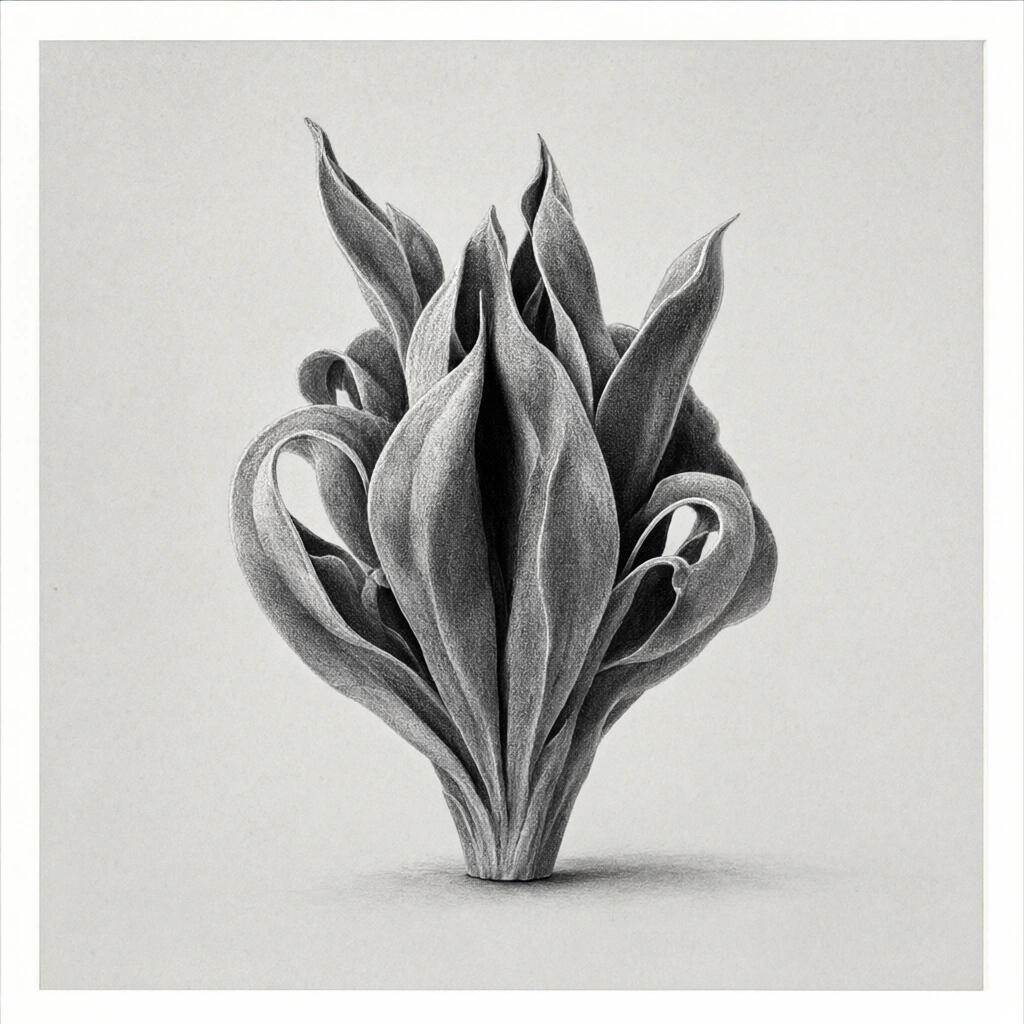 Qwen Image 2.1
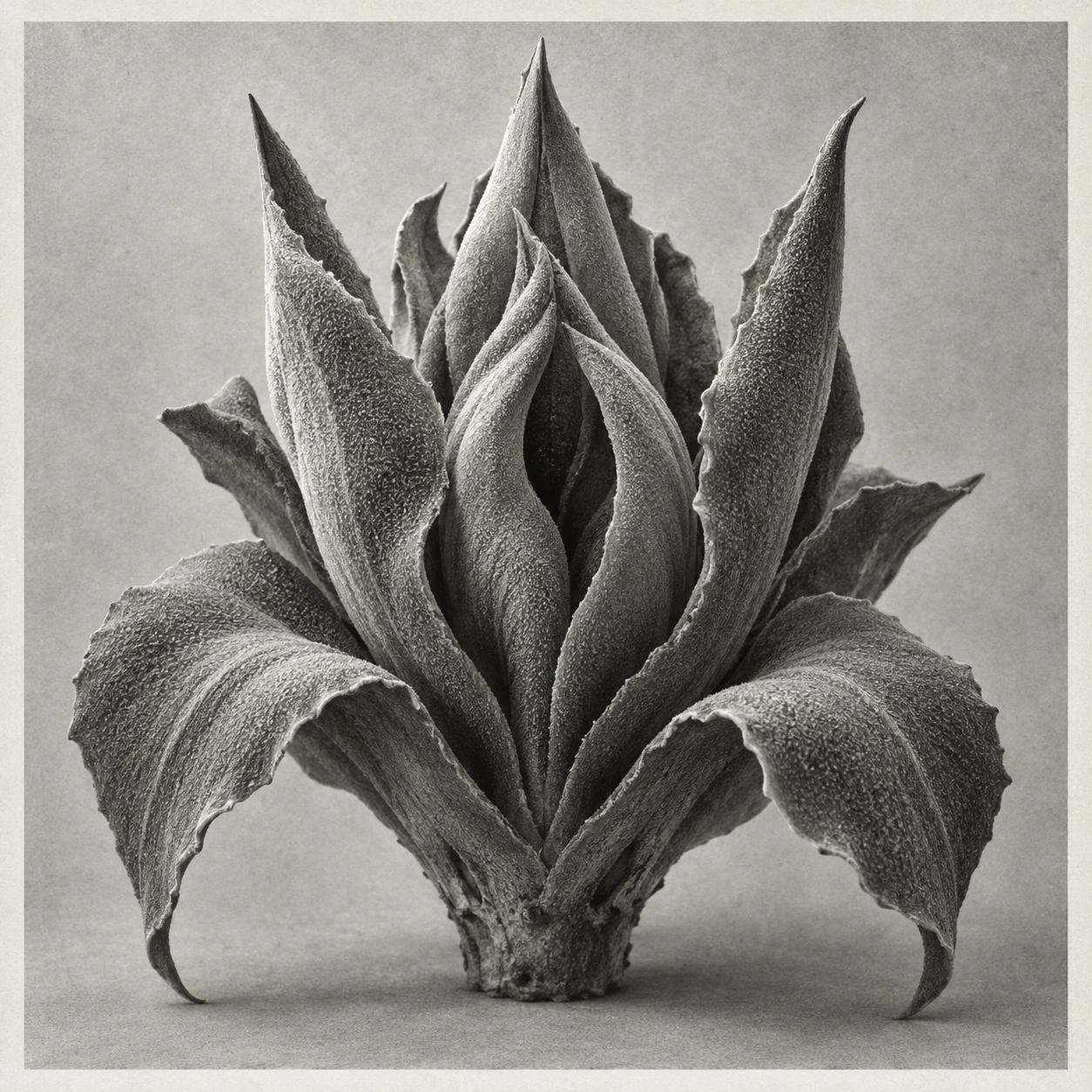 GPT Image 2.5
Reference details
- Reference ID
- 3234
- Category
- Ink & line
Reference prompts
Style prompt
The monochrome study isolates one intricate volume against a quiet, lightly mottled field. Fine tonal grain and velvety stippling describe curved surfaces, while deep recesses provide strong black accents between pale raised planes. The edges are exact but never mechanically uniform; small changes in contour reveal natural variation. Broad upper-side light travels over folds and leaves sharply legible shadows beneath overlaps. A centered, almost symmetric arrangement offers formal calm, but uneven heights and bends keep the shape alive. The surrounding negative space preserves attention on internal structure and texture. Midtones remain rich rather than collapsing into simple black-and-white blocks. The overall effect is scientific in attention and sculptural in presence, making modest organic geometry feel monumental through scale, isolation, and subtle light.Full example prompt
A square black-and-white botanical study shows a single sculptural plant form centered on a pale gray print field. A light border surrounds the image, separating the specimen from the white page beyond it. The form rises from a short narrow base at the lower center and opens upward into a dense crown of folded, pointed leaves. Several central lobes curve inward, making a dark vertical hollow that draws the eye into the structure. Taller spear-like points project at the upper left, center, and right, while broader outer leaves roll outward and down toward the lower corners. Their edges are irregular but distinctly outlined by changes in light, not by ink strokes. The surface looks velvety and finely granular, with stippled midtones across each curved plane. Bright light from the upper left grazes the raised folds, and deep shadow collects inside the narrow openings and under overlapping leaves. The almost symmetrical arrangement is subtly disturbed by different leaf heights and bends, giving the specimen an organic rhythm rather than rigid ornament. The background remains plain and slightly mottled, with no landscape, container, or other object to establish scale. A faint shadow under the base anchors the form to a flat surface. The specimen is sharply rendered in the middle, while the outer gray field stays quiet. Its natural anatomy is presented as architecture of ribs, flares, and recesses, making a small plant detail seem monumental. No text is visible inside the study. The overall composition is formal and contemplative, using a wide tonal range and precise surface texture to reveal the hidden structure of an isolated organic form.