
Styles
#3238
Watercolor with ink pen outline style reference and prompts
Explore the “Watercolor with ink pen outline” reference with pooled pigment and washes, translucent color layers, and ink contours. View the images, copy the style or example prompt, and discover related styles on Looksift.
Compare the Qwen Image 2.1 and GPT Image 2.5 examples, choose the visual qualities you want, and copy the style prompt for your own project.
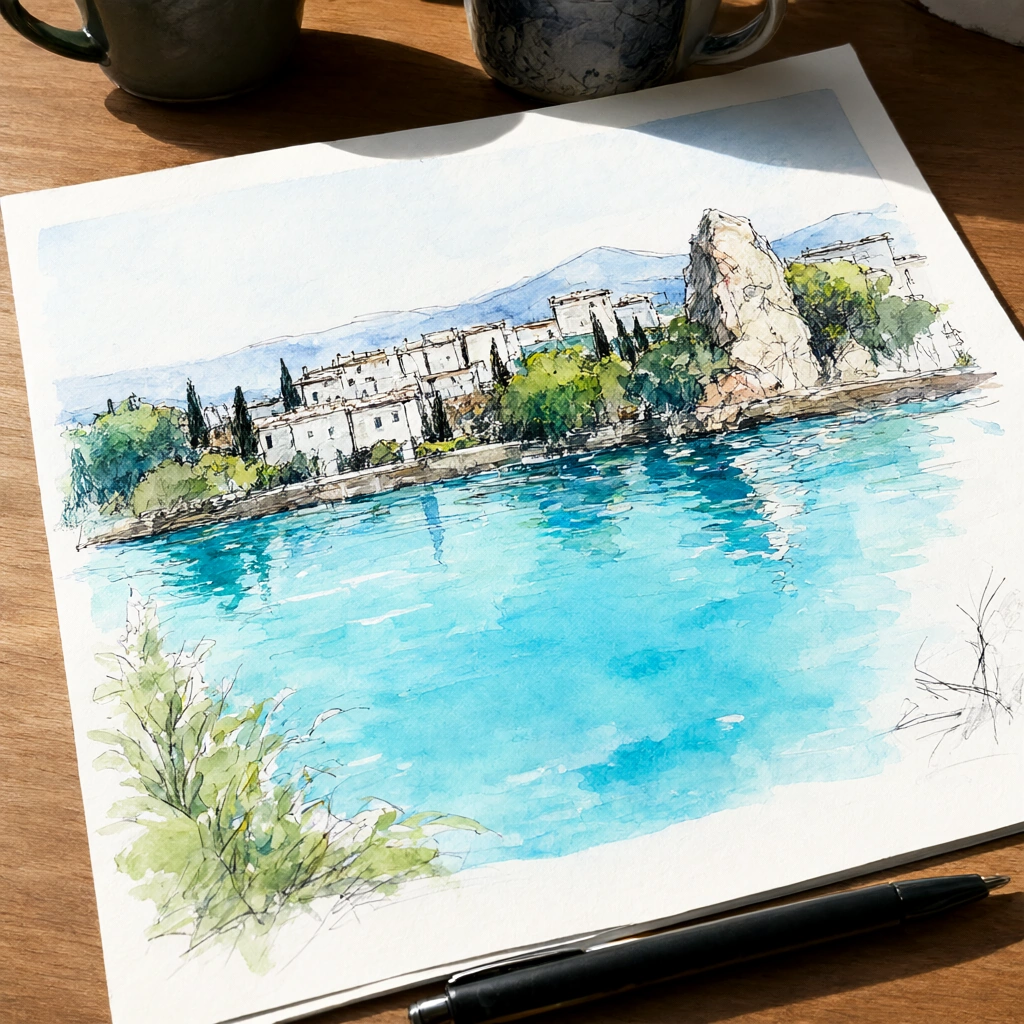 Qwen Image 2.1
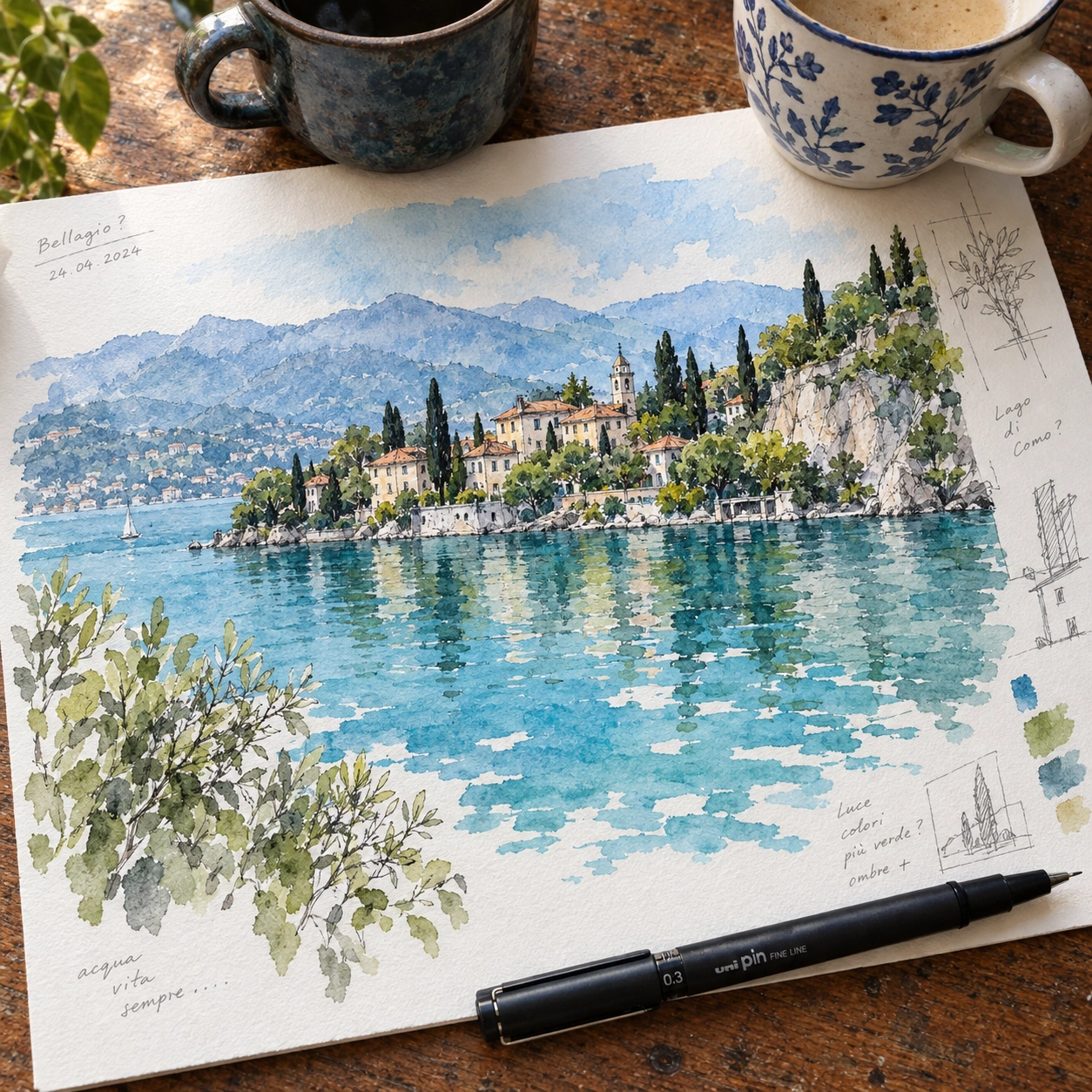 GPT Image 2.5
Reference details
- Reference ID
- 3238
- Category
- Photography
Reference prompts
Style prompt
The mixed-media surface joins transparent watercolor washes to thin, searching pen outlines. Pigment pools and blooms unevenly, leaving open paper highlights and soft feathered transitions beside exact dark marks. Cool turquoise, blue, and layered green dominate, with a few warm earth accents stabilizing the palette. Dense small linework gathers at focal contours while wider areas remain loose and fluid. The composition tolerates margins, stray exploratory marks, and unfinished edges, making the work feel observed in the moment rather than sealed into a polished rectangle. Light paper provides the brightest value and keeps saturated washes airy. Overlapping transparent passages suggest depth without heavy opaque modeling. The overall effect is nimble and handmade, balancing precise structure with the accidents and movement of waterborne color.Full example prompt
A square color photograph shows an open sheet of watercolor paper on a wooden table, carrying an ink-and-watercolor sketch of a lakeside settlement. The paper lies diagonally, its upper edge partly covered by two ceramic cups and its lower edge crossed by a dark pen. In the painting, bright turquoise water fills the lower half, broken by loose blue-green reflections and unpainted white gaps. Across the middle, a narrow shore carries clustered pale buildings, dark cypress-like shapes, and thick green foliage. A light rocky outcrop rises at the right, while faint blue hills and a washed sky recede behind the town. Fine black pen lines define roof edges, shore contours, and small vegetation details, but much of the watercolor spreads beyond them in transparent uneven patches. A pale green plant-like wash sits at the lower left of the page outside the central landscape, and exploratory pencil or ink marks remain around the right margin. The cups above the painting have rounded handles, one darker and one patterned; their shadows and contact with the paper make the artwork feel like an active tabletop study. The pen at the bottom points toward the right, anchoring the loose sheet to the warm brown table. Daylight from the upper left brightens the white paper and the watery blue pigment, leaving soft shadows beneath the cups and along the page edges. The camera looks down at an oblique angle, so the page, tools, and image occupy one coherent workspace. The overall composition combines a lively travel-sketch scene with visible working materials, using fluid color and precise ink accents to convey an immediate, handmade observation.