
Styles
#3247
Light tracing style reference and prompts
Explore the “Light tracing” reference with layered depth. View the images, copy the style or example prompt, and discover related styles on Looksift.
Compare the Qwen Image 2.1 and GPT Image 2.5 examples, choose the visual qualities you want, and copy the style prompt for your own project.
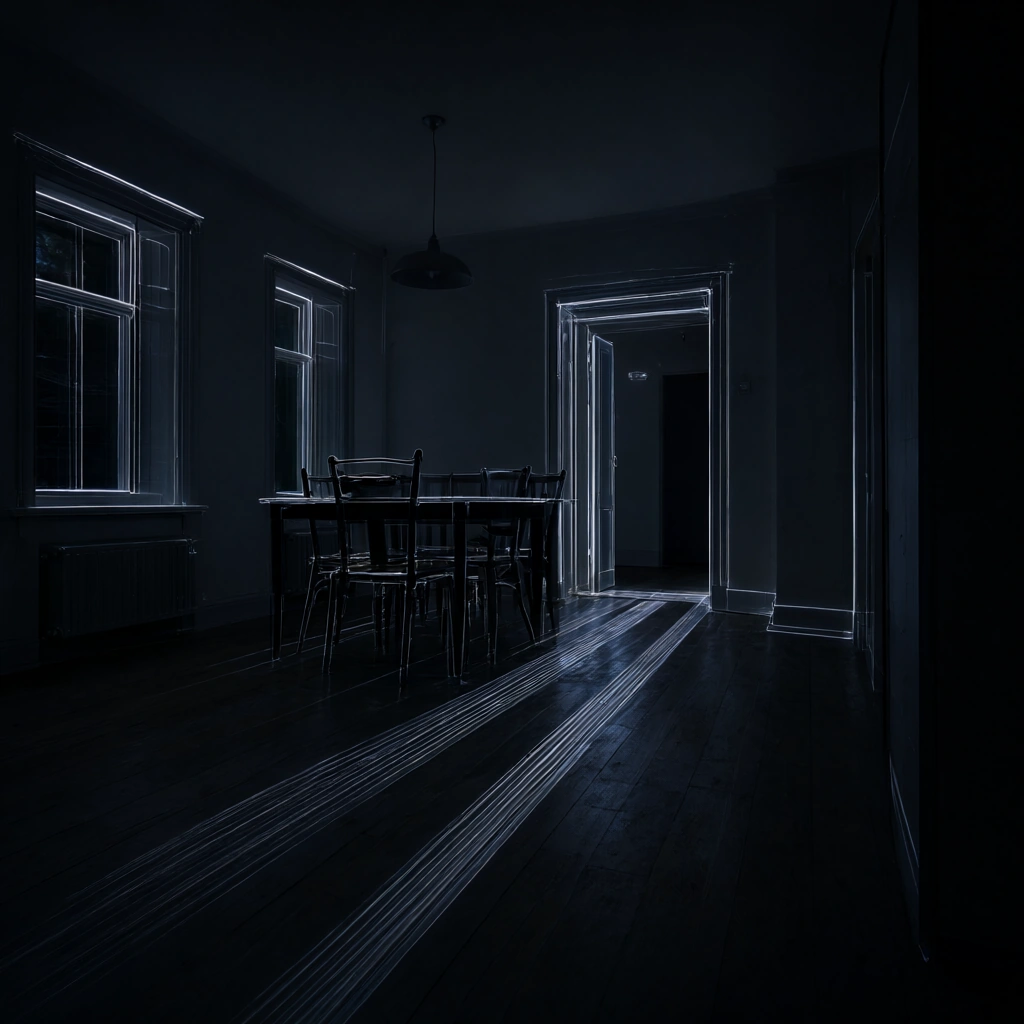 Qwen Image 2.1
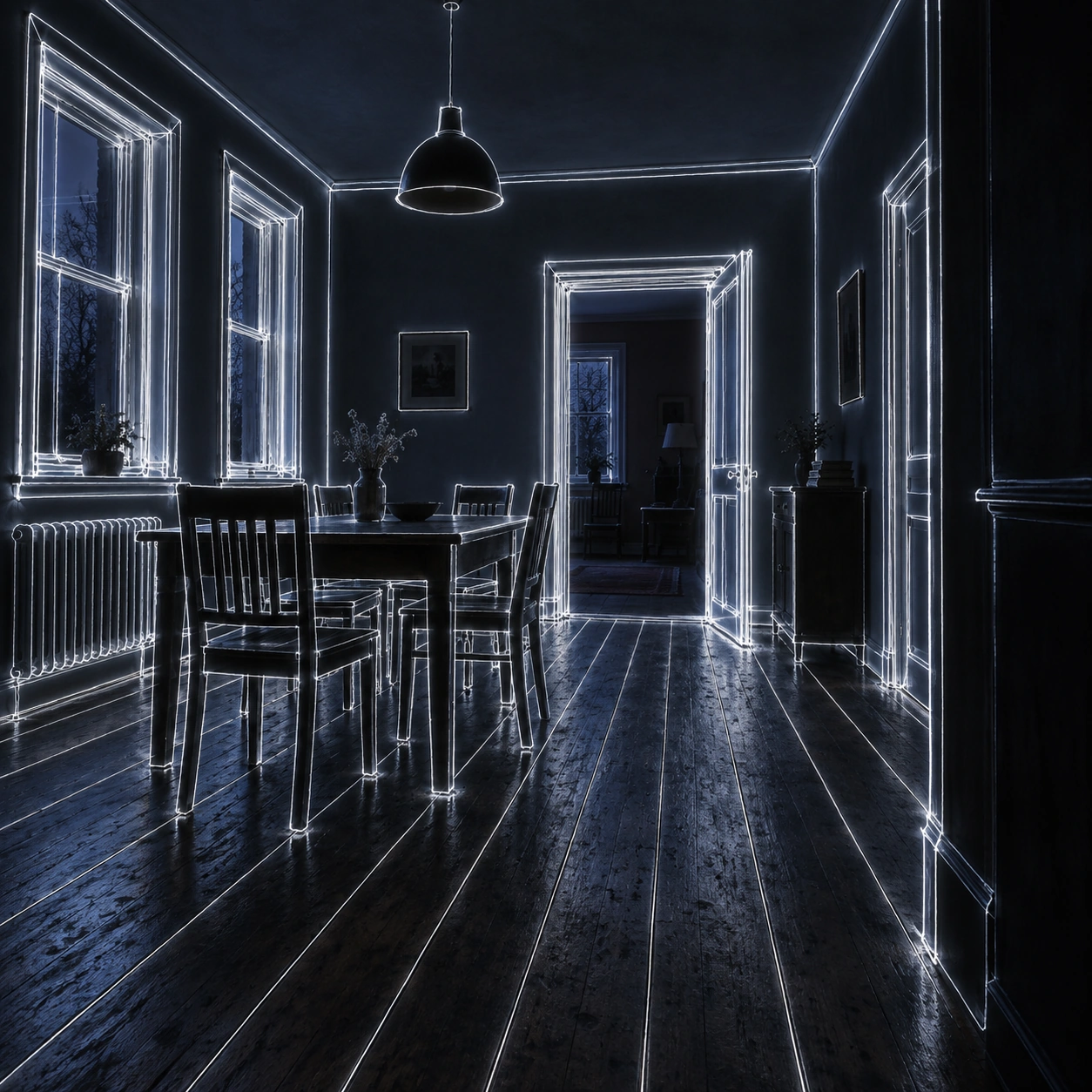 GPT Image 2.5
Reference details
- Reference ID
- 3247
- Category
- Photography
Reference prompts
Style prompt
The long-exposure photographic method sketches volume with thin luminous paths against a deep, cool-toned field. Repeated light passes accumulate around important edges, creating a gently vibrating outline rather than a single perfect stroke. Dark surfaces remain partly visible beneath the traces, giving the drawing physical depth and preventing it from becoming a flat diagram. Parallel lines can reveal receding planes, while brighter clustered contours establish a clear focal zone. Cool white and faint blue dominate, with only restrained ambient warmth. The light has little conventional cast shadow because it is itself the drawing instrument; broad shadows persist in areas the traces do not cross. The composition balances a bright far center against quieter dark margins. The overall effect is spectral and spatially precise, turning familiar solid forms into fragile, hand-drawn structures of light.Full example prompt
A square long-exposure photograph shows a dark domestic dining room whose windows, doorway, furniture, and wall edges are traced with delicate white light. The underlying room is dim blue-black, with only enough ambient detail to reveal old wooden floorboards receding toward the back. On the left wall, two rectangular windows sit above a low radiator; bright repeated strokes follow the window frames and their shallow recesses. A small dining table and several dark chairs stand in the center-left foreground, their legs and backs outlined with thin luminous marks. High near the center, a simple pendant lamp hangs as a mostly dark shape against the ceiling. At the far center, an open doorway is the brightest area, its frame built from several closely spaced white passes that lead into another shadowed room. The right side contains a tall dark wall or cabinet edge close to the camera, while more luminous lines sketch the corner and door trim beyond it. Across the floor, long parallel light traces follow the boards toward the doorway, making the room's perspective unusually visible. The traced lines are slightly imperfect and layered, so they look hand-drawn in space rather than like fixed neon tubing. Cool white light dominates the outlines, with faint blue glow in the surrounding darkness; shadows remain broad and deep beneath the table and along the near right edge. The camera looks into the room from a low, steady position, preserving the architecture while the mobile light source records repeated gestures. No person is visible, and no writing can be read. The overall composition is quiet but uncanny, turning an ordinary interior into a transparent wireframe of glowing lines suspended in darkness.